Alaska's Republican-run state government told a federal judge on Saturday, October 31, 2026, that the Trump administration's demand to set aside ballots in the state's pivotal Senate race is "both disturbing and impossible", urging the court to dismiss the lawsuit immediately and with prejudice. The Alaska Senate ballots filing, from the state attorney general's office, is the sharpest rebuke yet from a Republican-led state to a lawsuit filed at President Donald Trump's direction, and it comes three days before the November 3 midterm elections.
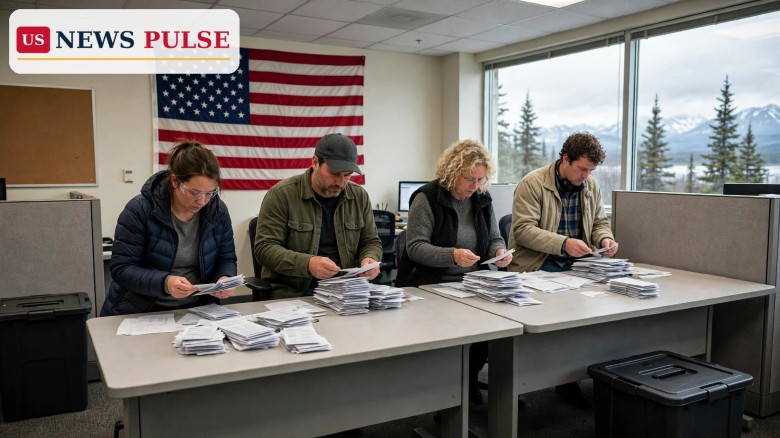
The state was responding to a Justice Department request made on Friday, October 30, asking Judge Sharon L. Gleason to order Alaska officials to preserve and segregate all ballots showing votes for Daniel J. Sullivan, a retired schoolteacher from Petersburg who shares a name with the incumbent Republican senator, Dan S. Sullivan. Alaska said there would be no way to do that without violating voter privacy, and that the relief the government seeks is "not even possible given Alaskan voters' vital right to ballot secrecy".
The filing was made by the Alaska Department of Law's Civil Division, on behalf of the Division of Elections director, the state election board and the ballot-counting review boards. Its language was unusually blunt for a state government responding to its own party's president. "There is no reason for this Court to entertain this meritless lawsuit any longer," the state wrote, adding that the government's opposition "provides no reason" to keep the case alive.
The immediate trigger was the Justice Department's Friday request. The department had already sued Alaska election officials on October 22, 2026, seeking to block or delay certification of the Senate race if Republican Senator Dan Sullivan loses to Democrat Mary Peltola. On Friday, it added a request that the judge separate all ballots showing votes for the second Dan Sullivan until it can be determined whether voters were fooled into wasting their votes for a spoiler candidate. The department also sought a ruling before Monday, November 2.
Alaska's answer was that the request cannot be carried out. "No matter how the ballots are physically stored, it will be easy to tell which ballots rank Daniel J.," the filing said, according to reporting of its contents. "If the United States means something different — as it seems to — its ballot segregation proposal is both disturbing and impossible." The point is about the secret ballot itself: in Alaska's ranked-choice system, separating ballots by how a voter ranked a particular candidate would mark those voters out, destroying the secrecy that protects them from retaliation or pressure.
The state also rejected the premise of the lawsuit. The two Sullivans are distinguished from each other on the ballot, officials wrote: the senator is listed as a Republican and the incumbent, while the other appears simply as "Daniel J. Sullivan Jr.". "State officials carefully designed the ballot to minimize voter confusion," the filing said. The Alaska Supreme Court ruled this summer that the second candidate fulfilled all legal requirements to stay on the ballot, and the state's filing says the new revelations about the possible role of Peltola's campaign in recruiting him do not change that fact. "Not every wrong can be righted in federal court," the state wrote.
The dispute centres on one of the strangest ballot features in American politics: two men named Dan Sullivan running for the same Senate seat. The incumbent, Dan S. Sullivan, is a Republican seeking re-election. The challenger, Daniel J. Sullivan Jr., is a retired schoolteacher from the remote fishing village of Petersburg, who, according to a New York Times report this week, was recruited onto the ballot with help linked to Peltola's campaign — internal texts and posts, the Times reported, appear to show her campaign was involved in recruiting him, and Peltola herself was aware of the situation.
Trump has seized on that report. He said he personally ordered the Justice Department lawsuit, and he has demanded that Peltola be prosecuted. The department's complaint argues that the presence of a second Sullivan could confuse voters and divert votes from the incumbent, and that the race should not be certified unless Sullivan is declared the winner. The administration has argued that a preamble to the 1990s law governing voter registration gave it responsibility for ensuring states maintained the "integrity" of federal elections, and it has said it is simply trying to combat fraud by preventing Peltola from being declared the victor in a race that could determine which party controls the Senate.
The state's filing pushes back on every part of that case. It criticises the legal basis on which the administration claims standing to intervene, noting that election certification is left to the states. It notes that the Alaska Supreme Court already approved the second Sullivan's placement on the ballot months ago. And it argues that even if the recruitment story is true, it does not create a federal case for blocking certification: the candidate is lawfully on the ballot, the ballot distinguishes him from the senator, and voters are entitled to vote for him.
The filing is also notable for who made it. The defendants are Republican-led: the motion was filed on behalf of Division of Elections Director Carol Beecher, a Republican, as well as the state election and ballot-counting review boards. Alaska Governor Mike Dunleavy, a Republican, announced a state probe into the recruitment allegation after the Times story and has condemned the placement of the second Sullivan on the ballot. He suggested on Thursday, October 29, that the state could withhold certification if Peltola wins, and stopped short of committing to certify while the matter remains under investigation. Yet the state's own lawyers are now asking a federal judge to throw the federal case out for good.
The segregation argument deserves attention, because it is where the case turns from politics to principle. Alaska uses ranked-choice voting, in which voters rank candidates in order of preference. A ballot that ranks Daniel J. Sullivan is not a ballot for one candidate alone: it is a record of a voter's full ranking, and separating those ballots out would create a identifiable set of voters who ranked a particular candidate in a particular way.
That, the state says, is the problem. Ballot secrecy is not a courtesy; it is a protection against coercion. If a voter's choices can be identified — even by inference, even by a process that claims to preserve anonymity — the voter is exposed. The state's filing says the federal proposal would do exactly that, and that no physical arrangement of ballot boxes can avoid it.
The Justice Department's proposal also raises a practical question the filing does not need to answer but the court will have to: what would segregation actually achieve? The department wants the ballots preserved and separated while it investigates whether voters were confused. But Alaska's position is that confusion, if it existed, cannot be cured by sorting ballots after the fact — and that the remedy the government seeks would itself violate the rights of the voters whose ballots were sorted.
That argument found an unusual ally. Peltola's campaign and voting rights groups have also urged Judge Gleason to dismiss the case, putting them in alignment with the state's Republican government. The American Civil Liberties Union, in a filing urging dismissal, wrote: "Imagine if the federal executive could pluck a few words like 'election integrity' from some statutory preamble and, on that basis alone, bend the machinery of state elections to his will, preemptively blocking certification of a U.S. Senate election to protect his preferred candidate from defeat and then subjecting voters to a law-enforcement-led inquest about who they 'really' supported. Imagine that world and ask whether it is what the Framers wanted or precisely what they most feared."
The state's own words are the story. "There is no reason for this Court to entertain this meritless lawsuit any longer," its filing said. "The Court should immediately dismiss this lawsuit with prejudice and allow state officials to conduct the general election — including ballot counting and certification — free from unwarranted federal interference."
Senator Dan S. Sullivan, meanwhile, used a Fox News interview on Saturday to sharpen the attack on Peltola. He said there was no way Peltola did not know about the effort to recruit the namesake candidate, calling it deceptive and an insult to voters. Peltola has denied involvement in the presence of the second Sullivan on the ballot, and her campaign has urged dismissal of the lawsuit.
The Justice Department has also stepped up its parallel criminal investigation, issuing a wave of subpoenas and announcing it is conducting a criminal probe into the recruitment of the second Sullivan. That investigation, which the department says has been under way for months, continues regardless of what happens to the civil lawsuit — and it is that investigation, rather than the certification case, that may ultimately determine whether anyone faces charges.
This filing matters because of who filed it. When a Republican-led state government tells a Republican president's Justice Department that its lawsuit is meritless, disturbing and impossible, it breaks the partisan frame that has surrounded this dispute. The case is no longer simply Democrats versus Republicans: it is a state defending its own election machinery against federal intervention, and election officials of both parties defending the secret ballot.
It matters, too, because of timing. Judge Gleason set a Saturday deadline for arguments on dismissal, leaving open a ruling before Election Day on Tuesday, November 3. If she dismisses the case with prejudice, Alaska can count and certify its Senate race without the shadow of a federal order hanging over it. If she does not, the certification fight could run into the days after the election, when the Senate majority itself may hang in the balance.
And it matters as a precedent. The Trump administration has used its legal powers aggressively to support its side in this midterm election, from subpoenas to criminal investigations to lawsuits seeking to block certification. A ruling that the federal government cannot pluck "election integrity" from a statutory preamble and bend a state's election machinery to its will would limit that strategy — not only in Alaska, but in every state where a close Senate race could be litigated after Tuesday.
Watch for four developments. First, Judge Gleason's ruling on dismissal, which could come before Election Day. Second, the election itself on Tuesday, November 3, and whether the Alaska Senate race is close enough for certification to become a live fight. Third, the criminal investigation into the recruitment of the second Sullivan, and whether it produces charges against anyone connected to Peltola's campaign. Fourth, the state probe announced by Governor Dunleavy, and whether it reaches a different conclusion from the federal investigation.
For now, Alaska's message to Washington is clear: the ballots cannot be separated, the lawsuit should be dismissed, and the state should be left to run its own election. Whether the court agrees will be known, possibly, within days.
Alaska asked Judge Sharon L. Gleason to dismiss the Trump administration's lawsuit immediately and with prejudice, so it cannot be refiled, and to let state officials conduct ballot counting and certification free from federal interference.
Because separating ballots that rank Daniel J. Sullivan would identify those voters' choices, violating ballot secrecy. The state said no physical arrangement of ballot storage can avoid that.
Dan S. Sullivan is the incumbent Republican senator seeking re-election. Daniel J. Sullivan Jr. is a retired schoolteacher from Petersburg, Alaska, who is also on the ballot. The ballot lists the senator as a Republican and the incumbent, and the other candidate simply as "Daniel J. Sullivan Jr."
It asked the judge to order Alaska officials to preserve and segregate all ballots ranking Daniel J. Sullivan, with a ruling sought before Monday, November 2.
Election Day is Tuesday, November 3, 2026, as part of the US midterm elections.
Related coverage: Trump Texas Rallies: Paxton, Methane Plan and a Talarico Surge on Oct 27, Trump $5,000 Dividend Promise Back in Spotlight Seven Days Before Midterms and Supreme Court SNAP Payments Block Extended as Shutdown Deal Heads to House Vote.
Leave a Comment



 | Today's Date: