


 | Today's Date:


Iran's Ghalibaf Warns US: Ball in Washington's Court to Prevent War on Election Day
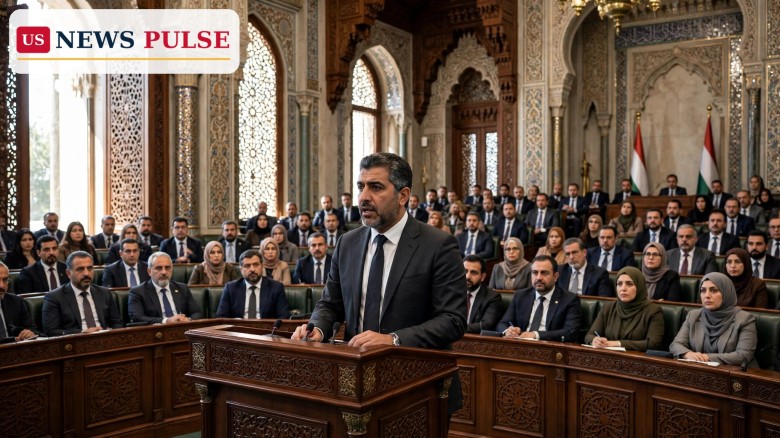
Iran's chief negotiator warned the United States on Tuesday, November 3, 2026, that the ball is now in Washington's court to prevent war, speaking in a televised address on the day Americans vote in midterm elections. Parliament Speaker Mohammad Bagher Ghalibaf said Tehran had already given the American side a powerful and rational response, while insisting Iran stands ready for battle if diplomacy fails.
Key Points
- Ghalibaf said in a televised speech on Tuesday that Iran has given the US a powerful and rational response, and the ball is now in Washington's court to prevent war.
- He said Iran is at its highest defensive readiness and warned another American strategic mistake would open a new battlefield.
- Iran's unified military command warned a new war could endanger undersea cables, data centres and AI facilities it values at $2 trillion.
- Tehran says it could reopen the Strait of Hormuz within two days if Washington accepts its demands; Gulf officials say the US warned of larger strikes as early as November 4.
- A senior Iranian official told Reuters mediators are working intensively, but Iran and the US remain far from an agreement.
What Happened
Ghalibaf, who leads Iran's negotiating team, spoke on Tuesday morning, Tehran time, as polling stations opened across the United States. His words were reported by Arab News, Al Arabiya and Kurdistan 24. "The countries of the region should know that, just as the Islamic Republic of Iran stands ready for battle with its finger on the trigger, it has also given the American side a powerful and rational response," Ghalibaf said. "The ball is now in America's court to prevent war."
The speech came a day after the United States carried out limited strikes on Iran's Qeshm Island, described by American officials as defensive. CNN reported that three US officials said the strikes came in response to Iran firing at a US aircraft. Iran's state-affiliated Fars News Agency reported several explosions on Qeshm in the early hours of Tuesday local time.
Ghalibaf warned that another "strategic mistake" by Washington would open a new battlefield from which the United States would struggle even more to find a way out, according to Iran International's account. He also said Iran is at its highest level of defensive readiness, a claim that could not be independently verified.
Background/Context
Qeshm Island sits about 14 miles from Bandar Abbas, at the mouth of the Strait of Hormuz, through which about 20 million barrels of oil passed every day before the war. Iran has used the island to store ballistic missiles, and it hosts a naval base and a desalination plant.
President Donald Trump said on Monday that an agreement with Tehran "could happen," while also saying in a Fox News appearance that night that the US "might have to go after" Pickaxe Mountain, the suspected underground nuclear site where Israel believes Tehran has stored part of its enriched uranium stockpile and advanced centrifuges. Trump did not specifically address the new Qeshm strikes in that appearance. On Saturday, Iran's Supreme Leader Mojtaba Khamenei said a major new attack would be met with a response "without geographical limitations."
Iranian negotiators left Qatari-mediated talks in Doha on Sunday, and a draft American deal proposal has circulated since, with no details publicly confirmed. Iran says any deal rests on its seven-step plan, now condensed into an offer to reopen the Strait of Hormuz within two days rather than seven, if Washington accepts its demands.
Ghalibaf Ball in US Court Warning
The most striking element of Tuesday's speech was the pairing of readiness and restraint. Ghalibaf presented Iran as simultaneously prepared for battle and willing to settle, placing the next move squarely on Washington.
The warning from Iran's unified military command sharpened that threat. The Khatam al-Anbiya Central Headquarters said another war could endanger undersea cables, data centres, artificial intelligence facilities and other strategic infrastructure it estimated at $2 trillion. The figure was first used earlier this month by Mohsen Rezaei, secretary of Iran's Supreme National Security Council. On October 19, the Islamic Revolutionary Guard Corps pointed to seven internet cables crossing the Strait of Hormuz and warned of new targets.
Two senior Iranian security officials told Reuters that Tehran has detailed plans to hit Gulf undersea cables if attacked again, with "no more red lines," and that Gulf states should hold Washington responsible for any damage. The $2 trillion valuation is Iran's own, with no independent estimate found.
Reactions/Quotes
Foreign Minister Abbas Araghchi said Iran's goal is a new regional security arrangement without foreign military presence, and that negotiations with Saudi Arabia are continuing. He made a similar point on October 28, after Saudi, Turkish and Pakistani officials visited Tehran. Saudi Arabia has described that visit as part of efforts to reduce tensions, even as Houthi attacks on the kingdom have continued.
A senior Iranian official, cited by Reuters, said mediators are making intensive efforts to narrow the gaps, but the two sides remain far from an agreement. The official said Tehran will not accept what it called excessive American demands, and that Washington must meet Tehran's conditions for reopening the Strait of Hormuz before nuclear talks can begin.
Why It Matters
Ghalibaf's speech matters because it arrives at a hinge moment: Election Day in the United States, with a warning that larger American strikes could come as early as November 4, the day after the vote. Gulf officials have said Washington warned them of that possibility, and oil prices rose in early Asian trading on Tuesday after news of the Qeshm strike broke.
What Happens Next
Three things will show whether Tuesday's warning hardens into confrontation or opens a path to talks: whether the United States follows the Qeshm operation with larger strikes as early as November 4; whether Washington responds publicly to Ghalibaf's claim; and whether the Strait of Hormuz reopens within two days on Iranian terms, or stays closed as Tehran's main leverage.
Frequently Asked Questions
Who is Mohammad Bagher Ghalibaf? Iran's parliament speaker and chief negotiator in talks with the United States.
What did Ghalibaf say on Tuesday? Iran has given the US a powerful and rational response, Iran stands ready for battle, and the ball is now in Washington's court to prevent war.
What happened on Qeshm Island? The US carried out limited strikes on Monday, described by American officials as defensive and a response to Iran firing at a US aircraft.
What is the $2 trillion warning? Iran's unified military command warned a new war could endanger regional undersea cables, data centres and AI facilities it values at $2 trillion — Iran's own figure, with no independent estimate.
Could the Strait of Hormuz reopen soon? Iran says it could reopen within two days if Washington accepts its demands, but a senior Iranian official says the two sides remain far from an agreement.
Related coverage: Trump calls Iran conflict a "very soft war" on Fox News, Iran leaves Doha talks as draft US deal circulates, and US stock futures slip on Election Day. The featured image is an illustrative generated parliament scene, not a photograph of the actual speech.
Leave a Comment