


 | Today's Date:



DOJ Police Grants: Judge Blocks Immigration Enforcement Conditions
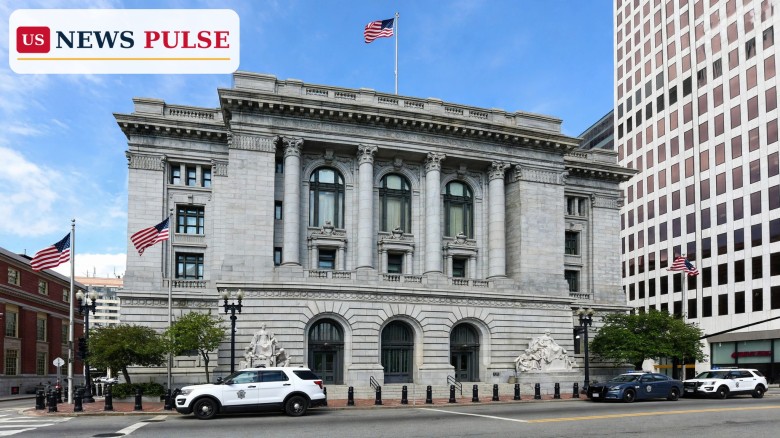
A federal judge in Rhode Island has permanently blocked the Justice Department from tying police and juvenile-justice grants to immigration enforcement for 22 states, ruling that the conditions were unlawful and striking a significant blow to the administration's use of federal funding as leverage over state law enforcement.
Chief United States District Judge John McConnell Jr. ruled from the bench in Providence, Rhode Island, on Wednesday, November 4, 2026, in favour of 22 states and the District of Columbia, holding that the Justice Department's immigration-enforcement conditions on the grants were unlawful. According to New Jersey's attorney general, the ruling permanently enjoins the implementation or enforcement of those conditions for the plaintiff states.
The conditions required grant recipients to give federal authorities access to immigrants suspected of living in the United States illegally who were in state custody, and to notify the Department of Homeland Security if such a person was released. For the states that sued, those requirements turned routine public-safety funding into a test of cooperation with federal immigration enforcement, and they argued that the Justice Department had no authority to impose them. The Justice Department did not immediately respond to Reuters' request for comment.
Key Points
- Judge McConnell's bench ruling: permanent injunction for 22 states and the District of Columbia.
- Grants affected: Byrne Justice Assistance Grants, Byrne Crisis Intervention, and juvenile-justice grants.
- Money at stake: 80 million dollars in Byrne formula grants in fiscal 2025; New Jersey about 4.2 million dollars.
- States' argument: the Justice Department lacked authority and the conditions breached the Spending Clause.
- What is not covered: states that did not join the lawsuit, and the separate June 2026 transportation-grants case.
What Happened
The case, State of New Jersey et al v. United States Department of Justice et al, case number 25-cv-00404 in the United States District Court for the District of Rhode Island, began in August 2025, when the states challenged immigration conditions attached to more than 1.3 billion dollars in Victims of Crime Act funding. The administration later abandoned that plan but imposed similar conditions on three other programmes, prompting the states to revise their lawsuit.
The programmes now covered are the Edward Byrne Memorial Justice Assistance Formula Grants, the Byrne State Crisis Intervention Program, and grants from the Office of Juvenile Justice and Delinquency Prevention. The states said they were allocated 80 million dollars through the Byrne formula grants in fiscal 2025 alone, with New Jersey receiving about 4.2 million dollars. The Byrne grants support state and local police departments, courts, and crime-prevention programmes, while the juvenile-justice grants fund prevention, intervention, and rehabilitation services for young people, and the crisis-intervention programme helps keep people in mental-health crisis out of jail.
Background: A Fight Over Federal Funding and State Power
The dispute grows out of a long-running tension between the federal government and states and cities that limit cooperation with federal immigration enforcement. Successive administrations have tried to use federal grants to encourage greater cooperation, and courts have repeatedly been asked to decide where lawful encouragement ends and unlawful coercion begins.
The states' central argument was that the Justice Department lacked authority to impose the conditions and that they breached the Constitution's Spending Clause, which gives Congress, not the executive branch, power over federal spending. Under that argument, conditions on federal money must be authorised by Congress and related to the purpose of the programme itself. The administration's position in similar cases has been that the federal government may set reasonable conditions on the money it distributes, particularly where public safety and immigration enforcement overlap.
DOJ Police Grants and Immigration Enforcement
At the centre of the DOJ police grants immigration enforcement dispute is a simple question with far-reaching consequences: can the Justice Department make state and local police departments act as an arm of federal immigration enforcement in exchange for money Congress intended for crime fighting?
The states said no, arguing that requiring access to people in state custody and advance notice of releases would effectively conscript state officers into federal immigration work, regardless of state law or local policy, and that the conditions were imposed without the congressional authorisation the Constitution requires. The ruling accepts that challenge for the plaintiff states, and it underscores how much of the current legal battle over immigration policy is being fought not at the border, but in disputes over funding, procedure, and the separation of powers.
Reactions: A Permanent Win for the States
New Jersey's attorney general presented the ruling as a major win for the multistate coalition, saying the decision permanently enjoins the disputed conditions for the plaintiff states. The emphasis on permanence matters: the states sought not only a temporary pause, but a final determination that the conditions could not be applied to them.
The Justice Department did not immediately respond to Reuters, and it was not immediately clear whether it would appeal or seek a stay. Any appeal would go to the United States Court of Appeals for the First Circuit, which covers Rhode Island, and could take months. Legal observers will watch whether other states, or other grant programmes with similar conditions, become the next test cases, and whether the ruling's reasoning on congressional authority and the Spending Clause is cited in challenges elsewhere.
Why It Matters
The ruling matters for three reasons. First, it protects a significant stream of public-safety funding for 22 states and the District of Columbia at a time when police departments and juvenile-justice programmes are already stretched. Second, it reinforces a constitutional boundary central to the administration's clashes with the states: time and again, courts have been asked whether the executive branch can rewrite the terms of congressionally funded programmes, and this ruling answers that question, for these programmes and these states, in the negative.
What Happens Next
The Justice Department's next move is the key unknown. It could appeal, seek a stay while an appeal is heard, or accept the decision for the plaintiff states while continuing to press similar conditions elsewhere. Each option carries political and legal risk, and the department has not yet signalled its course.
Frequently Asked Questions
What did Judge McConnell rule on November 4, 2026? He ruled from the bench that the Justice Department's immigration-enforcement conditions on police and juvenile-justice grants were unlawful, and permanently enjoined their enforcement for the 22 plaintiff states and the District of Columbia.
Which grants are covered? The Edward Byrne Memorial Justice Assistance Formula Grants, the Byrne State Crisis Intervention Program, and Office of Juvenile Justice and Delinquency Prevention grants.
What did the conditions require? Grant recipients had to give federal authorities access to immigrants suspected of living in the United States illegally who were in state custody, and to notify the Department of Homeland Security if they were released.
Related coverage: Two judges order USDA to keep food aid flowing for 42 million Americans; Senate votes 51-47 to end Trump's global tariff emergency; A 50-50 Senate would put JD Vance at the centre of a fight over control.
Sources: Reuters, New Jersey Attorney General's Office, United States District Court for the District of Rhode Island. This article was written from the court ruling and the states' announcements of November 4, 2026.
Leave a Comment