


 | Today's Date:





Kyiv Power and Water Outages Follow Russian Strikes on Ukraine's Energy Grid
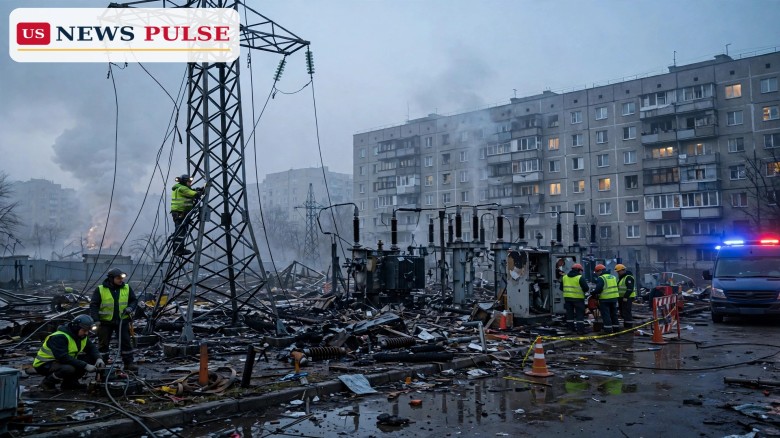
Russian strikes on Ukraine's energy infrastructure left large parts of Kyiv without power and water on Wednesday, November 4, 2026, as Kyiv power outages spread across the capital and surrounding regions after an overnight barrage that Ukraine's air force said involved 310 drones, including 81 jet-powered aircraft. Water supplies faltered, emergency centres opened, and repair crews worked to stabilise a grid struck more than 20 times in 24 hours.
Key Points
- Overnight attacks caused hours-long power and water outages across Kyiv and nearby regions on November 4; residents were urged to use drinking-water fountains and emergency centres.
- Ukraine's air force said Russia attacked with 310 drones, including 81 jet-powered drones, a day after strikes on power plants and substations across nine regions knocked out power around Kyiv.
- Kyiv's water utility later said supplies were restored, and energy company DTEK said emergency shutdowns in Kyiv ended after repair teams stabilised the system.
- President Volodymyr Zelenskyy said the toll from the November 2 Komyshuvakha aid-site strike had risen to 40, with about 30 to 38 people still possibly trapped.
- Russia's Defence Ministry said it hit two power stations in the Kyiv and Zhytomyr regions; Ukrainian strikes killed three people in Russia's Belgorod region the same day.
What Happened
Residents across Kyiv woke on Wednesday to darkened homes and faltering taps after overnight attacks cut power and water. Outages reached beyond the capital, and authorities urged people to use public drinking-water fountains while emergency centres offered phone charging.
Ukraine's air force said Russia attacked overnight with 310 drones, including 81 jet-powered ones. The barrage followed Tuesday's large-scale attack on power plants and substations across nine regions, which had already knocked out power in several areas around Kyiv. State grid operator Ukrenergo said energy facilities had been struck more than 20 times in 24 hours. Later, the water utility said supplies had been restored and DTEK said emergency shutdowns in Kyiv had ended, though officials warned the grid remained fragile.
Russia's Defence Ministry said its forces hit two power stations in Kyiv and Zhytomyr regions. Moscow's account could not be independently verified. Separately, Ukrainian strikes killed three people in Russia's Belgorod region on Wednesday, and Russia said it had downed 709 Ukrainian drones.
Background and Context
The Kyiv outages are the latest blow in a sustained campaign against Ukraine's energy system as winter approaches. Days earlier, 433 long-range drones hit the power grid overnight into November 1, leaving hundreds of thousands without electricity. Repeated strikes on substations and power plants have made the grid a central battleground of the war.
The same week brought a far deadlier reminder of the war's civilian cost at Komyshuvakha, a village in the Zaporizhzhia region where a Russian strike on November 2 hit a humanitarian aid distribution site centred on a school. Police later released bodycam footage from an officer killed in the strike, and President Zelenskyy said nine aerial bombs were dropped, hitting people collecting aid and then rescuers. The toll climbed from 26 dead to 40 by Wednesday, with more than 30 people still possibly trapped.
Diplomatically, the strikes landed days before a White House gathering on November 5 bringing Russian and Ukrainian representatives together, and United States-mediated talks in Abu Dhabi on November 10 and 11. The contrast between the negotiating table and the drone barrage underlined how far apart fighting and diplomacy remain.
Kyiv Power and Water Outages Expose a Grid Under Strain
What made Wednesday's outages so disruptive was that they hit power and water together: pumping stations need electricity, so taps can run dry even where pipes are intact. That is why the city pointed residents to drinking-water fountains and emergency centres: a power cut quickly becomes a communications and heating cut too.
The restoration statements brought relief, but also a warning. Emergency shutdowns protect a damaged grid from collapsing further, and ending them means repair teams have stabilised the system for now, not that it is safe from the next attack. With winter approaching, each round of damage leaves less margin.
Reactions and Statements
Ukrainian officials framed the day in terms of damage and repair: the water utility confirmed supplies restored, DTEK said emergency shutdowns had ended, and Ukrenergo pointed to more than 20 strikes on energy facilities in 24 hours. President Zelenskyy updated the Komyshuvakha toll to 40, with dozens possibly still trapped, keeping the focus on a rescue effort in its third day.
Russia's Defence Ministry said it had struck two power stations in the Kyiv and Zhytomyr regions, presenting the attacks as strikes on energy infrastructure. It did not publicly address the Komyshuvakha toll. The competing accounts captured the wider information war running alongside the physical one.
Why It Matters
The Kyiv outages matter because they show how the war reaches civilians far from the front. A strike on a substation does not only darken homes; it stops water pumps, strains hospitals and forces a city to reorganise its day around generators and charging points. Repeated often, that disruption wears down resilience, which is why energy infrastructure is such a persistent target as winter sets in. Readers can follow the diplomatic track in our report on Ukraine-Russia peace talks set for Abu Dhabi on November 10 and 11 and the earlier grid attack in Russia's 433-drone strike on Ukraine's power grid.
They also matter for the negotiations now under way. Each new round of strikes hardens positions and raises the cost of compromise, even as mediators argue only a settlement can stop the cycle. The rising Komyshuvakha toll and the Kyiv outages together show why humanitarian concerns keep returning to the diplomatic conversation. Our coverage of the rescue, including the bodycam footage from the aid-centre strike, sets out what happened there in full.
What Happens Next
In the immediate term, attention turns to whether Kyiv's restored supplies hold. Ukrenergo and DTEK will monitor the grid, and any fresh overnight barrage could bring back shutdowns and water disruption. Residents will watch for updated utility advice.
Beyond the city, the diplomatic calendar offers the next tests: the White House gathering on November 5, and Abu Dhabi talks on November 10 and 11 on security arrangements, de-escalation and humanitarian measures. Whether either meeting can produce even a limited pause in strikes on energy infrastructure is the key test.
Frequently Asked Questions
What caused the Kyiv power and water outages? Overnight Russian attacks on power plants and substations triggered hours-long outages across Kyiv and nearby regions on November 4, 2026.
How many drones were involved? Ukraine's air force said Russia attacked overnight with 310 drones, including 81 jet-powered ones, after Tuesday's attack across nine regions.
Was the water supply restored? Yes, the water utility later said supplies were restored, and DTEK said emergency shutdowns had ended.
What happened at Komyshuvakha? A Russian strike on November 2 hit an aid distribution site at a school in Komyshuvakha. President Zelenskyy said the toll had risen to 40 by November 4, with about 30 to 38 people still possibly trapped.
What happens next diplomatically? Russian and Ukrainian representatives are due at the White House on November 5, with United States-mediated talks in Abu Dhabi on November 10 and 11.
Leave a Comment