


 | Today's Date:





Russia Secretly Agreed to Supply Iran With 90 Missile Launchers, Leaked Records Show
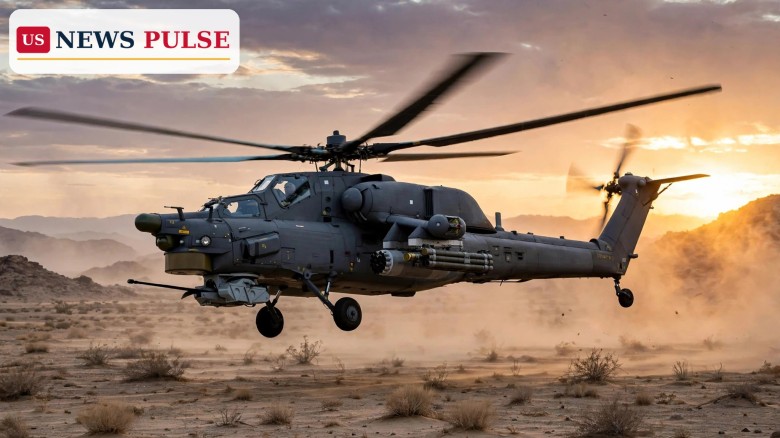
Leaked Russian defence-industry records show Moscow secretly agreed to supply Iran with 90 helicopter-mounted launchers for a precision-guided missile used extensively by Russian forces in Ukraine, the Financial Times reported on Thursday. The documents, obtained by the Ukrainian private intelligence organisation Dallas Analytics, list an export order for 90 APU-L launchers for the LMUR missile, also known as the Izdeliye 305, for a foreign customer coded “K-10” — the code Russia’s state arms exporter uses for Iran. It undercuts President Donald Trump’s recent claim that Russia was doing little to help Tehran. It remains unclear whether the launchers were ever delivered.
Key Points
- Russia agreed to supply Iran with 90 APU-L helicopter launchers for LMUR precision-guided missiles, the Financial Times reported.
- The order appears in a Vympel production schedule for 2024 and 2025 for a customer coded “K-10”, Rosoboronexport’s code for Iran.
- The same schedule listed a separate Chinese order for 192 APU-305 launchers.
- It is not known whether the 90 launchers reached Iran; Iran already operates Mi-28 attack helicopters that carry the system.
- Western intelligence officials told the Financial Times that Moscow–Tehran military cooperation deepened further during the Middle East war this year.
What Happened
The Financial Times reported on Thursday, November 5, 2026, that it had reviewed previously undisclosed Russian defence-industry documents obtained by Dallas Analytics. At its centre is a Vympel production schedule covering 2024 and 2025. The schedule lists an export order for 90 APU-L launchers for a customer identified only as “K-10”.
K-10, the report says, is the code Rosoboronexport, Russia’s state arms exporter, uses for Iran. A person familiar with the matter and internal documents confirmed that identification. The order was also mentioned in a letter sent in May 2024 from Vympel to the defence design bureau KBM, seeking faster deliveries of components and warning that delays could jeopardise nine contracts.
The same Vympel schedule listed a separate order from China for 192 APU-305 launchers, a related system. The Financial Times also found a 2023 schedule from a Rostec subsidiary listing six Yak-130 jet trainers for the same K-10 buyer; SIPRI data indicates all six aircraft had been delivered by the end of 2024. Crucially, the reporting does not settle whether the 90 launchers were ever delivered: the schedule shows the order was placed, not that the hardware reached Iranian hands.
Background: Russia and Iran’s Deepening Military Partnership
Russia and Iran have built one of the closest military partnerships in the world over the past four years, and the leaked records suggest that cooperation runs deeper than either government has publicly acknowledged. Iran has supplied Russia with drones for the war in Ukraine; Moscow has given Tehran air defences, fighter aircraft and training. The launcher order, dating from 2024, shows the relationship was already expanding before the current Middle East war began.
That war, now in its ninth month after the United States and Israel began strikes on Iran on February 28, 2026, has made the partnership more consequential. Missiles have again struck Qeshm Island, Iran claims to have shot down American drones, and President Trump has said a decision on widening the war is coming soon. But the report sits uneasily with the White House’s account: President Trump has recently asserted that Russia was doing “very little, if anything” to assist Iran, while Western intelligence officials told the Financial Times the opposite.
What the Russia Iran Arms Deal Means
The APU-L is a helicopter-mounted launcher that carries two LMUR missiles, a precision-guided weapon that entered service in 2022 and has been used extensively by Russian forces in Ukraine. The missile can be guided remotely by an operator while it is in flight and can hit moving targets. The system is designed to fit the Mi-28 attack helicopter, and Iran already has those aircraft: Tehran’s deputy defence minister confirmed in November 2023 that arrangements for the induction of Mi-28 helicopters had been finalised. If delivered, they would give Iran’s attack-helicopter fleet a modern precision-strike capability.
Reactions
The White House has not publicly responded to the report, but the disclosure lands as the administration weighs its next moves in the war with Iran. President Trump’s recent assertion that Russia was doing “very little, if anything” to help Tehran is now contradicted by the leaked schedule — if the order was fulfilled. Western intelligence officials, speaking to the Financial Times, said military cooperation between Moscow and Tehran had deepened further during the Middle East war this year. Neither Moscow nor Tehran has publicly commented on the documents.
Why It Matters
If the launchers reached Iran, they would sharpen one of the sharpest tools in Tehran’s arsenal at the very moment the United States is considering wider strikes. Precision-guided helicopter missiles are suited to exactly the kind of fighting seen in the Gulf: striking ships, coastal targets and mobile air defences with accuracy that unguided rockets cannot match. The report also matters for the diplomacy around the war. The United States has been pressing Russia to stay out of the conflict and has warned other countries against helping Iran evade sanctions. Evidence that Moscow was quietly arming Tehran before the war began complicates any claim that Russia is neutral.
What Happens Next
The key unanswered question is whether the 90 launchers were delivered. Analysts will now look for signs of the APU-L system on Iranian Mi-28 helicopters — in military parades, in training footage, or in the wreckage of any future fighting. The delivery of the six Yak-130 trainers to the same buyer by the end of 2024 shows that at least some of the K-10 orders were fulfilled. Washington is likely to press Moscow for an explanation as it decides whether to widen its campaign against Iran.
Read more: Oman and Iran seek lasting deal to reopen Strait of Hormuz shipping lanes; Trump weighs new Iran strikes as CENTCOM readies forces; Rezaei meets Putin in Moscow with Khamenei letter as Iran sets seven conditions for talks.
Frequently Asked Questions
What did the leaked documents reveal?
They show Moscow agreed to supply Iran with 90 helicopter-mounted APU-L launchers for the LMUR precision-guided missile, listed in a Vympel schedule for 2024–2025 for a customer coded “K-10”, Rosoboronexport’s code for Iran.
What is the LMUR missile?
The LMUR, also known as the Izdeliye 305, is a precision-guided missile that entered service in 2022 and has been used extensively by Russian forces in Ukraine. It can be guided remotely in flight and can hit moving targets.
Did Iran actually receive the 90 launchers?
It remains unclear. The documents show the order was placed, but do not prove delivery. A separate order for the same buyer — six Yak-130 jet trainers — was delivered by the end of 2024, according to SIPRI data.
Why does this matter for the US-Iran war?
They would give Iran’s Mi-28 helicopters a modern precision-strike capability as the US weighs wider strikes. The report also contradicts President Trump’s claim that Russia was doing “very little, if anything” to help Iran.
Who leaked the documents?
Dallas Analytics, a Ukrainian private intelligence organisation, obtained them and shared them with the Financial Times, which reported the story on November 5, 2026.
Leave a Comment