


 | Today's Date:



Drone Attack Halts Iraq's Khor Mor Gas Field, Cutting Two-Thirds of Kurdistan Power
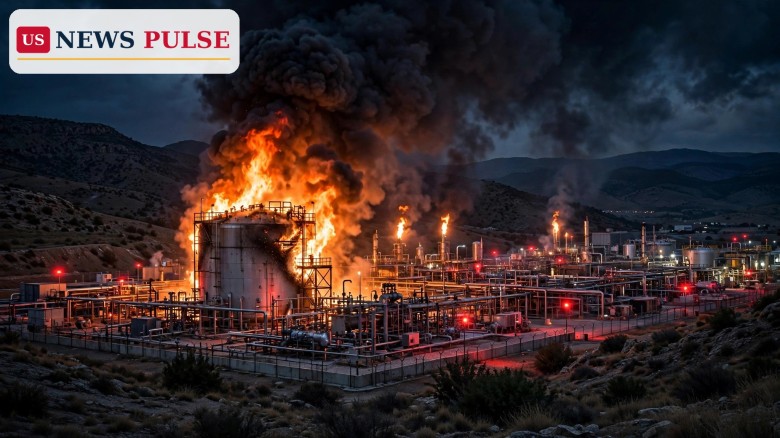
A drone strike late on Sunday, November 8, 2026, halted production at Iraq's Khor Mor gas field, one of the largest gas fields in Iraqi Kurdistan, and knocked out nearly two-thirds of the region's electricity supply. The drone hit a liquefied petroleum gas storage tank and set it alight, sending smoke over the site in Chamchamal district, Sulaymaniyah province, and forcing all crew into shelters.
The Kurdistan Region's electricity ministry said the halt cut gas to five power stations and estimated generation would fall by 2,500 to 2,800 megawatts, roughly two-thirds of normal supply. Outages spread across most of Kurdistan within hours, while Prime Minister Ali al-Zaidi ordered a joint investigation and said an initial assessment found no casualties.
Key Points
- A drone struck the Khor Mor gas field late on Sunday, November 8, 2026, at about 11 p.m., hitting a liquefied petroleum gas storage tank.
- Production was halted, cutting gas supplies to five power stations across Iraqi Kurdistan.
- The Kurdistan electricity ministry estimated generation would fall by 2,500 to 2,800 megawatts, about two-thirds of normal supply.
- Prime Minister Ali al-Zaidi said an initial assessment found no casualties and ordered a joint investigation with Kurdistan Region authorities.
- No group has claimed responsibility; suspicion falls on Iran or its allied Iraqi militias, which have repeatedly attacked the field since the US-Iran war began.
What Happened
The attack came at about 11 p.m. on Sunday, when a drone hit the storage tank at Khor Mor and started a fire that lit up the night sky over Chamchamal district. Smoke rose from the site for hours, all staff were ordered into shelters for fear of a second strike, and production was shut down as emergency crews worked to control the blaze.
The consequences for the power grid were immediate. The ministry said the halt cut gas to five power stations and warned generation would fall by 2,500 to 2,800 megawatts, roughly two-thirds of what Kurdistan normally produces, with outages across most of the region as the grid lost its main fuel source in a single night.
Prime Minister Ali al-Zaidi said an initial assessment found no casualties and ordered a joint investigation with Kurdistan Region authorities. No group had claimed responsibility by Monday morning, and officials in Baghdad and Erbil had not publicly named a suspect.
Background and Context
Khor Mor is one of the most important energy assets in northern Iraq. Operated by Pearl Petroleum, a joint venture of the UAE-based Dana Gas and Crescent Petroleum, it produces about 750 million cubic feet of gas a day, most of it going straight to power plants across the Kurdistan Region. When Khor Mor stops, the lights go out, which is why the field has become a target.
The attack is not the first on the field. Khor Mor has been hit repeatedly since the US-Iran war began on February 28, 2026, in a pattern of drone strikes on energy infrastructure across Iraqi Kurdistan. The attacks are rarely claimed, and suspicion has consistently fallen on Iran or Iraqi militias allied to Tehran.
The timing adds to the tension. The strike came only hours after President Donald Trump said renewed US military action against Iran was highly unlikely if talks to end the war keep progressing. But Secretary of State Marco Rubio said on Sunday that negotiations had made little progress and Tehran's demands were unacceptable.
Khor Mor Gas Field Attack Follows a Pattern of Strikes
The choice of target fits a familiar pattern in the nine-month war. Energy sites in Kurdistan are soft, high-value targets: a single drone can cut power to millions, strain relations between Baghdad and Erbil, and send a message to Washington without attacking American forces directly. Deniability makes drone warfare attractive to actors who want pressure without open escalation.
For the people of Kurdistan, the pattern means repeated disruption: a fire at the field, a sharp fall in generation, and outages while repairs are made. The scale of this strike, cutting an estimated two-thirds of supply, makes it one of the most damaging yet, and raises the question of how long the field can keep operating under repeated attack.
Reactions and Quotes
The Kurdistan Region's electricity ministry moved quickly to explain the scale of the damage, putting the expected loss at 2,500 to 2,800 megawatts and confirming five power stations had lost their gas supply: one strike removed about two-thirds of the region's generating capacity overnight.
In Baghdad, Prime Minister Ali al-Zaidi ordered a joint investigation with Kurdistan Region authorities and said the first assessment found no casualties. A shared inquiry matters: energy and security in Kurdistan are often points of friction between Baghdad and Erbil, and it signals both governments treat the attack as a national security matter.
Why It Matters
The immediate cost is power. Losing two-thirds of generation means homes, hospitals, schools and businesses across Kurdistan face outages until gas flows resume, and with winter approaching, heating and water are also at risk. Repeated strikes erode confidence that the grid can be kept running.
The political cost may be larger. Khor Mor's gas is the backbone of Kurdistan's economy and its leverage with Baghdad, and every successful attack shows the region's energy lifeline can be cut at will. It also complicates the US position: Washington has backed Kurdistan's energy development for years, yet the field keeps getting hit.
What Happens Next
The first question is how quickly production can restart. That depends on the damage to the storage tank and surrounding plant, and on whether engineers can work safely while the threat of another strike remains. Previous attacks have taken days to repair, and officials have not yet given a timetable.
The second question is who is held responsible. The joint investigation will look at the drone's origin and flight path, and its findings will shape whether Baghdad and Erbil name a culprit. Any formal blame on Iran or its allied militias would feed directly into the diplomacy around the war, just as Trump meets Qatar's prime minister.
Frequently Asked Questions
Where is the Khor Mor gas field?
Khor Mor is in Chamchamal district, Sulaymaniyah province, in Iraqi Kurdistan. It is one of the region's largest gas fields.
How much power was lost in the attack?
The Kurdistan electricity ministry estimated generation would fall by 2,500 to 2,800 megawatts, roughly two-thirds of normal supply, after gas to five stations was cut.
Was anyone hurt in the drone strike?
Ali al-Zaidi said an initial assessment found no casualties. All crew were ordered into shelters during the attack.
Who is blamed for the attack?
No group has claimed responsibility. Suspicion falls on Iran or its allied Iraqi militias, but no formal accusation has been made.
Why does Khor Mor matter so much?
Operated by Pearl Petroleum, it produces about 750 million cubic feet of gas a day, most of it fuelling power plants across Kurdistan. When it stops, most of the region loses power.
Related coverage: Trump says fresh Iran attack 'highly unlikely' if talks progress, US strikes Iran's Qeshm Island in secret raids near Hormuz and Vance says US-Iran talks are making progress with no deadline for a deal.
Leave a Comment