


 | Today's Date:





Larissa Drone Strike Hits Cargo Ship in Romanian Waters, NATO Jets Scramble
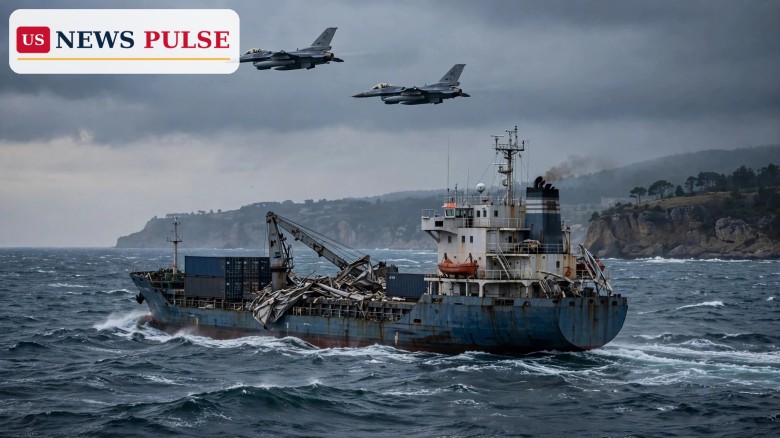
A drone struck the cargo ship Larissa in Romanian territorial waters on Friday evening, and NATO fighter jets scrambled soon after as Romanian radar tracked aerial targets near Snake Island in the Black Sea. The Larissa drone strike was reported at 9:40 p.m. local time, and the drone hit a crane on the vessel about 6.8 nautical miles northeast of the village of Sfântu Gheorghe while the ship was heading for Ukraine. Hours later, two Romanian F-16s took off from the 86th Air Base at Fetești after radar detected another target near Snake Island, sending emergency alerts across Tulcea County before dawn on Saturday, November 14, 2026.
Key Points
- A drone hit the cargo ship Larissa 6.8 nautical miles northeast of Sfântu Gheorghe on Friday evening, striking a crane as it headed for Ukraine.
- Romania's Defence Ministry said the strike was reported at 21:40, and did not link it to the Snake Island alerts that followed.
- Hours later, two Romanian F-16s scrambled from Fetești after radar detected a target near Snake Island.
- RO-Alert messages went out across Tulcea County at 04:45 and 05:39; the alert ended at 05:52, with no airspace incursion reported.
- Third such alert episode in a week; Romania recorded 23 airspace violations in 2026, more than the 18 from 2022 to end-2025.
What Happened
The attack came on Friday evening, November 13, in waters Romania claims as its own. The Larissa, a cargo vessel bound for Ukraine, was hit about 6.8 nautical miles — roughly 12.6 kilometres — northeast of Sfântu Gheorghe, a village on Romania's Black Sea coast. The drone struck a crane on the ship, and the ministry said the strike was reported at 21:40.
The evening did not end there. From 21:53 to 22:58, an air alert ran after radar tracked a target southeast of Snake Island, in Ukrainian airspace. In the early hours of Saturday, Romanian radar picked up another target near Snake Island, a small Ukrainian-held island. Two Romanian F-16s, on air policing duty, took off from the 86th Air Base at Fetești.
The command centre alerted the emergency inspectorate, and RO-Alert messages went across Tulcea County — first in the east at 04:45, then in the north at 05:39. The alert ended at 05:52. Officials reported no airspace incursion and no debris, and the ministry did not say whether the two incidents were related.
Background and Context
Romania's Black Sea coast is now one of the most closely watched stretches of NATO territory. Snake Island sits about 35 kilometres off the coast, Since the full-scale invasion of Ukraine, drones and missiles have repeatedly strayed toward NATO borders, and Black Sea shipping has come under attack. Read our report on the drone attacks that made the Black Sea the world's deadliest waterway.
The Larissa incident was the third such alert episode in a week. On November 8, Spanish F-18s and NH-90 helicopters scrambled after a similar alert, and on November 11, F-16s took off from Câmpia Turzii. Each time, radar tracked an object near Snake Island, jets went up, alerts went out, and the episode ended with no confirmed incursion.
The numbers show how sharply the pressure has grown. Romanian Defence Ministry data records 23 airspace violations in 2026, more than the 18 recorded from 2022 to end-2025 combined. At least 42 NATO air-policing missions have flown this year, more than in any year since 2022. Read our report on NATO jets scrambled twice over Lithuania and Latvia.
The Larissa Drone Strike and Romania's Airspace
What sets the Larissa strike apart is where it happened. The drone did not merely pass near Romanian territory — it struck a ship inside Romania's territorial waters, on a vessel sailing to Ukraine. Officials have not said who launched the drone, and no group has claimed responsibility.
The distinction matters for how NATO reads the incident. An object crossing allied airspace triggers scrambles; a strike on a ship in allied waters raises harder questions about intent and response. The ministry's silence leaves open whether they were parts of one operation or two separate events that night.
Reactions and Quotes
The ministry set out the Saturday morning scramble in a statement. "Two F-16 aircraft of the Romanian Air Force, in the Air Police combat service, took off from the 86th Air Base in Feteti," the ministry said. It added that the command centre had notified the emergency inspectorate "in order to institute measures to alert the population in the eastern area of Tulcea County, and at 04:45 an RO-Alert message was sent."
The statement went on: "Subsequently, at 05:39, a new RO-Alert message was sent for the population in the northern area of Tulcea County. The air alert ceased at 05.52." On whether the ship strike and the radar alerts were one attack, the ministry was clear only about what it would not say: it "did not specify whether the two incidents were related."
Why It Matters
The Larissa strike brings the war at sea to a NATO member's own waters. Merchant ships carry Ukraine's exports, and every attack on a vessel bound for a Ukrainian port raises the cost of keeping that trade moving. It also tests the line NATO has drawn in the Black Sea: repeated alerts show the alliance is watching, but a strike inside Romanian waters forces a harder conversation about deterrence.
It matters, too, for the people on Romania's coast. Tulcea County residents were woken by emergency alerts twice in one morning, the third time in a week. The alerts keep civilians safe, but each one is also a reminder that the war in Ukraine is close enough to set off phones in Romanian villages before dawn.
What Happens Next
Romanian investigators will now try to establish what hit the Larissa and where the drone came from. No timeline has been given, and no attribution made. If the evidence points to a Russian launch, Bucharest will face pressure to respond, and NATO will face fresh questions about protecting Black Sea shipping.
The alerts are unlikely to stop. With 23 airspace violations already recorded this year, Romanian jets will keep scrambling every time radar picks up a target near Snake Island. The Larissa strike has shown the danger is no longer confined to the sky.
Frequently Asked Questions
What happened to the Larissa? A drone struck the vessel in Romanian territorial waters on Friday evening, November 13, hitting a crane as it headed for Ukraine, 6.8 nautical miles northeast of Sfântu Gheorghe.
Did NATO jets scramble? Yes. Two Romanian F-16s took off from Fetești on Saturday morning after radar detected a target near Snake Island, and alerts went out across Tulcea County.
Was Romanian airspace violated? No incursion was reported and no debris was found. The ministry did not say whether the ship strike and the radar alerts were related.
How often has this happened? Third such alert episode in a week, after November 8 and 11. Romania has recorded 23 airspace violations in 2026, more than the 18 from 2022 to end-2025.
Leave a Comment