
World Cup Security Report: House Democrats Say ICE Chaos and $625M Delay Risked Fans
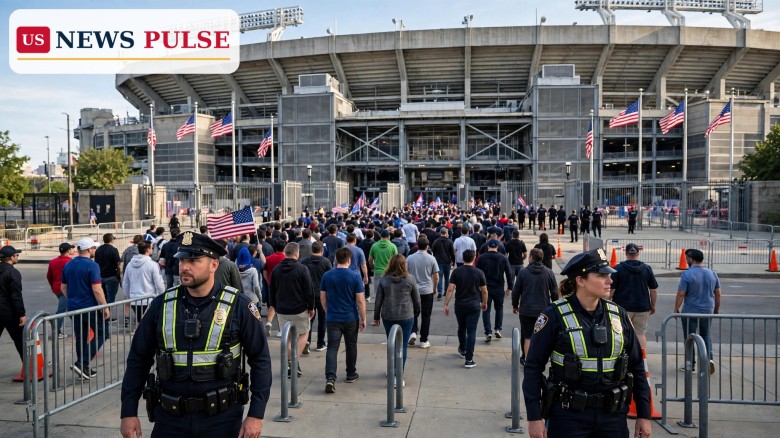
The World Cup security report released on October 30, 2026, by House Democrats delivers a blunt verdict on America's biggest sporting summer: the tournament succeeded, but only despite a series of avoidable federal failures that put fans, host cities and local police under needless strain. The report, led by Congresswoman Nellie Pou of New Jersey, says immigration enforcement uncertainty and a seven-week delay to $625 million in security funding created risks that better planning could have prevented, and it warns that the same mistakes must not be carried into the 2028 Los Angeles Olympics.
Key Points
- House Democrats released the World Cup security report on October 30, 2026, about 100 days after the July 19 final at MetLife Stadium in New Jersey.
- The report says the Trump administration's immigration enforcement policies and mishandling of federal security money created unnecessary security risks before and during the tournament.
- The Department of Homeland Security missed its own deadline for awarding $625 million in World Cup security funding by nearly seven weeks, with grants finally announced on March 18, 2026.
- Delays threatened match permits in Massachusetts, a major fan festival in Miami and security operations in Kansas City, according to the report.
- ICE's refusal to rule out civil immigration enforcement at World Cup events created uncertainty for fans and host communities, the report says.
- With Congress already providing $1 billion for security at the 2028 Olympics, the report urges transparent funding rules and a fully staffed FEMA.
What Happened
Marking 100 days since the conclusion of the 2026 FIFA World Cup, Pou, the ranking member of the House Homeland Security Committee's Task Force on Enhancing Security for Special Events in the United States, released a report written by the task force's Democratic members. It was also signed by fellow task force members Congresswoman LaMonica McIver of New Jersey and Congressman Al Green of Texas. The document examines shortcomings in federal security coordination and what it calls the botched distribution of $625 million in congressionally appropriated security money.
The report's central argument is not that the tournament failed. Pou opens by praising the outcome, crediting local, state and federal law enforcement officers whose careful work kept millions of fans and visitors safe. Her point is sharper: success should not be used as an excuse to ignore what went wrong in the preparations. "The World Cup was an extraordinary success, including in New Jersey where we proudly hosted the historic championship final," Pou said. "But that success should not prevent us from examining what could have gone better. Our new report identifies several avoidable problems with immigration enforcement, security coordination, and delays in federal money that complicated preparations for the tournament."
The timing matters. The report lands as Washington turns from the tournament to the next mega-event on American soil, the 2028 Los Angeles Olympics, for which Congress has already provided $1 billion in security funding. Pou frames the report as a lessons-learned exercise with a deadline attached: fix the funding pipeline and the enforcement messaging now, while there is still time to get the Olympics right.
Background and Context
The 2026 World Cup was the largest in the tournament's history: 48 teams, 104 matches, 16 cities across three countries, running from June 11 to July 19, 2026. Eleven American cities hosted matches, and the final was played at MetLife Stadium in East Rutherford, New Jersey, where Spain beat Argentina 1-0 before a crowd of nearly 83,000. Pou represents the New Jersey district that includes MetLife Stadium, which hosted eight matches including the final, so the security debate was, for her, a hometown issue as well as a national one.
Congress had appropriated $625 million specifically for World Cup security, to be distributed to host cities through the Federal Emergency Management Agency, which sits inside the Department of Homeland Security. The money was meant to pay for the extraordinary policing, screening, traffic control and emergency planning that a tournament of this scale demands. Each World Cup match, Pou has previously noted, is comparable in security terms to a Super Bowl, and host cities needed the money early enough to hire officers, buy equipment and sign contracts.
Instead, the funding arrived late. According to the report, DHS missed its own deadline for awarding the grants by nearly seven weeks, and only announced the awards on March 18, 2026, after sustained pressure from Pou and other committee members. By then, host cities were already warning publicly that their preparations were in jeopardy. At a February 2026 oversight hearing, officials from Miami, Kansas City and Foxborough, Massachusetts, testified about the strain: Miami's host committee said its fan festival could be cancelled within 30 days without funds, Kansas City's deputy police chief said delayed money was hindering security preparations, and Foxborough threatened to withhold the licence for Gillette Stadium unless it received $7.8 million, roughly half its annual public safety budget.
The enforcement question ran in parallel. In February 2026, then-ICE Director Todd Lyons appeared before the task force and, when questioned directly by Pou, refused to rule out civil immigration enforcement at World Cup events. Pou and other Democratic task force members demanded an emergency hearing on the administration's immigration plans; the hearing was never held by the Republican majority, and written questions sent to ICE and Customs and Border Protection went unanswered, the report says. In March 2026, Pou introduced the Save the World Cup Act, H.R. 7986, which would have banned civil immigration enforcement at World Cup matches and fan festivals. The bill did not become law, and the uncertainty lingered into the tournament itself.
World Cup Security Report: The Five Findings That Matter Most
The report organises its case into five findings, and each one points to a different part of the federal machine. First, on immigration enforcement, it says ICE's expanded operations and its refusal to rule out civil enforcement at events created uncertainty for fans and host communities. Second, on security coordination, it says conflicting guidance about ICE's role complicated local planning, while congressional requests for information were ignored. Third, on tourism and local economies, it says enforcement fears and threats to withdraw airport customs personnel needlessly risked discouraging visitors and harming local businesses.
Fourth, on funding, it says DHS missed its own deadline by nearly seven weeks, jeopardising local preparations in several host cities. Fifth, on FEMA itself, it says DHS carried out mass firings, encouraged resignations and diverted personnel from their primary responsibilities to support ICE and CBP operations, even as President Donald Trump repeatedly called for eliminating FEMA while the agency was administering World Cup security money. Taken together, the report argues, these were not isolated glitches but a pattern: the agencies responsible for keeping the tournament safe were simultaneously being hollowed out, redirected and starved of timely funding.
The report also documents the human stakes behind the funding figures. Security for a World Cup is not an abstract budget line; it is overtime for police officers, screening equipment at stadium gates, traffic plans for tens of thousands of arriving fans and emergency medical cover. When the money arrives seven weeks late, cities cannot simply compress that work. They either spend their own funds and hope for reimbursement, cut corners, or threaten to pull permits, as Foxborough did. The report's account of Massachusetts, Miami and Kansas City shows all three pressures operating at once.
Reactions and Quotes
Pou's own statement strikes a deliberately two-sided tone, praising the officers on the ground while criticising the leadership above them. "I again commend our local, state, and federal law enforcement officers whose careful work kept millions of fans and visitors safe," she said, before adding that the report "identifies several avoidable problems with immigration enforcement, security coordination, and delays in federal money that complicated preparations for the tournament."
Looking ahead, Pou was explicit about the purpose of the exercise. "With the 2028 Los Angeles Olympics fast approaching, we have an opportunity and a responsibility to learn from our experiences in the 2026 World Cup," she said. "I hope our findings will help strengthen security preparations for the Olympics and other major events America will host in the years ahead."
It is important to be clear about what this document is, and what it is not. It is a report by the Democratic members of the task force, not a bipartisan committee product, and it presents the Democrats' account of events. The October 30 release does not include a response from the Department of Homeland Security, ICE or the White House, and the administration has previously defended its handling of the funding process and its enforcement posture. Readers should treat the report's findings as one side's oversight case, documented with hearing testimony and a funding timeline, rather than as an agreed set of facts. The underlying timeline, however, is a matter of public record: the grants were announced on March 18, 2026, weeks after DHS's own target, and host cities did testify in February that their preparations were at risk.
Why It Matters
The report matters for three reasons that extend well beyond soccer. The first is scale. The United States is now in a run of mega-events: the World Cup is over, the 2028 Olympics are coming to Los Angeles, and the country will mark its 250th anniversary in the same period. Each event demands the same machinery, federal money, local police, intelligence sharing and crowd management, and each one will test whether that machinery can be trusted to deliver on time.
The second is money. The $625 million World Cup pot and the $1 billion already provided for Olympic security are among the largest single-event security appropriations Congress has ever made. If the distribution system cannot move that money on schedule, the appropriation itself is undermined, and cities are left to gamble their own budgets on a federal promise. The report's central recommendation, that DHS set transparent funding rules and ensure FEMA has the manpower to deliver resources on time, is aimed squarely at that failure.
The third is trust. A tournament that welcomes the world cannot afford ambiguity about whether visitors will be safe from immigration enforcement at the stadium gate. The report argues that the refusal to give a clear assurance did real damage, discouraging some visitors and complicating planning for host communities, even though the tournament itself ultimately passed without a major security incident. For the Olympics, where the audience will again be global, that lesson may matter more than any single budget line.
What Happens Next
The report's recommendations now face a political test. Its authors want DHS to publish transparent rules for the $1 billion in Olympic security funding and to guarantee that FEMA has the staff to administer it on schedule. Whether the Republican majority in the House takes up those recommendations, holds further hearings or seeks a formal DHS response remains to be seen. Pou's task force role gives her a platform to keep pressing, but as a Democratic ranking member she cannot compel hearings on her own.
Los Angeles organisers, meanwhile, will be watching closely. Olympic security planning is already under way, and the World Cup experience gives the city a concrete checklist: lock in federal funding early, get written clarity on enforcement roles around venues, and protect the agencies that administer the money from staffing cuts. The report also serves as a warning to other future host cities that federal promises need to be verified, not assumed.
For the public, the next visible milestone will be any DHS response to the report and the first announcements about how the Olympic security money will be distributed. If those announcements come early and with clear rules, the World Cup's messy funding story may prove to have been a useful warning. If they slip, as the World Cup grants did, the report's authors will be able to say they warned Washington in writing, 100 days after the final whistle.
Frequently Asked Questions
What is the World Cup security report? It is a report released on October 30, 2026, by the Democratic members of the House Homeland Security Committee's Task Force on Enhancing Security for Special Events, led by Congresswoman Nellie Pou of New Jersey, examining federal security preparations for the 2026 FIFA World Cup.
How late was the $625 million in World Cup security funding? According to the report, DHS missed its own deadline by nearly seven weeks. Grant awards were finally announced on March 18, 2026, after pressure from Pou and other committee members.
Which host cities were affected by the delays? The report says delays threatened match permits in Massachusetts, a major fan festival in Miami and security operations in Kansas City. February hearing testimony detailed each city's warning in full.
What did the report say about ICE? It says ICE's expanded operations and its refusal to rule out civil immigration enforcement at World Cup events created uncertainty for fans and host communities, and that conflicting guidance about ICE's role complicated local security planning.
What does the report recommend for the 2028 Olympics? It urges DHS to set transparent funding rules for the $1 billion Congress has already provided for Olympic security and to ensure FEMA has the manpower needed to deliver those resources on time.
Related coverage on US News Pulse: Judge Blocks Trump Child Asylum Rules in Win for Unaccompanied Minors, Maryland Judges Lawsuit Faces Skeptical Fourth Circuit in Trump Deportation Fight, and CENTCOM Denies Iran Sea Drone Claim Near Strait of Hormuz.
© 2026 US News Pulse. All rights reserved.
 Print
 Save