
Iran Khamenei Warning: No Geographic Limits if US Strikes Resume in November
Iran's supreme leader has ordered the country's armed forces to answer any renewed attack immediately and without geographic limits, in the sharpest Iranian warning yet as Washington is reported to be preparing a possible new round of strikes the day after the United States midterm elections. The Iran Khamenei warning, issued on Saturday, October 31, 2026, lands alongside a reported draft framework for talks that would trade nuclear and shipping concessions for sanctions relief — and the worst month for attacks on commercial shipping in the Strait of Hormuz since the war began.
Supreme Leader Mojtaba Khamenei, who succeeded his father Ayatollah Ali Khamenei after the older Khamenei was killed in the joint United States-Israeli attack that opened the war in late February, met senior commanders of the Iranian Armed Forces and issued what his account described as important strategic directives. He ordered an update of the military target list to bring United States and Israeli physical and non-physical assets within reach, stronger intelligence work, home-grown defence production and more ammunition and weapons for reconnaissance, support and combat operations.
Key Points
- Supreme Leader Mojtaba Khamenei ordered Iran's armed forces on Saturday to respond immediately and without geographic limits to any enemy threat.
- Iran's army warned separately that a new United States attack would spread the war wider, not contain it.
- A reported draft framework would move Iran's highly enriched uranium to a third country or lower its enrichment level, and reopen the Strait of Hormuz within seven days of an initial understanding.
- Attacks on ships in and around Hormuz topped 30 in October, the highest monthly total of the war, according to UK Maritime Trade Operations.
- Qatari mediators visited Tehran on Friday and a United States delegation is reported to be heading for direct talks in Doha, even as Gulf allies are briefed to prepare for possible strikes on November 4.
What Happened
According to a statement published on Khamenei's official Telegram account on Saturday, Iran itself would decide the timing and conditions for ending any renewed military or terrorist attacks by its enemies. "Should Iran's enemies resume military or terrorist attacks, it will be the Armed Forces of the Islamic Republic and the Iranian nation that will determine when and under what conditions those attacks will end," the statement said.
The warning was echoed within hours by Iran's army. Spokesman Mohammad Akraminia wrote on X that if the United States president "once again embarks on more regional adventurism under pressure from, and in an attempt to appease, the Zionists, the flames of war will undoubtedly engulf a much wider geographical area." Foreign Minister Abbas Araghchi added on Saturday that "Iran's powerful armed forces will deal against those who dare harm our people," and, in a separate post aimed at Germany's chancellor, spoke of an "earth-shattering blow" against anyone who harmed Iranians, adding: "Red lines are a thing of the past."
The timing matters. MS NOW reported on Friday, citing three senior Gulf Arab officials, that the Trump administration had briefed Gulf allies to prepare for a short, intense round of strikes on Iran as soon as Wednesday, November 4, the day after the November 3 midterm elections. No strike has been ordered and no final decision has been announced, and the White House has said only: "We do not comment on sensitive military plans that may or may not exist. President Trump keeps all options on the table to ensure that Iran can never have a nuclear weapon." President Donald Trump has also pledged that he would not renew strikes before the midterms, given how unpopular the war's handling is with voters, while saying on Friday that Iran wanted talks and that the war "is going to be over very soon."
On the diplomatic track, the picture is contradictory in a way that has become familiar in this war. Qatari outlet Al-Araby Al-Jadeed reported on Saturday that a United States delegation would hold direct talks with an Iranian delegation in Doha, following progress after Qatari mediators visited Tehran on Friday, with preliminary agreements said to have been reached on Iran's nuclear programme, the Strait of Hormuz and economic incentives, with China and Russia as guarantors. Al Arabiya English, which said it had exclusively obtained the draft framework's key points, reported a more detailed version of the same outline, described below. At the same time, a senior Iranian official told Reuters last week that Qatar had floated ideas rather than presented a proposal, and that Tehran would show no flexibility on the nuclear issue.
Background/Context
The war began on February 28, 2026, with a joint United States-Israeli attack on Iran that killed Ayatollah Ali Khamenei and senior military commanders. Iran responded by targeting United States assets across the Middle East and Israel. In the months since, the fighting has concentrated on the Strait of Hormuz, the narrow Gulf shipping route through which a large share of the world's seaborne oil passes. Iran has blockaded the strait since the war began, while the United States has blockaded Iranian ports in an attempt to squeeze Iran's economy.
Almost two months have passed since the last American strike on Iran. In that interval, the diplomatic effort has run in parallel with a military build-up. United States Central Command chief Admiral Brad Cooper briefed Trump on military options at the White House on Thursday, in a rare in-person briefing, joined by Defence Secretary Pete Hegseth and General Dan Caine. The United States is also sending a third aircraft carrier strike group toward the Middle East, the USS Theodore Roosevelt with the 13th Marine Expeditionary Unit, expected in late November, joining the USS George H.W. Bush and the USS George Washington. Central Command says more than 10,000 United States personnel are enforcing the naval blockade on Iranian ports and oil terminals, alongside 12 destroyers and two aircraft carriers in the wider build-up.
The human and economic costs have kept rising. Energy prices have spiked through the war: Brent crude rose above $100 a barrel for the first time since April on Friday, and German Chancellor Friedrich Merz said during a visit to South Korea that rising energy prices alone had cost Europe more than 100 billion euros over eight months. That figure drew Araghchi's "earth-shattering blow" reply, in which he noted that Merz had hailed the Israeli-American bombing of Iran last year as "doing Europe's dirty work." Egypt's Foreign Minister Badr Abdelatty, speaking on Saturday at the Manama Dialogue summit in Bahrain, said he was "extremely worried" that a second round would be "more dangerous, more destructive, and it will lead to nowhere," adding: "We have to draw lessons from the past."
Domestically, the war is now part of the midterm campaign. Trump has made it a closing argument, telling KCMO radio on Friday: "We're going to have a non-nuclear Iran. Iran cannot have a nuclear weapon, and they won't have a nuclear weapon, and that's going to end very soon." In the Oval Office the same day he said: "There are talks. They want to talk. They keep talking," while arguing that Tehran was struggling to pay its soldiers and police and that Washington had time. He also minimised the cost of the campaign, saying the United States was spending "very little money, relatively speaking." Voters, however, have punished the war's handling in polls, and Trump has previously said he would not launch "another little Epic Fury" — his phrase for a renewed operation — before the election.
Iran Khamenei Warning: What the Order Actually Says
Strip away the rhetoric and Khamenei's order has three concrete parts. First, the response doctrine: immediate, and without geographic limits. That is a deliberate widening of the threat, aimed at Gulf states hosting United States bases and at Israel, and it mirrors the army's warning that a new attack would spread the war rather than localise it. Second, the target list: United States and Israeli "physical and non-physical" assets are to be brought within reach, language broad enough to cover bases, ships, infrastructure and cyber or economic targets. Third, the readiness programme: better intelligence, indigenous defence production, and more ammunition and weapons for reconnaissance, support and combat.
Khamenei himself has not been seen in public since he was wounded in the United States-Israeli airstrikes six months ago that launched the war and killed his father. His Saturday statement therefore carries a second message beyond its words: that the leadership chain is functioning and issuing orders through its commanders even without public appearances. The meeting with senior commanders, announced on his X account, was the vehicle for that message.
It is also worth noting what the order does not do. It does not announce an attack, set a deadline, or name a specific target. It is framed entirely as a response to a resumed attack. That framing matters for mediators, because it leaves room for Tehran to say it is deterring rather than escalating, even as its language raises the temperature for every capital in the region.
Reactions/Quotes
"If the US president once again embarks on more regional adventurism under pressure from, and in an attempt to appease, the Zionists, the flames of war will undoubtedly engulf a much wider geographical area," army spokesman Mohammad Akraminia said on X, without elaborating on what form that wider war would take.
"Iran's powerful armed forces will deal against those who dare harm our people," Foreign Minister Abbas Araghchi said on Saturday. In his reply to Chancellor Merz, he added: "100bn Euro is nothing compared to the Earth-shattering blow Iran's Powerful Armed Forces will deal against those who dare harm our people. Red lines are a thing of the past."
"The second round will be more dangerous, more destructive, and it will lead to nowhere. We have to draw lessons from the past," Egypt's Foreign Minister Badr Abdelatty said in Bahrain, adding that he was "extremely worried" about a new escalation.
"We're going to have a non-nuclear Iran. Iran cannot have a nuclear weapon, and they won't have a nuclear weapon, and that's going to end very soon," President Trump said on Friday. "There are talks. They want to talk. They keep talking," he told reporters in the Oval Office, while insisting Washington was in no hurry.
"We do not comment on sensitive military plans that may or may not exist. President Trump keeps all options on the table to ensure that Iran can never have a nuclear weapon," a White House official told MS NOW.
Saudi Arabia has already asked the Trump administration to "give diplomacy a chance" before any new strikes, fearing Iranian retaliation against Saudi water, electricity and energy infrastructure. Gulf allies briefed on the November 4 possibility are lobbying Washington to de-escalate, and one Gulf official told MS NOW they "would not be surprised" if some countries resisted the United States using their air bases to launch attacks on Iran.
Why It Matters
The Saturday warnings and the draft framework together describe a war at a fork. One path is a negotiated pause built around the draft's trade: Iran moves or dilutes its highly enriched uranium and reopens Hormuz within a week of an initial understanding, while the United States eases sanctions, blockades and economic restrictions, with independent verification before each phase and a dispute mechanism involving mediators and guarantors to stop a single delay collapsing the deal. China is named as a possible guarantor in the Al Arabiya account, and China and Russia are named as guarantors in the Al-Araby Al-Jadeed account — a difference that itself shows how preliminary the text is.
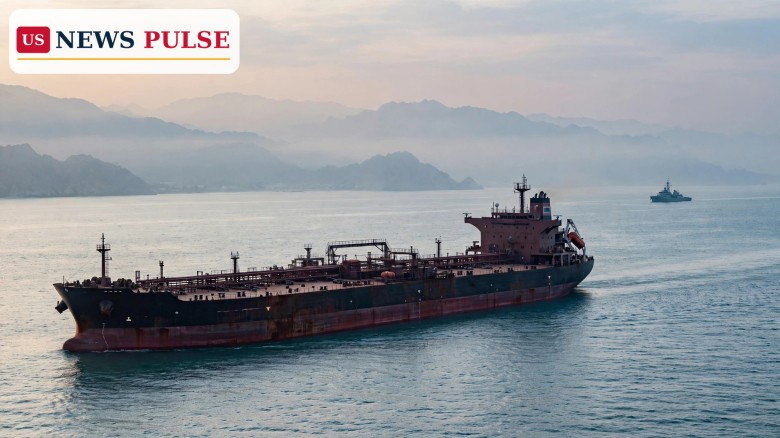
The other path is a second round of strikes, and the shipping data shows why that path would hit the world economy immediately. UK Maritime Trade Operations recorded more than 30 attacks on commercial vessels in and around Hormuz, the Gulf of Oman and the Arabian Gulf in October, more than double September's total and above March's 30, the first full month of the war. Since February 28, UKMTO has recorded 145 incidents, and it counts only reports from verified vessels, so the true number could be higher. On Friday alone, a crude oil tanker was struck by an unknown projectile while completing an outbound transit of the strait, and Iran's Revolutionary Guards navy claimed four oil tankers had caught fire and exploded in the strait between Friday and Saturday. Central Command, by contrast, says more than 95 percent of ships have sailed through safely in recent months, and Admiral Cooper said in a video published on Friday: "When I flew over the strait, I saw dozens of commercial vessels transiting... Here's what I didn't see: I didn't see the IRGC out there, at all."
For American voters, the stakes are domestic as well as strategic. The midterms on Tuesday will decide control of Congress, and the war has become a test of Trump's foreign policy in the same campaign in which he is asking voters to "pretend I'm on the ballot." A new round of strikes the day after the vote would be read, fairly or not, as a decision deferred for electoral reasons. A deal, even a preliminary one, would let Trump claim the "non-nuclear Iran" outcome he promised on Friday. Neither outcome is guaranteed by Saturday's statements, which is precisely why both sides are talking and threatening at the same time.
What Happens Next
The immediate test is Doha. If a United States delegation does meet an Iranian delegation there in the coming days, as Al-Araby Al-Jadeed reported, the draft framework's details — the uranium destination, the verification mechanism, the sanctions relief sequence and the guarantors — will be the first things negotiators have to settle. If the meeting does not happen, or if it collapses over the nuclear issue, the November 4 date in the MS NOW report becomes the next focal point.
On the water, UKMTO has advised ships to cross the strait with caution, and the October attack total suggests that advice will stay in place regardless of what happens in Doha. Two fishermen were reported missing and two wounded on Saturday after an "enemy" drone attack struck two fishing boats 14 nautical miles south of Qeshm Island, according to Iran's semi-official Fars news agency — a reminder that the war's daily toll is not confined to tankers and warships.
For the region, the next 72 hours are therefore a race between two clocks: the diplomatic clock in Doha and the military clock that Gulf allies say points to November 4. Khamenei's Saturday order is Tehran's way of saying that if the second clock runs out first, its response will not be limited to the place where the first bomb falls.
Frequently Asked Questions
What did Iran's supreme leader order on Saturday?
Mojtaba Khamenei ordered Iran's armed forces to respond immediately and without geographic limits to any enemy threat, to update the target list covering United States and Israeli assets, and to strengthen intelligence, indigenous defence production and ammunition output.
Is a new United States strike on Iran planned for November 4?
MS NOW reported, citing three senior Gulf Arab officials, that Gulf allies had been briefed to prepare for a short, intense round of strikes as soon as November 4. No strike has been ordered, no final decision has been announced, and the White House has declined to comment on military plans.
What does the reported draft framework propose?
According to Al Arabiya English, Iran would transfer its highly enriched uranium to an agreed third country or reduce its enrichment level, and the Strait of Hormuz would reopen to international traffic within seven days of an initial understanding, matched by United States steps to ease sanctions, blockades and economic restrictions, with independent verification before each phase.
How bad were attacks on Hormuz shipping in October?
UK Maritime Trade Operations recorded more than 30 attacks in and around the strait in October, the highest monthly total of the war, more than double September's total, and 145 incidents since the war began on February 28.
Are the United States and Iran actually talking?
Qatari mediators visited Tehran on Friday, Vice President JD Vance has written to Iran's security chief Mohsen Rezaei, and a United States delegation is reported to be heading for direct talks in Doha. Tehran has confirmed receiving the Vance letter but has not announced a response, and a senior Iranian official has described the Qatari ideas as unacceptable on the nuclear issue.
Related coverage: Iran Strikes November 4 Report: US Warns Gulf Allies as Doha Talks Race to Avert War | Trump Sends Third Aircraft Carrier Toward Iran as War Build-Up Grows | Trump Says Iran War Will Be Wrapped Up Soon as Mediators Return to Tehran
© 2026 US News Pulse. All rights reserved.
 Print
 Save