
Russia 433 Drones Strike Ukraine Power Grid, Leaving Hundreds of Thousands Dark
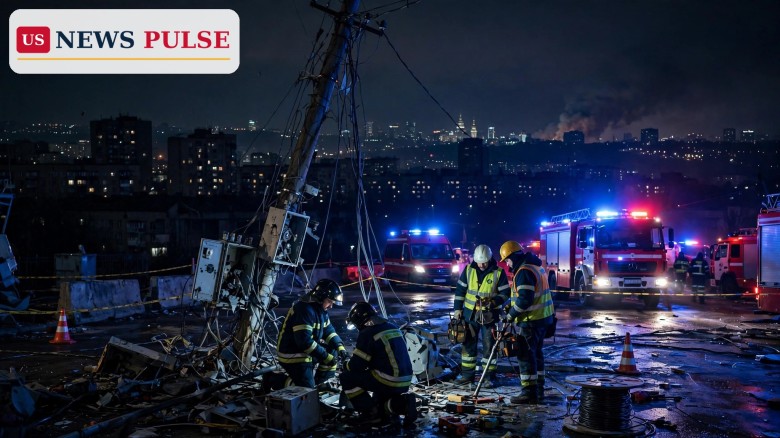
Russia launched 433 long-range drones at Ukraine overnight into Sunday, November 1, 2026, in a mass attack on the country's energy system that left hundreds of thousands of families without electricity, killed one person and injured at least 47 others, according to Ukraine's Air Force and regional authorities. Ukrainian defences shot down or suppressed 371 of the drones, but strikes were recorded at 16 locations and falling debris hit 14 more, in an assault that stretched from Kyiv to the west of the country and forced emergency power cuts in the capital.
The barrage, which began at about 6 p.m. on October 31, was one of the largest single-night drone attacks of the war by number of weapons launched, and it landed as Ukraine heads into winter with its power grid already under repeated strain. President Volodymyr Zelensky said Russia had hit energy infrastructure in at least four regions overnight and urged allies to speed up air-defence help, saying decisions on that support "must be implemented now".
Key Points
- Russia launched 433 drones overnight into November 1, 2026, including 64 jet-powered Shahed drones plus Gerbera and Parodiya decoy drones.
- Ukraine's Air Force said 371 drones were shot down or suppressed; strikes hit 16 locations and debris fell at 14 locations.
- One person was killed and at least 47 injured over the past day, regional authorities reported on November 1.
- Hundreds of thousands of families were left without electricity, Zelensky said, and Kyiv moved to emergency power outages.
- Ukraine also struck back overnight, hitting the Kamensky plant in Russia's Rostov region and a large industrial site in Nizhny Novgorod region, officials said.
What Happened
Ukraine's Air Force said the attack ran overnight from Saturday evening into Sunday morning. The weapons included Shahed attack drones, 64 of them jet-powered, alongside Gerbera and Parodiya-type decoy drones designed to confuse air defences. By Sunday morning, dozens of Russian drones were still reported in Ukrainian airspace, and Kyiv had already faced six separate drone alerts since midnight.
The human toll was spread across the country. In Dnipropetrovsk Oblast, 17 people were injured over the past 24 hours, including three children, Governor Oleksandr Hanzha said. In Donetsk Oblast, one person was killed in Sloviansk and eight more were injured across the region, Governor Vadym Filashkin reported. Sumy Oblast recorded 12 injured, and its regional military administration said air-raid sirens had sounded for 23 hours and 57 minutes — almost the entire day.
Seven people were injured in Kharkiv Oblast, including a 16-year-old girl, Governor Oleh Syniehubov said. A 14-year-old was injured in Poltava Oblast, and one person each was injured in Volyn Oblast and Kyiv Oblast. Attacks were also reported in Cherkasy, Khmelnytskyi, Kirovohrad, Lviv, Luhansk, Rivne, Vinnytsia and Zhytomyr oblasts, though those reports carried no confirmed casualties at the time of publication.
The energy damage was the clearest strategic target. In Zhytomyr region, more than 650 settlements were left without electricity after strikes on energy infrastructure, regional military administration head Vitalii Bunechko said. In Dnipropetrovsk region, almost 100,000 consumers lost power after repeated attacks on critical infrastructure. Damage to energy infrastructure was also reported in Vinnytsia, where a communications tower and homes were damaged.
In Kyiv, DTEK, Ukraine's largest private energy company, introduced emergency power outages on November 1 because rolling outage schedules could no longer be maintained. DTEK said the electricity situation in the capital had worsened after a repeated Russian strike on a thermal power plant on October 30, and earlier attacks. On the evening of October 30, three drones hit a critical infrastructure facility in Kyiv, leaving parts of the Obolonskyi, Darnytskyi, Desnianskyi and Podilskyi districts without electricity. Three DTEK workers were injured in the latest overnight attacks.
Background and Context
Russia's campaign against Ukraine's energy grid is not new, but its timing matters. With winter approaching, strikes on power plants, substations and transmission lines test both the physical grid and the repair crews who must work, often at night and under threat of further attack, to restore supply. DTEK said on Sunday that energy workers were doing everything possible to keep the system on schedule "even in such a difficult situation" and to restore damaged equipment when it was safe to do so.
The scale of Sunday's attack also reflects a change in the weapons themselves. Jet-powered Shaheds fly faster than earlier models, shortening warning times, while large numbers of decoy drones are meant to soak up interceptor missiles and radar attention. Ukraine's claim that 371 of 433 drones were downed or suppressed still leaves more than 60 weapons that either struck targets or fell as debris — enough, when aimed at infrastructure, to cause widespread outages even in a largely successful defence.
The overnight exchange was two-sided. Russia's Defence Ministry said its forces had downed 235 Ukrainian drones over Russian regions overnight. In Nizhny Novgorod region, Governor Gleb Nikitin said a large-scale overnight Ukrainian drone attack caused "significant damage" to an industrial facility in the Kstovo district and a major fire, with more than 100 drones destroyed over the region. Ukrainian monitoring groups named the target as a LUKOIL refinery, but independent confirmation of the exact facility hit and the full scale of damage was not available at publication. Zelensky said Ukraine had also hit the Kamensky plant in Russia's Rostov region, which he said was involved in the manufacture of Russian missiles.
The attack came as a separate, local ceasefire around the Ukrainian town of Oleshky — brokered in part by Melania Trump — was due to end on Sunday evening, a reminder that even limited humanitarian pauses have not stopped the wider war. For readers following that story, see our earlier coverage of the Oleshki evacuation and the return of Oleshky evacuees after 1,711 days, as well as the refinery strike that ended an earlier pause.
Russia 433 Drones Ukraine Power Attack
What makes the November 1 attack stand out is the combination of scale and target. Four hundred and thirty-three drones is a very large single-night salvo, and the reported pattern — strikes in 16 places, debris in 14 more, energy infrastructure in at least four regions — points to a deliberate attempt to overwhelm defences and degrade the grid at many points at once, rather than a single symbolic strike.
That matters for civilians in a practical way. A single damaged substation can be repaired; damage across several regions at once strains crews, spare parts and the ability to reroute power. Emergency outages in Kyiv, more than 650 settlements dark in Zhytomyr, and nearly 100,000 consumers without power in Dnipropetrovsk together describe a system absorbing hits faster than it can be fully restored — the exact pressure a winter energy campaign is designed to create.
It also matters for Ukraine's air-defence arithmetic. Shooting down 371 drones is a high interception rate, but it consumes interceptor missiles, wears out crews and still leaves debris falling on homes and streets. The presence of jet-powered Shaheds and decoys suggests Russia is investing in making each salvo harder and more expensive to stop, which is why Zelensky's appeal on Sunday focused not on sympathy but on the speed of allied air-defence decisions.
Reactions and Quotes
President Volodymyr Zelensky said on November 1: "As things stand, hundreds of thousands of families remain without electricity." He added: "Russia is destroying our infrastructure and killing our people right now ... accordingly, decisions regarding air defense must be implemented now," and called on allies to speed up their support.
DTEK said: "Energy workers are working to restore damaged equipment, when it is safe to do so." The company had earlier said workers were doing everything possible to keep the system on schedules even in difficult conditions, before the move to emergency outages in Kyiv.
Regional officials gave the local picture in stark terms. Sumy Oblast's regional military administration reported 12 injured and noted: "Air raid sirens sounded in the region for an entire day. 23 hours 57 minutes." Zhytomyr's Vitalii Bunechko said the enemy had "once again attacked the region's energy infrastructure" and that more than 650 settlements had lost power, with no fatalities or injuries reported from those strikes at that stage.
On the Russian side, Nizhny Novgorod Governor Gleb Nikitin said a large-scale overnight Ukrainian drone attack caused "significant damage" to an industrial facility and that more than 100 drones were destroyed over the region. Russia's Defence Ministry said 235 Ukrainian drones were downed over Russian regions overnight. Those claims, like Ukraine's interception figures, come from the respective militaries and could not be independently verified in full at publication.
Why It Matters
For Ukraine, the November 1 barrage is a warning about the winter ahead. Energy infrastructure is civilian infrastructure: when power fails, heating, water pumping, hospitals, schools and communications all suffer, and the burden falls hardest on families already living through almost four years of war. The fact that three energy workers were injured while keeping the lights on underlines that repair itself has become a front-line job.
For the United States and its allies, the attack tests the pace of air-defence support. Interceptor stocks, radar coverage and the political speed of decisions are now as important as the weapons themselves. Zelensky's message on Sunday was explicit: the help that matters is help that arrives in time for the next salvo, not after it.
For the wider war, the overnight exchange shows both sides now fighting a drone war at industrial scale. Russia launched 433 drones in one night; Ukraine says it stopped most of them and still struck Russian industrial targets. That scale makes single incidents harder to read in isolation — the pattern, night after night, is the story — and it raises the stakes for any negotiation, since each side can point to damage inflicted and damage absorbed.
What Happens Next
Repair crews will work through Sunday and into the week to restore power in Kyiv, Zhytomyr, Dnipropetrovsk and other affected regions, with emergency outages in the capital likely to continue until the grid stabilises. Regional authorities are expected to update casualty and outage figures as damage assessments come in, and those numbers may rise.
Ukraine's Air Force will publish its fuller overnight assessment, including how many drones were shot down by type and where debris fell. Watch also for any allied response to Zelensky's air-defence appeal — new commitments, faster deliveries or statements from Washington and European capitals in the coming days.
The end of the Oleshky local ceasefire on Sunday evening is another watchpoint: whether humanitarian crossings continue, and whether the wider fighting around the Dnipro intensifies. Further overnight drone salvos are likely, given the pattern of recent weeks, and the next large attack will test whether the grid and its defenders can absorb another night like November 1.
Frequently Asked Questions
How many drones did Russia launch at Ukraine overnight into November 1, 2026?
Ukraine's Air Force reported 433 long-range drones launched from Saturday evening, including 64 jet-powered Shaheds plus Gerbera and Parodiya decoy drones. It said 371 were shot down or suppressed.
How many people were killed or injured?
Regional authorities reported one person killed and at least 47 injured over the past day, including children in Dnipropetrovsk and Kharkiv oblasts and three injured DTEK energy workers.
How many homes lost power?
President Zelensky said hundreds of thousands of families remained without electricity. More than 650 settlements lost power in Zhytomyr region and almost 100,000 consumers were cut off in Dnipropetrovsk region, with emergency outages introduced in Kyiv.
Did Ukraine strike back?
Yes, according to officials on both sides. Russia said 235 Ukrainian drones were downed overnight; Ukraine said it hit the Kamensky plant in Rostov region, and Nizhny Novgorod's governor reported significant damage to a large industrial facility in Kstovo.
Why is Ukraine's power grid being targeted before winter?
Strikes on energy infrastructure aim to degrade heating, water, hospitals and communications as cold weather arrives, putting pressure on civilians and on the repair crews who must restore supply under fire.
Sources: Kyiv Independent, November 1, 2026; Reuters, November 1, 2026; The New Voice of Ukraine, November 1, 2026; Ukraine Air Force statement via regional reports, November 1, 2026.
© 2026 US News Pulse. All rights reserved.
 Print
 Save