
Trump Calls Habba $50 Million Contract 'Unacceptable' After Pardon Report
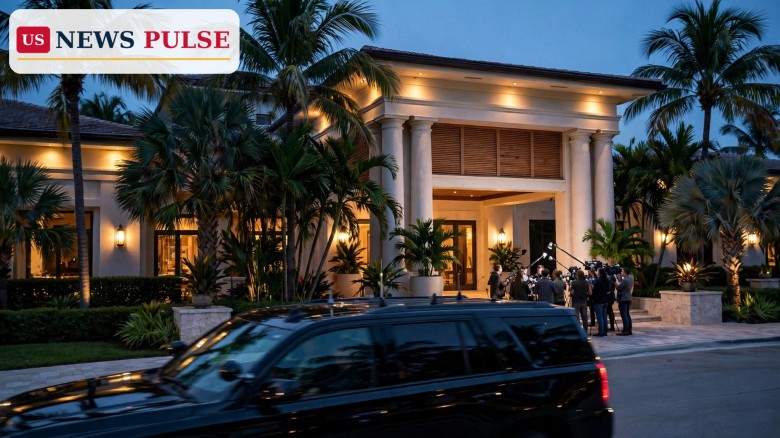
President Donald Trump has said it was "unacceptable" for his former personal lawyer Alina Habba Mildon to secure a $50 million contract while she was serving at the United States Department of Justice, after a New York Times report linked the deal to the family of a Venezuelan banker who later received a presidential pardon. The Trump Habba contract, which Trump condemned in blunt terms to reporters at his Mar-a-Lago club in Palm Beach, Florida, on Saturday, October 31, 2026, has become a fresh test of how the White House handles questions about conflicts of interest, private enrichment and pardons — just three days before the November 3 midterm elections.
Trump did not merely distance himself from the arrangement. He said he had told Habba Mildon directly that he did not want her to be paid, called the deal "totally obnoxious and outrageous" and "terrible", and said she had used her relationship to obtain it. Habba Mildon, for her part, has denied any connection between her employment arrangement and the pardon, saying she was never paid for a pardon, never met anyone at the White House or the Justice Department about a pardon, and never did any work for a pardon for anyone. That denial, and the president's condemnation, now sit side by side in the public record — and neither, on its own, resolves the questions the timing of the deal raises.
Key Points
- Donald Trump said on Saturday, October 31, 2026, at Mar-a-Lago, that Alina Habba Mildon's $50 million contract was "unacceptable", "totally obnoxious and outrageous" and "not acceptable at all".
- The New York Times reported last week that the family of Venezuelan banker Julio Herrera Velutini guaranteed Habba Mildon more than $50 million over four years to serve as general counsel at Concord Partners, at $10 million a year plus bonuses.
- Habba Mildon signed the contract in late October 2025 while serving as acting US attorney for New Jersey, days after Concord Partners was registered, according to the Times.
- Herrera had faced federal bribery charges, reached a plea agreement in August 2025, and was pardoned by Trump on January 15, 2026, according to the Justice Department's website.
- Habba Mildon has denied any connection between the employment deal and the pardon, saying she was never paid for a pardon and never worked on one for anyone.
What Happened
Speaking to reporters at Mar-a-Lago on Saturday, Trump was asked about the contract that the Times had reported the previous week. His answer, as reported by Reuters, was unusually direct for a president speaking about a former aide. "I thought it was totally obnoxious and outrageous, and it's not acceptable," he said. "Not acceptable at all." He added: "I thought it was terrible. I told her, and I said, 'I don't want her paid.' I thought we had somebody speak to the people that did it, and she used her relationship to do that. And it was far too much."
The Reuters account, carried by outlets including the Times of India, The Daily Star and Arab News, is consistent in its essentials: the president objected to the payment, said he had told Habba Mildon so, and framed the size of the deal — more than $50 million over four years — as itself part of the problem. What Trump did not do, in the reporting read for this article, was say that the contract had been cancelled, that any payment had been returned, or that any formal ethics review had been opened. It also remains unclear, in that reporting, whether the four-year contract can be terminated before its scheduled completion.
Habba Mildon's response, reported last week, was equally direct, though in the opposite direction. She said she was never paid for a pardon, never met with anyone at the White House or the Justice Department about a pardon, and never did any work for a pardon for anyone. Her statement, as reported, draws a sharp line between two things that critics have joined together: a lucrative private employment contract, signed while she held a senior Justice Department post, and a presidential pardon granted months later to a member of the family behind that contract. Whether that line holds will depend on facts that have not yet been published — above all, on what work, if any, Habba Mildon did for Concord Partners, and on who, if anyone, raised Herrera's case with the White House.
Background and Context
Alina Habba Mildon first came to national attention as one of Trump's personal lawyers, representing him in civil cases before he returned to the White House. She later served as acting US attorney for New Jersey, one of the most senior federal law enforcement posts in the country. That role matters to this story for a simple reason: a federal prosecutor holds power over other people's liberty, and the public expects that power to be exercised without regard to private financial interest. A contract worth $10 million a year, signed while in that post, with a company linked to a family whose patriarch was facing federal charges, therefore attracts scrutiny even if no wrongdoing is ultimately shown.
The timeline reported by the Times is the heart of the controversy. In late October 2025, according to the newspaper, Habba Mildon signed a contract with Concord Partners, a company linked to Herrera's family that had been registered only days earlier. The deal guaranteed her more than $50 million over four years as general counsel, at $10 million a year plus bonuses. Herrera, a Venezuelan banker, had been facing US felony bribery charges. He reached a plea agreement in August 2025. On January 15, 2026, according to the Justice Department's website, Trump pardoned him. The sequence — contract, plea, pardon — does not by itself prove that one caused the other, and Habba Mildon's denial is on the record. But the sequence is why the story has travelled: it joins a private payday, a public office and a presidential pardon in a single narrative, and it does so in the final days of a midterm campaign in which Trump has presented himself as a scourge of corruption.
Trump Habba Contract: What Is Known, and What Is Not
What is known is specific and sourced. The Times reported the contract, its value, its annual payment and its bonuses, and the timing of its signing. Reuters reported Trump's response at Mar-a-Lago, in his own words. The Justice Department's website records Herrera's pardon date. Habba Mildon's denial has been reported in her own terms. Those are the confirmed building blocks of this story, and this article does not go beyond them.
What is not known is equally important, and this article does not fill the gaps. It is not known, from the reporting read here, whether Habba Mildon received any payment under the contract, or how much. It is not known what work she performed for Concord Partners, or whether that work touched on Herrera's criminal case in any way. It is not known who, in Trump's account, spoke to "the people that did it", or what was said. It is not known whether any ethics official at the Justice Department reviewed the contract at the time it was signed, or whether any review is under way now. And it is not known whether the pardon of Herrera was considered through the normal Justice Department pardon process, or through another route. Until those facts are published, the story should be described for what it is: a reported contract, a presidential condemnation, a denial, and a set of unanswered questions about the space between them.
Reactions and Quotes
Beyond Trump and Habba Mildon, there has been no detailed public response in the reporting read for this article from Concord Partners, from Herrera or his family, or from the Justice Department. That silence is itself notable, because it leaves the two most important voices — the company that offered the contract and the department where Habba Mildon served — unheard on the central questions: why was the contract offered at that level, and was it reviewed?
The political reaction, in the first hours, has been shaped less by formal statements than by the timing. The story broke in the week before the midterms, when both parties are competing to define the other as corrupt, and when Trump's own campaign has leaned heavily on attacks on his opponents' ethics. A story in which the president himself calls a former aide's deal "unacceptable" is awkward for that message in two ways: it concedes that something improper happened close to the president, and it invites the question of why a president who objected did not stop it. Democrats are likely to press that question; Republicans, for their part, may argue that Trump's public condemnation is itself evidence that he does not tolerate such deals, even by his own former lawyers.
Why It Matters
This story matters for three reasons. First, it concerns the integrity of federal prosecution. The acting US attorney for New Jersey is not a ceremonial post; it carries decisions about who is charged, who is offered a plea, and who is left alone. If the public believes that such a post can be held alongside a $10-million-a-year private retainer from a family with a member facing federal charges, confidence in those decisions suffers, whether or not any individual decision was affected. Second, it concerns the pardon power, which is among the most unchecked powers a president holds. Pardons are supposed to be acts of mercy or justice, not rewards, and any suggestion that a pardon followed a lucrative arrangement — even if that suggestion is denied and unproven — damages the power itself.
Third, it matters because of who said it. Trump is not an outside critic of Habba Mildon; he is her former client, her former boss, and the president who pardoned Herrera. When he calls the deal "totally obnoxious and outrageous", he is not merely commenting on a news story. He is, in effect, conceding that the arrangement should not have happened, while leaving open whether anything will now be done about it. That combination — condemnation without a stated consequence — is what will keep this story alive beyond the weekend.
What Happens Next
Several things could happen next, and the order in which they happen will shape the story. Habba Mildon or Concord Partners could issue a fuller statement, addressing whether any payment was made, what work was done, and whether the contract remains in force. The Justice Department could say whether the contract was reviewed when it was signed, or whether it is being reviewed now. The White House could say whether Trump intends to take any action beyond his public remarks, or whether he regards the matter as closed by his condemnation. And Congress, or an ethics watchdog, could ask for documents — the contract itself, any ethics filings, and any record of how Herrera's pardon was considered.
Frequently Asked Questions
What did Trump say about the Habba contract? At Mar-a-Lago on Saturday, October 31, 2026, Trump said it was "unacceptable" for Alina Habba Mildon to secure a $50 million contract while serving at the Justice Department, calling it "totally obnoxious and outrageous", "terrible" and "far too much", and saying he told her he did not want her paid.
What was the contract? According to the New York Times, the family of Venezuelan banker Julio Herrera Velutini guaranteed Habba Mildon more than $50 million over four years as general counsel at Concord Partners, at $10 million a year plus bonuses, signed in late October 2025 while she was acting US attorney for New Jersey.
Who is Julio Herrera Velutini? A Venezuelan banker who faced US federal bribery charges, reached a plea agreement in August 2025, and was pardoned by Trump on January 15, 2026, according to the Justice Department's website.
What has Habba Mildon said? She has denied any connection between the employment deal and the pardon, saying she was never paid for a pardon, never met anyone at the White House or Justice Department about a pardon, and never did any work for a pardon for anyone.
Has anyone been charged over the contract? No. In the reporting read for this article, no charge, formal ethics finding or cancellation of the contract has been announced, and it remains unclear whether the contract can be terminated early.
Related coverage on US News Pulse: Rule of Law project: former DOJ prosecutors build cases Trump DOJ won't touch, Judge rules Bill Essayli unlawfully serving as LA's top federal prosecutor, and Hegseth fires Brett Sylvia, Pentagon top planner, as Trump weighs Iran strikes.
© 2026 US News Pulse. All rights reserved.
 Print
 Save