
Supreme Court Rejects Trump Bid to Set Aside California Ballots Before Midterms
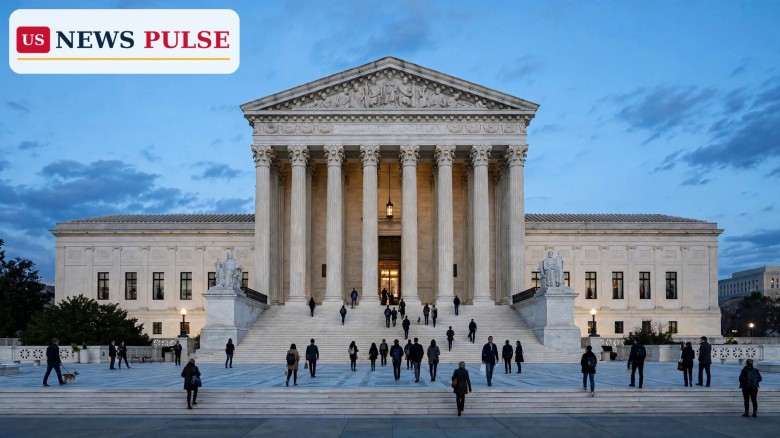
The Supreme Court rejects Trump California ballots bid on Monday, November 2, 2026, declining the Justice Department's emergency request to force California to segregate mail ballots cast by about 20,000 registered voters the administration alleges may not be citizens. The decision, issued on the eve of the November 3 midterm elections, leaves California's existing ballot procedures in place as voters decide control of Congress, and none of the justices publicly dissented.
Key Points
- The Supreme Court on November 2 declined the Justice Department's emergency request to force California to segregate ballots from about 20,000 registered voters on a federal suspected-noncitizen list.
- No justice publicly dissented from the decision, which was issued hours before the November 3 midterm elections.
- The administration wanted the ballots set aside and kept from being counted while it challenged the voters' eligibility; California said its own safeguards already protect election integrity.
- Lower courts had already refused the same request: Judge David Carter on October 28 and a divided 9th Circuit panel on October 30.
- The ruling is the second major California ballot defeat for the administration on November 2, after Judge James Boasberg's preliminary injunction barring a related federal demand.
What Happened
The Justice Department filed its emergency application with the Supreme Court on November 2, the day before an election in which all 435 House seats, 35 Senate seats and 36 governorships are at stake. The administration asked the Court to direct California to set aside mailed ballots cast by anyone on a federal list of about 20,000 registered voters it alleges may not be citizens, and to prevent those ballots from being counted while the government challenged their validity.
The Court declined the request without a published dissent. The brief order means the ballots in question will be handled under California's normal procedures on Election Day, rather than under the special segregation regime the administration sought. It does not, by itself, decide the underlying lawsuit over the voters' eligibility, which can continue through the ordinary courts — but it removes the last-minute change to how California counts votes in this election.
The administration's argument was that, once the challenged ballots are mixed in with lawful ballots, they cannot be separated again. In its filing, the Justice Department wrote: “Once California commingles the challenged ballots with lawful ones, there is no way to get the challenged ballots back.” California countered that it already has safeguards to protect election integrity and that the federal list itself was, in its words, “highly suspect” — assembled through a process the state says has not been shown to be credible.
Background: How the California Ballot Fight Reached the Supreme Court
The dispute began when the Justice Department sued California in October, claiming the state was preventing enforcement of the federal law that makes it a criminal offence for noncitizens to vote in federal elections. Federal officials obtained California voter-roll data during the summer and assembled a list, drawn from U.S. Citizenship and Immigration Services and Homeland Security Investigations records, of people they said might not be citizens. California officials and election experts questioned the list's accuracy from the start.
On October 28, U.S. District Judge David Carter rejected the Justice Department's request for a temporary restraining order that would have kept ballots connected to voters on the federal list from being counted until their citizenship was verified. Carter wrote that the government had failed to provide sufficient evidence that it used a “credible” process to create the list, and he warned in memorable terms: “Never before in American history has the federal government, on the eve of an election, sought to coerce a state and local government to abandon their own Constitutional election procedures and bend to the will of the Executive Branch.”
On October 30, a divided panel of the 9th U.S. Circuit Court of Appeals also sided with California, by 2-1. The appeals court said forcing California to use the federal list could bar valid votes from being cast and jeopardise the Los Angeles County election, concluding: “As the district court found — and we discern no clear error — there is no feasible way to identify and segregate the ballots of specific individuals without potentially catastrophic effects on the entire system.” In dissent, Circuit Judge Patrick Bumatay called the government's request reasonable, writing: “This solution would not cancel any vote but would allow time to verify the eligibility of suspected noncitizens.”
The same day, a separate ruling in Washington pointed the same way. Judge James Boasberg issued a preliminary injunction barring the Department of Homeland Security from demanding that California segregate ballots based on federal suspected-noncitizen lists, ruling that California may decide for itself what procedures to use for verifying citizenship and that the executive branch lacks authority to impose its preferred procedures unilaterally. In that case, the court found the federal lists flawed, including many people wrongly listed — a finding California has cited throughout the dispute.
Supreme Court Rejects Trump California Ballots Bid: What the Justices Decided
The Supreme Court's decision is best understood as a refusal of emergency relief, not a final ruling on whether any individual voter on the federal list is or is not a citizen. Emergency applications ask the Court to change the status quo immediately, before the full case is heard, and the Court declines most of them. Here, the practical effect is clear: California will count its midterm ballots under the procedures it had already adopted, and the administration's segregation demand will not be imposed for this election.
That matters because the administration had warned election officials in all states that they could be prosecuted if they knowingly allowed noncitizens to vote, and because the California request was, in the words of USA Today, “a rare attempt by a president to get involved in the administration of elections.” The Constitution gives states and Congress, but not the executive branch, responsibility for regulating federal elections — a point California pressed at every stage and that underpinned both lower-court refusals.
Election-law experts had been sceptical of the application before the Court acted. Rick Hasen, an elections law expert at the University of California, Los Angeles, called the Supreme Court appeal a “Hail Mary petition” — a long-shot filing made on the eve of an election, when courts are especially reluctant to change voting rules. The Court's unsigned order, with no public dissent, bears out that scepticism without offering a written explanation of its reasoning, as is common for emergency orders.
Reactions and Quotes
California Attorney General Rob Bonta had argued before the ruling that there is “no widespread voter fraud” and that “the federal government has no right to interfere in California's elections.” His office's position throughout has been that California's existing checks — including its voter-registration and ballot-verification procedures — are sufficient, and that the federal list, built from immigration records, cannot reliably identify who is and is not eligible to vote.
The administration, for its part, has maintained that it is enforcing a straightforward criminal prohibition: noncitizens may not vote in federal contests, and California is impeding that enforcement. That framing — federal criminal law versus state election administration — is the legal core of the case, and it is the issue the underlying lawsuit will continue to litigate even after this emergency defeat.
Judge Carter's October 28 language has become the most quoted passage of the dispute, and it captures why the case drew national attention. A federal court had never before, in his assessment, been asked on the eve of an election to coerce a state into abandoning its own constitutional election procedures. The Supreme Court's refusal to grant that request, hours before polls opened, keeps that precedent from being set in this election.
Why It Matters
The decision matters first for California voters. About 20,000 people were on the federal list, and the administration's request would have treated their mailed ballots differently from every other voter's — set aside, and potentially uncounted, while their eligibility was challenged. Lower courts warned that the segregation exercise itself could disrupt the count, particularly in Los Angeles County, one of the largest election jurisdictions in the country. The Supreme Court's order removes that risk for the midterms.
It matters second for the balance of power over elections. President Donald Trump has tried to expand the federal government's role in election administration and has alleged, without evidence, that noncitizens are influencing outcomes by voting illegally. A Supreme Court order forcing California to segregate ballots would have been a significant step toward that expanded federal role. The Court's refusal, with no public dissent, leaves the traditional allocation — states run elections, Congress sets the framework — intact for this cycle.
It matters third as a signal about last-minute election litigation. Courts at every level in this case — district court, appeals court and now the Supreme Court — declined to change the rules in the final days before voting. That consistency reinforces a principle courts often invoke near elections: changing procedures at the last minute creates confusion and risks disenfranchising lawful voters, and the burden for justifying such a change is very high.
What Happens Next
California's midterm ballots will be counted under the state's existing procedures, and the results in the state's races — including closely watched House contests that could help decide control of the chamber — will be certified on the normal timetable, with a December 11 certification deadline noted in earlier coverage of the dispute. The underlying Justice Department lawsuit over the voters' eligibility can continue, but any further relief would come through the ordinary litigation process, not through an emergency order on the eve of voting.
The decision also closes the book, for this election, on the administration's two-track California ballot campaign: the emergency application to the Supreme Court and the related Department of Homeland Security demand blocked by Judge Boasberg. Both have now failed. Attention now turns to the votes themselves, with results expected through Tuesday night and into the following days as mail ballots are processed.
Frequently Asked Questions
What did the Supreme Court decide on November 2, 2026?
The Court declined the Justice Department's emergency request to force California to segregate mail ballots cast by about 20,000 registered voters the administration alleges may not be citizens. No justice publicly dissented.
Does this mean the ballots will be counted?
Yes, under California's existing procedures. The Court's order means the special segregation regime the administration sought will not be imposed for this election; the underlying lawsuit over eligibility can continue separately.
Why did lower courts refuse the same request?
Judge David Carter ruled on October 28 that the government had not shown a credible process for creating its list, and a divided 9th Circuit panel ruled on October 30 that segregating the ballots could bar valid votes and jeopardise the Los Angeles County election.
What was Judge Boasberg's separate ruling?
On November 2, Judge James Boasberg issued a preliminary injunction barring the Department of Homeland Security from demanding California segregate ballots based on federal suspected-noncitizen lists, finding the lists flawed and the executive branch without authority to impose its preferred procedures.
What happens next in California?
Ballots will be counted and certified on the normal timetable. The administration's emergency bid has failed, and any further challenge to individual voters' eligibility would proceed through ordinary litigation, not a last-minute order.
Related coverage: Judge Boasberg blocks the Trump demand to segregate California ballots, NBC News final poll: Democrats lead 52-45 as Trump disapproval hits 60%, and El-Sayed raises $2.4 million in one day after Stevens backs Rogers in Michigan.
© 2026 US News Pulse. All rights reserved.
 Print
 Save