
Kennedy Center Closure Filing Says Money, Not Repairs, Drove Shutdown Push
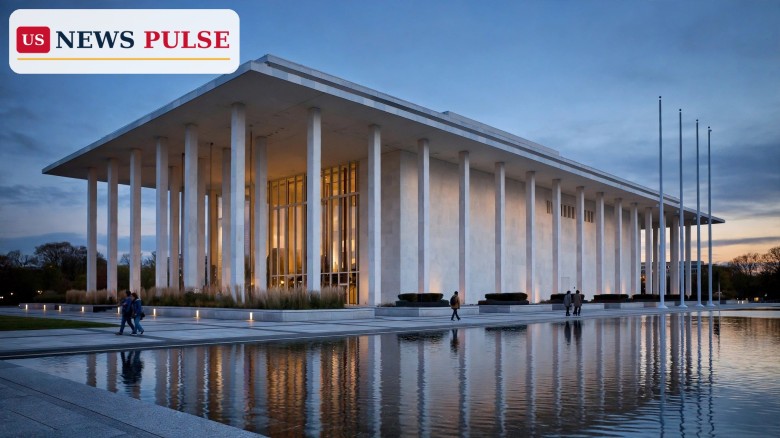
The Kennedy Center closure fight took a new turn this week, as lawyers for Representative Joyce Beatty argued that the push to shut the Washington arts institution for two years was driven by money troubles, not by the dangerous building conditions cited by its leadership. The filing, lodged on Friday night and reported over the weekend, puts internal messages at the centre of a dispute subject to a court order keeping the centre open.
Key Points
- Beatty's lawyers cite a September exchange in which board Vice Chair Jennifer Fischer told Commerce Secretary Howard Lutnick the centre was "broke" and "burning money."
- The filing says leaders sought a shutdown to hide financial decline, not because renovations required a full closure.
- It says trustees never saw a revised estimate putting a phased renovation's extra cost at about $41 million, far below the $303 million used to justify closure.
- It disputes a claim that $257 million in congressional renovation money must be spent by fiscal 2029, saying the real deadline is fiscal 2034.
- The centre referred questions to the Justice Department; a judge's order keeping it operating remains in place.
What Happened
Beatty, an Ohio Democrat and ex officio board member, asks United States District Judge Christopher Cooper to reject the Trump administration's request to dissolve a preliminary injunction blocking the shutdown. Her lawyers say renewed board votes to close the building repeated the procedural failures Cooper found unlawful in May, when he ruled the board had failed to consider closure's consequences and had relied on insufficient information.
The filing centres on a September 10 text from the centre's chief financial officer to President Charles Matthew Floca, memorialising a Fischer-Lutnick conversation. In that account, Fischer said the centre needed to shut down, was broke, and had borrowed money to pay its bills. CNN reported September messages quoting Fischer as telling Lutnick: "She told him we need to get shut and need a unanimous vote."
The filing also alleges Floca gave trustees an incomplete financial account before the September closure vote. In a two-page memo, he described the operating deficit as moving unfavourably and blamed some difficulties on prior management. Beatty's lawyers say it omitted recent information and ignored the Trump takeover's effects. Before the meeting, Floca circulated a draft resolution warning of "certain fiscal collapse within weeks" and an imminent inability to meet payroll or maintenance obligations.
Background/Context
President Donald Trump remade the Kennedy Center after returning to office, replacing its board and becoming chairman. Trustees voted in December to add his name to the institution, prompting protests, performer cancellations and donor withdrawals, according to filings and earlier reporting. A judge later ordered the name removed, ruling only Congress could change it, and the board has since voted again to restore a form of Trump recognition alongside a two-year closure.
At a June 1 Audit and Finance Committee meeting, officials were told ticket sales had fallen to pandemic-era levels, with roughly $4 million in sales since January 2026. Fundraising fell sharply after the renaming, with pledges dropping by more than 100 percent because of adjustments and write-offs, the filing says. Yet it also argues collapse warnings were overstated: internal documents suggested millions available for months of operations, though some funds were held by a foundation and could face clawback, and the centre held $180.6 million in endowment and investment assets as of fiscal 2024.
Kennedy Center Closure Filing Challenges the Renovation Case
The technical dispute is whether phased renovation was feasible. Beatty's lawyers say the centre's own consultant, Jones Lang LaSalle, found it technically feasible at a substantially lower extra cost than management claimed: about $41 million, versus Delta Consulting Group's $303 million. Floca, they say, told trustees costs would double under a phased approach, based on a preliminary estimate, while a revised $41 million figure was never shown to the board before it approved closure. "The record now confirms that they knew that estimate was wrong," the attorneys wrote.
The filing also challenges the timetable. Officials contended $257 million appropriated by Congress must be spent by the end of fiscal 2029. Beatty's lawyers say the real deadline is fiscal 2034, removing a key urgency argument for immediate, full closure.
Reactions/Quotes
Beatty framed the filing as a duty to the institution and the public. "The court told this Board to do its job. As a trustee, I have a duty to be accountable. Yet Trump and his handpicked management failed to follow the law, hid facts that didn't fit their narrative, and rubberstamped Trump's wishes," she said. "I have a duty to protect this living memorial to President Kennedy on behalf of the American people."
Her lawyers put the motive bluntly: "In short, the closure was motivated, not by the need to conduct renovations, but by the desire of various Defendants, including the Board's Vice Chair, to hide the Kennedy Center's current struggles and their embarrassment." The Kennedy Center referred CNN to the Justice Department, which CNN said it had contacted.
Why It Matters
The case concerns more than one building. The Kennedy Center is the only memorial to President John F. Kennedy in Washington, and its board tests how far a president's appointees can reshape a congressionally created cultural institution. If Beatty's account is accepted, the closure votes were a political and reputational strategy, not a neutral facilities decision. If the administration prevails, the centre genuinely cannot be repaired safely in phases, and delay would waste money and endanger visitors.
The dispute also tests how courts police information inside public boards. Beatty's central claim is procedural: trustees lacked the revised cost estimate, the fuller financial picture and the correct spending deadline before voting. That echoes Cooper's May ruling, which blocked shutdown while allowing necessary renovations to proceed. Programming continues in the REACH, and the Kennedy Center Honors moved to the Capital One Arena.
What Happens Next
Cooper must decide whether to dissolve the injunction, as the administration requests, or keep it in force while the case proceeds. Watch for a Justice Department or centre response to the "broke" messages and cost dispute, any hearing or request for evidence on the centre's true cash position, and whether REACH programming continues uninterrupted. The spending-deadline question may prove decisive: if the money need not be spent by 2029, the case for rushing into full closure weakens considerably.
Frequently Asked Questions
What does the filing allege? That leaders pushed a two-year closure mainly over financial troubles and embarrassment, not building condition, and gave trustees incomplete information before voting.
Who is Joyce Beatty? An Ohio Democrat in Congress and ex officio Kennedy Center board member who sued over the Trump naming and closure plans.
Is the centre closed now? No. A judge's order keeping it operating is in place, with programming continuing in the REACH, while the administration seeks to lift the order.
What is the cost dispute? Management cited $303 million extra for phased work; Beatty's lawyers say the centre's own consultant put it at about $41 million, unseen by trustees.
Related coverage: Harvard admissions lawsuit dismissed as judge rejects Trump records case, Trump's 127 promises kept list on election eve, and Judge dismisses FBI officials case over Hunter Biden laptop testimony.
© 2026 US News Pulse. All rights reserved.
 Print
 Save