
DOJ Charges 63 People in Voting Cases Across 15 States on Election Eve
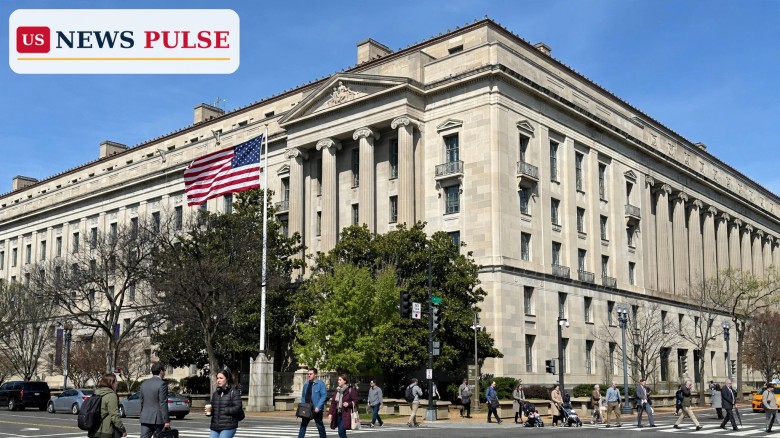
The United States Justice Department announced charges against 63 people in 15 states for election-related crimes on Monday, November 2, 2026, less than a day before Americans voted in the midterm elections. The DOJ voting charges cover alleged illegal voting in federal elections, false claims of United States citizenship, and fraudulent voter registration. Officials called it the largest surge of voter-fraud arrests since President Donald Trump returned to office.
Key Points
- Federal prosecutors charged 63 people across 15 states in cases announced on November 2, 2026, the day before the midterms.
- The cases allege noncitizen voting, false claims of US citizenship, and fraudulent registration, spanning the 2022, 2024 and 2026 cycles.
- Four of the 63 were described as unlawfully present; the status of the others was not fully detailed.
- The department said 195 noncitizens in 25 states were charged in the past nine weeks, and 239 people in total since Trump returned to office.
- All charges are allegations, not convictions, and every defendant is presumed innocent unless a court finds otherwise.
What Happened
The announcement gathered cases from federal districts across the country into one national release. The conduct was connected mainly to the presidential election of November 5, 2024, but also included allegations from the 2022 midterms and 2026 primaries. That breadth matters: the release was not a claim about ballots cast on Election Day itself, but a round-up of prosecutions built up over months and, in some cases, years.
In North Carolina, prosecutors charged 18 people, the largest state group. One defendant, a 34-year-old Guatemalan national from Robeson County, was accused of falsely claiming citizenship and voting as a noncitizen in 2020 and 2024. Another North Carolina case involved a defendant who allegedly registered in 2000 and voted in 12 general elections, while a further case involved a Kenyan permanent resident accused of voting in nine general elections and nine primaries between 2008 and 2026.
In Georgia, prosecutors charged Benito Covarrubias Iniguez, 64, a Mexican national, with falsely claiming US citizenship to vote in a federal election. In Tennessee, two indictments were unsealed on November 2, against a Mexican citizen accused of voting in Haywood County in 2024 and a German citizen accused of voting in Fayette County in 2022 and 2024. In Texas, a defendant was accused of voting in 12 general elections while unlawfully present.
In California, six people, including nationals of the Philippines, Mexico, Israel, Canada and Iran, were charged over allegedly concealing past registration or voting and making false statements during naturalisation. In New Jersey, two defendants were accused of voting as noncitizens and then making false statements while seeking naturalisation. In Utah, a Samoan national was accused of voting illegally in 2024; reporting said he was arrested in Alaska, denied the allegation, and was released.
Background/Context
Federal law bars noncitizens from voting in federal elections and criminalises false claims of citizenship made to register or vote. Prosecutors have long brought scattered cases of this kind, usually a handful at a time. What made Monday different was scale and timing: a coordinated national total, released the day before an election deciding all 435 House seats, 35 Senate seats and governorships in 36 states.
Reporting on the release noted an important qualification: the department did not specify whether every case was newly filed on Monday, because some had already been announced earlier by individual United States attorney's offices. The announcement therefore reads, in part, as a consolidation of recent prosecutions rather than 63 entirely new filings overnight. The cases also do not, on their own, show that any race outcome changed, and the department did not claim that they did. The department also said it would send about 1,000 election monitors to counties in all 50 states.
DOJ Voting Charges: What the Cases Allege
The charges fall into three broad groups: voting by a person who is not a US citizen; a false claim of citizenship on a registration form or in voting; and fraudulent registration, including an application submitted in another state. Prosecutors emphasised the naturalisation cases, in California and New Jersey, where defendants were accused not only of registering or voting while ineligible, but of then denying that conduct when seeking citizenship. Those false-statement allegations can carry their own penalties and affect an immigration case even if the voting charge is a misdemeanour.
The department also distinguished the four defendants described as unlawfully present from the rest, whose status it did not fully explain. Some may have been lawful permanent residents, still ineligible to vote.
Reactions/Quotes
Attorney General Todd Blanche called the announcement the largest surge of voter-fraud arrests since President Trump returned to office. The department framed it as evidence that its crackdown on noncitizen voting was producing results, and said it would continue investigating and prosecuting voter fraud.
On the same election eve, the Supreme Court had rejected the administration's bid to force California to set aside about 20,000 mail ballots of voters on a federal alleged-noncitizen list. Supporters argue the cases show enforcement catching real violations; critics argue bundling older cases into an election-eve total risks implying a scale of fraud the charges do not prove.
Why It Matters
The timing gives the announcement weight beyond its 63 defendants. Released hours before polls opened, it reinforced the administration's central election message: that noncitizen voting is a live problem and federal enforcement is active. For voters who trust that message, it is reassurance; for voters who distrust it, it looks like a political signal dressed as law enforcement.
For the legal system, each case will require prosecutors to prove citizenship, intent and the act alleged, often years after the vote. The outcomes, not the announcement, will decide whether the total holds up as convictions or remains allegations.
What Happens Next
The defendants will now move through the federal courts, with arraignments, plea negotiations and, where contested, trials. Some cases may resolve quickly; others reaching back to 2008 or 2020 may take months. The department has said it will keep investigating, so further charges cannot be ruled out.
House, Senate and governors' results will not turn on these 63 cases, but the argument over noncitizen voting is unlikely to end with the count. Voters should treat claims about any race outcome with caution until results are certified.
FAQ
What did the Justice Department announce on November 2? Charges against 63 people in 15 states for election-related crimes, including alleged illegal voting, false claims of US citizenship, and fraudulent registration.
Are the 63 people convicted? No. The charges are allegations, and every defendant is presumed innocent unless a court finds them guilty beyond a reasonable doubt.
How many defendants were unlawfully present? Four were described as unlawfully present. Others were not fully detailed, and some may have been lawful permanent residents still ineligible to vote.
Do these cases show a result was changed? No. The department did not claim the charged votes changed any result, and the cases span several election cycles.
Related coverage: Supreme Court rejects Trump bid to set aside California ballots, FBI election-day post gave voters the wrong day and Georgia sets a midterm early-voting record.
© 2026 US News Pulse. All rights reserved.
 Print
 Save