
Trump Israel Aid to End: US to Stop $4 Billion Annual Funding by End of 2026
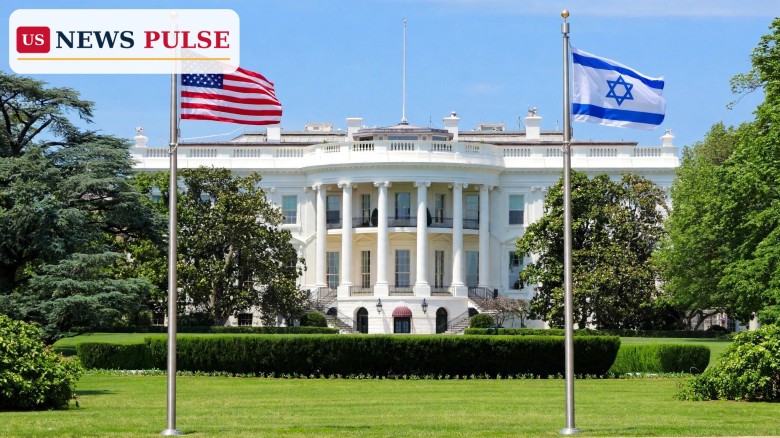
President Donald Trump has said the United States will stop paying $4 billion a year in funding to Israel by the end of 2026, announcing on Tuesday, November 3, 2026, that he and Israeli Prime Minister Benjamin Netanyahu agreed the deal months ago. The Trump Israel aid announcement, made on Fox News' Fox & Friends on the morning of the US midterm elections, marks a shift in a long-running foreign assistance relationship.
"We've already agreed that by the end of this year we won't be paying Israel," Trump said, adding of Israel: "they don't need it." He stressed that Washington would still help Israel if it needed help, but said the annual payments themselves would end. The remarks raised immediate questions about exactly which funding Trump meant, because the current memorandum of understanding providing $3.8 billion a year in US military aid to Israel runs until 2028, with talks under way on assistance beyond that date.
Key Points
- Trump said on Fox & Friends on Tuesday, November 3, 2026, that the US will stop $4 billion a year in funding to Israel by the end of 2026.
- He said he and Prime Minister Benjamin Netanyahu agreed the deal months ago, and that Israel "doesn't need it" any longer.
- Trump said the US would still help Israel if it needed help, despite the end of the annual payments.
- It was not immediately clear which exact funding Trump meant, as the $3.8 billion-a-year military aid memorandum runs to 2028.
- Netanyahu has previously said he hoped to wean Israel off US military support within a decade, most recently in a May 2026 interview.
What Happened
Trump made the announcement during an appearance on Fox & Friends, the morning programme where he frequently speaks directly to his political base. Asked about US financial support for Israel, he said the arrangement with Netanyahu had already been settled some time ago. He framed the decision partly as a political argument, saying some Democrats and left-wing politicians had been using US financial support for Israel as a talking point to criticise Republicans, and suggesting that ending the payments would remove that line of attack.
He did not set out a timetable beyond the end of the year, nor did he describe any conditions, legislation or formal agreement that would put the change into effect. The timing was notable: the announcement came on the morning of the 2026 midterm elections, when voters were choosing members of Congress and deciding the balance of power in Washington for the remainder of Trump's term. Markets reacted quickly, with oil prices turning lower after the announcement and Brent crude falling nearly 3%, although traders were also weighing US-Iran diplomacy and the midterm outcome.
Background and Context
US military assistance to Israel is one of the largest and longest-standing bilateral aid programmes in the world. Under the current memorandum of understanding, signed during the Obama administration, the United States provides $3.8 billion a year in military aid to Israel, covering the period through 2028. Talks about assistance beyond that date have been under way, and the shape of any successor arrangement has been debated in both Washington and Jerusalem.
Trump's figure of $4 billion is close to, but not identical with, the $3.8 billion annual sum in the current memorandum, which may reflect rounding, additional funding streams, or a new arrangement altogether. That ambiguity is why the announcement has prompted as many questions as answers: whether it refers to the memorandum itself, to supplementary funding, or to a broader understanding reached between Trump and Netanyahu.
Trump Israel Aid: What the $4 Billion Covers
The Trump Israel aid announcement matters because of what the money represents. American military aid to Israel has traditionally funded purchases of advanced weapons systems, missile defence, joint research and the maintenance of Israel's qualitative military edge in the region. It also carries political weight far beyond its dollar value, signalling the strength of the US-Israel alliance to allies and adversaries alike.
If the annual payments genuinely end by December 31, 2026, Israel would need to fund those capabilities from its own budget, accelerate its domestic defence industry, or negotiate a different form of cooperation with Washington. Supporters argue Israel's economy is strong enough to shoulder the cost, a point Trump appeared to make when he said Israel does not need the money. Critics are likely to argue that the aid buys the United States influence, interoperability and a stable partner in a volatile region, and that ending it abruptly could weaken that leverage.
Reactions and Quotes
Trump's own words were the clearest statement on the record. "We've already agreed that by the end of this year we won't be paying Israel," he said on Fox & Friends, adding: "they don't need it." He also sought to reassure listeners that the change did not mean abandoning Israel, saying the United States would still help Israel if it needed it.
Why It Matters
The announcement matters for three reasons. First, it would end a pillar of the US-Israel relationship that has endured for decades. Second, it comes at a moment of intense regional tension, with US-Iran diplomacy under way and the Middle East still shaping global politics. Third, it was made on midterm election day, when control of Congress, and therefore of future foreign aid appropriations, was itself being decided.
What Happens Next
The next steps will be clarification from the White House and the Israeli government about which funding is covered, what happens to the memorandum running to 2028, and whether Congress will be involved. Lawmakers in both parties are likely to seek briefings, and the reaction from Israel's political and defence establishment will be closely watched.
Frequently Asked Questions
What did Trump actually say? On Fox & Friends on Tuesday, November 3, 2026, Trump said he and Netanyahu had agreed months ago that by the end of this year the US would not be paying Israel, adding that Israel does not need the money.
How much aid is involved? Trump cited $4 billion a year. The current memorandum provides $3.8 billion a year and runs to 2028, so it is not yet clear whether he meant that sum, a rounded figure, or a different stream.
Will the US still support Israel? Trump said the US would still help Israel if it needed it, even as the annual payments end. No details of any replacement support have been announced.
Has Netanyahu supported ending aid? Netanyahu has previously said he hoped to wean Israel off US military support within a decade, in a May 2026 CBS interview and a January 2026 interview with The Economist, though his timetable was far longer than the end of 2026.
What happens to the current aid agreement? That remains unclear. The memorandum runs to 2028, and no clarification had been reported about whether it would be amended, replaced or allowed to lapse early.
Related coverage: Melania Trump to host Russia-Ukraine meeting at the White House on November 5; Vance says US-Iran talks are making progress with no deadline for a deal; Trump's 127 promises kept, White House lists second-term wins on election eve.
© 2026 US News Pulse. All rights reserved.
 Print
 Save