
Three Oil Tankers Hit Mines and Burn in Strait of Hormuz as Aramco Expands Bypass
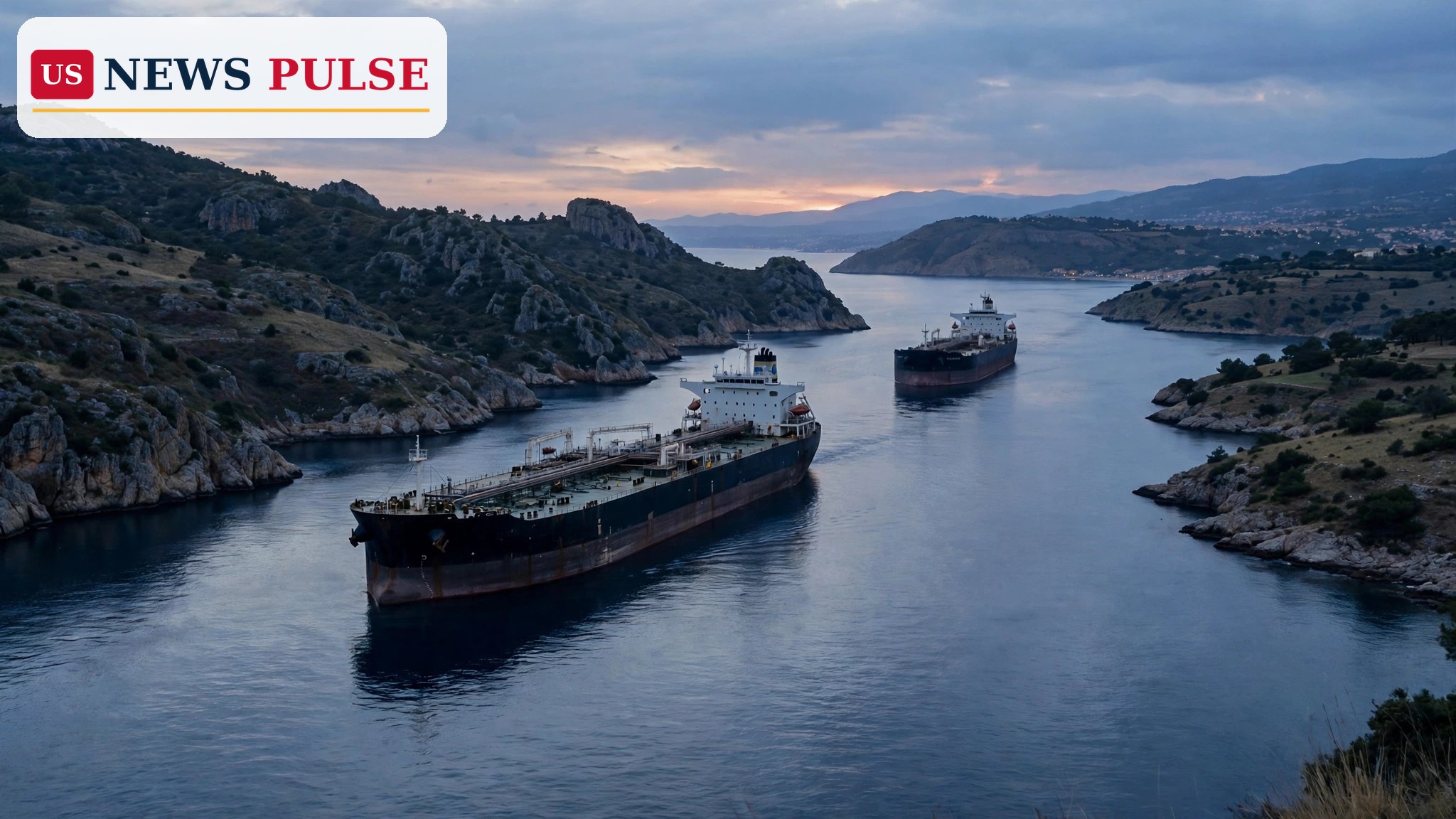
Three oil tankers struck naval mines and caught fire in the Strait of Hormuz in the early hours of Tuesday, 3 November 2026, Iran's Revolutionary Guards Navy said, in the latest blow to shipping through the world's most important oil chokepoint. The vessels were left abandoned and burning off the strait's southern shores, according to the Iranian account, as Saudi Aramco said it is expanding its East-West pipeline to bypass Hormuz altogether.
The Strait of Hormuz oil tankers incident was reported by Iran's Revolutionary Guards, known as the IRGC, which said the tankers had entered what Tehran calls unauthorised routes with their navigation and identification systems switched off. The IRGC named no tankers and gave no crew, casualty or damage details, and there was no immediate independent confirmation of its account.
Key Points
- Iran's Revolutionary Guards Navy said three oil tankers struck naval mines and caught fire in the Strait of Hormuz early on 3 November 2026.
- The vessels were left abandoned and burning off the strait's southern shores, with fires lighting the eastern strait overnight, according to the IRGC account.
- The IRGC named no tankers and gave no crew, casualty or damage details, and there was no immediate independent confirmation.
- The IRGC warned ships cooperating with the United States military on unauthorised routes risked the same outcome.
- Saudi Aramco chief executive Amin Nasser said the company is expanding its East-West pipeline to bypass Hormuz, citing more than 130 tanker attacks so far in the Iran conflict.
What Happened
According to the IRGC Navy, the three tankers hit naval mines after entering routes Iran regards as unauthorised, with their navigation and identification systems switched off. The vessels caught fire and were abandoned. Iranian reports did not identify the ships, their flags, their cargoes or the fate of their crews.
The absence of those details matters. Until the vessels, any spill and the fate of crews are known, insurers and governments can only treat this as an Iranian claim, not a verified event.
The IRGC also linked the incident to a separate event a day earlier. It said a tanker struck a mine and caught fire east of the strait on Monday, 2 November 2026, according to Iran's Navy. That earlier incident was likewise reported without a vessel name or casualty figure in the material available for this article.
Background/Context
The Strait of Hormuz is a narrow passage between Iran and Oman, linking the Persian Gulf to the Gulf of Oman and the open sea. Much of the world's seaborne oil has traditionally passed through it, which is why disruption there moves oil prices and insurance rates far beyond the Gulf.
The waterway has been at the centre of the United States-Iran war that began on 28 February 2026 and is now in its ninth month. Shipping has faced repeated attacks and mine claims, and Aramco puts the number of tanker attacks so far at more than 130, mainly against very large crude carriers.
Freight rates have risen sharply: Aramco said they were up more than 15 times from a year ago. That pressure is one reason a land bypass has become a priority for Riyadh, even though no pipeline can fully replace seaborne capacity through Hormuz.
Strait of Hormuz Oil Tankers: Why the Pipeline Bypass Matters
Saudi Aramco's East-West pipeline runs across Saudi Arabia from the Gulf coast to the Red Sea, offering an alternative route for crude that avoids Hormuz. Expanding it would let more Saudi oil reach export terminals without passing the chokepoint, reducing the kingdom's exposure to a closure or to the kind of mine incidents reported on Tuesday.
Chief executive Amin Nasser announced the expansion on Tuesday as a response to the sustained threat. The reports available gave no added capacity, cost or timetable, so the practical relief for global supply remains uncertain.
Even so, the signal is significant: the world's largest oil exporter is publicly investing in a Hormuz bypass while reporting a surge in tanker attacks.
Reactions/Quotes
The IRGC's warning was aimed at other ship operators: ships cooperating with the United States military on unauthorised routes risked the same outcome. It did not define which routes Tehran regards as authorised.
Aramco's response was commercial: Nasser presented the expansion as a practical answer to insecurity at sea. No statement from the United States military, the tankers' owners or an independent maritime authority had been reported in the material available.
Until a vessel is named or a maritime agency reports, the Tuesday incident remains an Iranian claim rather than a verified event.
Why It Matters
If confirmed, three tankers burning in a single night would mark a sharp escalation in the threat to Gulf shipping, even in a conflict that has already seen scores of attacks. It would raise insurance costs further, push more owners to reroute or pause transits, and add another risk premium to oil prices that have already swung sharply on war news.
It also matters for diplomacy. It came as Washington and Tehran were reported to be exploring a settlement, with senior United States officials describing progress and no strict deadline. A major shipping incident risks hardening positions on both sides.
For consumers, the link is indirect but real: higher freight, longer routes and higher war-risk insurance feed into crude costs, and crude costs feed into petrol, diesel, heating and food transport.
What Happens Next
The next steps are verification and response. Maritime agencies, insurers and satellite trackers will look for the reported vessels, while governments will assess whether the IRGC account matches vessel movements, distress signals or imagery. Any confirmation, or any contradiction, will shape the market and diplomatic reaction.
Shipowners will watch for guidance from naval forces and insurers on usable routes, and for Aramco's capacity and timing details.
Finally, the incident will be read alongside the wider negotiations: continued talks would suggest a settlement is still seen as possible, while more incidents could narrow the space for diplomacy.
Frequently Asked Questions
What happened in the Strait of Hormuz on 3 November 2026? Iran's Revolutionary Guards Navy said three oil tankers struck naval mines and caught fire early on Tuesday after entering what Iran calls unauthorised routes with navigation and identification systems switched off.
Have the tankers been identified? No. The IRGC named no tankers and gave no crew, casualty or damage details, and there was no immediate independent confirmation in the reports available.
What did the IRGC warn other ships? It warned ships cooperating with the United States military on unauthorised routes risked the same outcome.
What is Aramco doing about Hormuz? Chief executive Amin Nasser said it is expanding its East-West pipeline to bypass Hormuz, citing more than 130 tanker attacks and freight rates up over 15 times from a year ago.
Was there a similar incident the day before? Yes, according to Iran's Navy: a separate tanker struck a mine and caught fire east of the strait on Monday, 2 November 2026.
Read more on US News Pulse: CENTCOM says Iran killed over 20 mariners in deliberate attacks on Gulf shipping and Al Mayeda LNG tanker attack near Hormuz draws Qatar condemnation.
© 2026 US News Pulse. All rights reserved.
 Print
 Save