
North Korea Fires Artillery Rockets Just Before Hegseth's DMZ Border Visit
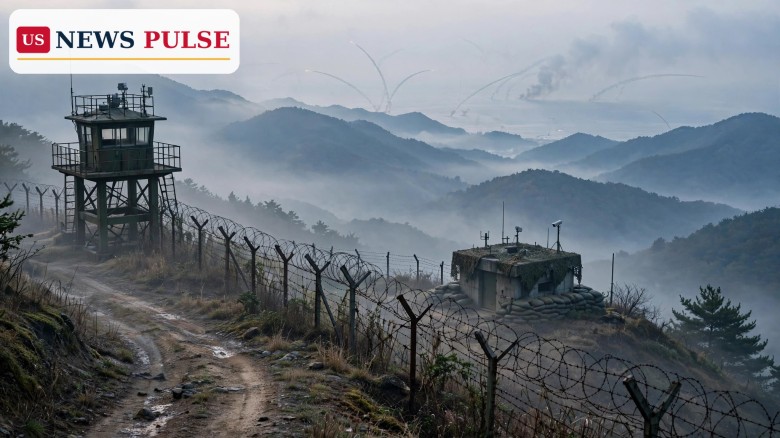
SEOUL — North Korea fired multiple artillery rockets toward waters off the northern Yellow Sea on Monday, less than an hour before United States Defense Secretary Pete Hegseth arrived at the Demilitarized Zone (DMZ) for a high-profile visit to the Korean border, South Korea's military said. The North Korea artillery rockets, launched at around 4 p.m. local time, turned an already closely watched trip into a vivid reminder of how quickly tensions on the Korean Peninsula can flare — and of how much is riding on the alliance talks Hegseth is holding in Seoul this week.
Hegseth toured the DMZ alongside South Korean Defense Minister Ahn Gyu-back, receiving a briefing at Observation Post Ouellette and visiting Panmunjom, the truce village where the armistice that halted the Korean War was signed in 1953. The visit came a day before the two defence chiefs were due to hold their annual Security Consultative Meeting in Seoul.
Key Points
- North Korea fired multiple artillery rockets toward the northern Yellow Sea at around 4 p.m. local time on Monday, November 3, 2026, according to South Korea's Joint Chiefs of Staff.
- The launch came less than an hour before US Defense Secretary Pete Hegseth arrived at the DMZ with South Korean Defense Minister Ahn Gyu-back.
- Hegseth was briefed at Observation Post Ouellette and visited the Panmunjom truce village during the border tour.
- Pyongyang had also fired about 10 artillery rocket shells around 3 p.m. on November 1, minutes before a summit between South Korean President Lee Jae Myung and Chinese President Xi Jinping.
- Hegseth said Washington will work deliberately to fulfil President Donald Trump's pledge for South Korea to build nuclear-powered submarines in a US shipyard.
What Happened
South Korea's Joint Chiefs of Staff said the North fired multiple artillery rockets toward waters off the northern Yellow Sea. The rockets fell into waters off North Korea's western coast,. No damage or casualties were reported, and the firings did not cross into South Korean territory, but the timing — under an hour before Hegseth reached the border — ensured the episode would dominate coverage of the visit.
Hegseth's DMZ tour went ahead as planned. At Observation Post Ouellette, one of the most exposed American positions along the border, he was briefed on the security situation facing the roughly 28,500 US troops stationed in South Korea and their South Korean counterparts. He then visited Panmunjom, where North and South Korean soldiers stand face to face.
The November 3 launch was not isolated. South Korea's military said Pyongyang fired about 10 artillery rocket shells around 3 p.m. on November 1, minutes before President Lee sat down with Chinese President Xi Jinping in Gyeongju.
Background and Context
The Korean Peninsula remains technically at war. The 1950–53 Korean War ended with an armistice, not a peace treaty, and the DMZ — a four-kilometre-wide strip running 250 kilometres across the peninsula — has separated the two Koreas ever since.
The latest launches fit a pattern of North Korean activity around major diplomatic events. In late October, North Korea fired around 10 short-range ballistic missiles from the Wonsan area into the East Sea, its third launch occasion that month. South Korea raised its 2026 defence budget by 8.2 percent, its largest increase in six years, a figure Seoul highlights as evidence it is answering Washington's calls for greater burden-sharing.
North Korea Artillery Rockets and the DMZ
The choice of artillery rockets, rather than ballistic missiles, matters. Artillery rocket systems are among the weapons North Korea would rely on first in any conflict on the peninsula, because they can strike Seoul — home to roughly half of South Korea's population — from positions just north of the border. Firing them toward the Yellow Sea is both a live-fire exercise and a signal: a demonstration that those systems are ready, aimed at audiences in Seoul, Washington and Beijing alike.
For Hegseth, the timing offered an unplanned illustration of the argument he has been making on the trip: that the US-South Korea alliance must stay ready. At a joint press conference, he said Washington would pursue the interagency work needed to fulfil President Trump's pledge that South Korea be allowed to build nuclear-powered submarines in a US shipyard. The pledge is significant because nuclear-powered submarines would greatly extend the range and endurance of South Korea's navy, and because it touches on sensitive questions about nuclear technology, alliance trust and regional reactions, including from China.
Reactions and Statements
South Korea's Joint Chiefs of Staff confirmed the launches and said the military was maintaining readiness, while noting the rockets fell into waters off the North's coast. Officials in Seoul have typically responded to such firings with public restraint and stepped-up surveillance, avoiding escalation while signalling that provocations are being watched.
Hegseth, speaking alongside Minister Ahn, framed the alliance as central to deterrence on the peninsula. He said Washington would make interagency efforts in a deliberate manner to deliver on the submarine pledge, acknowledging the complexity of an undertaking that requires coordination across the US defence, energy and diplomatic establishments, without committing to a timetable. There was no immediate public comment from Pyongyang.
Why It Matters
The episode matters for three reasons. First, it shows North Korea is willing to use live fire to mark American and allied diplomatic moments, raising the risk of miscalculation when communication channels between Pyongyang and Seoul remain thin. Second, it puts the alliance agenda — submarines, spending, command arrangements — into sharp relief: the very capabilities under discussion in Seoul are those meant to deter exactly this kind of display.
What Happens Next
Hegseth and Ahn will hold the annual Security Consultative Meeting in Seoul on Tuesday, November 4, where the submarine pledge, combined readiness and the wartime command transfer are all expected to be on the agenda.
Related coverage: North Korea's October missile launches into the East Sea, Zelenskyy in Berlin rejects Putin phone call and demands ceasefire first, and Three oil tankers hit mines in the Strait of Hormuz.
Frequently Asked Questions
What did North Korea fire on November 3, 2026?
South Korea's Joint Chiefs of Staff said North Korea fired multiple artillery rockets toward waters off the northern Yellow Sea at around 4 p.m. local time. They landed in waters off North Korea's western coast and did not enter South Korean territory.
How close was the launch to Hegseth's DMZ visit?
The launch came less than an hour before Hegseth arrived at the Demilitarized Zone with South Korean Defense Minister Ahn Gyu-back. He was briefed at Observation Post Ouellette and visited the Panmunjom truce village.
Did North Korea fire anything else recently?
Yes. Pyongyang fired about 10 artillery rocket shells around 3 p.m. on November 1, minutes before a summit between President Lee Jae Myung and President Xi Jinping, and around 10 short-range ballistic missiles into the East Sea in late October.
What is the nuclear-powered submarine pledge?
President Donald Trump has pledged that South Korea will be able to build nuclear-powered submarines in a US shipyard. Hegseth said Washington will work deliberately through its agencies to fulfil that pledge, which would extend the range and endurance of South Korea's navy.
© 2026 US News Pulse. All rights reserved.
 Print
 Save