
Tyrin Johnson Memphis Video Shows Guard Aiming Guns at Dying Man, DA Says
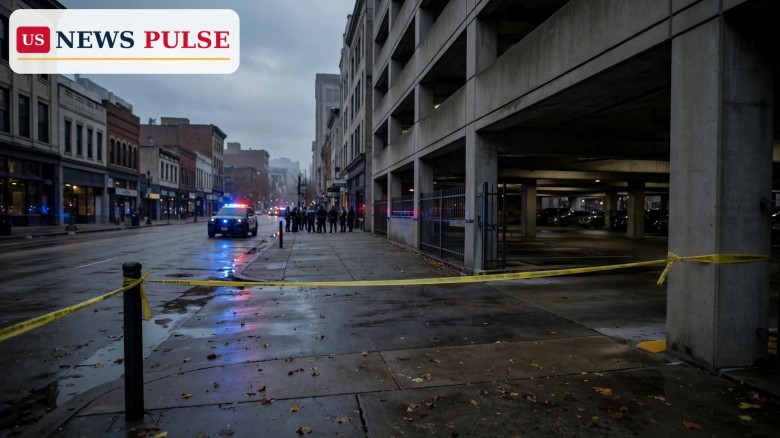
MEMPHIS, Tennessee — The Tyrin Johnson Memphis shooting video released by prosecutors on Monday has reopened painful questions about a fatal encounter in downtown Memphis last summer. It shows National Guard members pointing handguns at a wounded 20-year-old on a sidewalk while an officer calls for an ambulance — but it does not show the moment shots were fired. The Shelby County District Attorney's Office released four clips from the July 5, 2026 shooting that killed Tyrin Johnson, saying it did so "in the nature of transparency" while the Tennessee Bureau of Investigation's inquiry is nearing completion but still ongoing.
Johnson died at the scene from a single gunshot wound that entered his back and exited his chest, according to the medical examiner. That finding sits in tension with early police and Guard accounts that Johnson faced troops while holding a gun. Investigators say Johnson was armed, but the direction of the fatal wound contradicts the account that he faced the troops.
Key Points
- Prosecutors released video on Monday, November 2, 2026, from the fatal July 5, 2026 shooting of 20-year-old Tyrin Johnson in downtown Memphis.
- Four clips show Guard members pointing handguns at Johnson as he lay wounded, with an officer calling for an ambulance and asking troops for a medical kit.
- The footage does not show the initial confrontation or the moment shots were fired.
- Prosecutors identified the Guard members who fired as Alyssa Hout, then 19, and Dallas Jellnick, then 20.
- District Attorney Steve Mulroy has made no charging decision; the Tennessee Bureau of Investigation inquiry remains ongoing.
What Happened
On the night of July 5, 2026, Memphis police heard shots in the downtown entertainment zone, according to the district attorney's office. Johnson then turned onto Union Avenue, where the two Guard members fired at him, prosecutors said. The released video picks up after that point: a parking-lot camera, a Memphis police body camera, a second parking-lot camera and a bystander's phone together show Guard members with handguns pointed at Johnson as he lay wounded.
In the footage, an officer can be heard calling for an ambulance and asking the troops for a medical kit, as the scene shifted from a shooting to a medical emergency. Johnson died at the scene from one gunshot wound. The clips do not show what Johnson did in the moments before the shots, whether he raised a weapon, or how the troops came to open fire — the very questions a charging decision would turn on.
Background: A Summer Night in Downtown Memphis
Downtown Memphis on a summer holiday weekend draws large crowds to its entertainment district, and Guard troops were present in the city during 2026. The July 5 shooting happened in that crowded, high-tension setting, where officers were already responding to reported gunfire when the encounter with Johnson unfolded on Union Avenue.
Johnson's death became one of the most closely watched fatal shootings in Memphis this year in part because of who fired: not Memphis police officers, but members of the National Guard, a military force operating in a civilian law-enforcement environment.
Tyrin Johnson Memphis Shooting Video: What the Footage Shows — and What It Does Not
The Tyrin Johnson Memphis shooting video is best understood as four partial windows onto one scene. The parking-lot cameras give a wide, distant view of the sidewalk and the troops around Johnson. The police body camera brings the viewer closer to the urgent aftermath, including the call for an ambulance. The bystander's phone adds a civilian perspective from the edge of the scene.
What the footage does not do is show the shooting itself. There is no clip of the initial confrontation, no view of Johnson turning onto Union Avenue in the seconds before the shots, and no image of the moment the triggers were pulled. That absence is why the family's lawyer has said the release leaves critical questions unanswered: video is powerful evidence, but only of what its cameras actually captured.
Reactions and Quotes
The district attorney's office said it released the footage "in the nature of transparency," signalling an intent to let the public see what investigators have seen, even while the investigation continues. The office also confirmed that the Tennessee Bureau of Investigation's inquiry is nearing completion, though it remains ongoing, and that no charging decision has been made.
Family attorney André C. Wharton said the footage leaves critical questions unanswered precisely because it does not show the shooting itself. Memphis police and Guard accounts given after the shooting described Johnson as facing troops while holding a gun. No official has yet publicly reconciled that account with the medical examiner's finding in detail.
Why It Matters
The Johnson case matters beyond one Memphis street corner because it tests how accountability works when National Guard troops are deployed in American cities. Soldiers trained for military missions operate under different rules and chains of command than city police officers, yet on a downtown sidewalk they exercise the same lethal power. When a shooting follows, the public, the family and the courts need to know which rules applied and whether they were followed.
It also matters because of what the video era has changed about public trust. Families and communities no longer accept official summaries alone; they expect to see the footage. But footage is not always complete, and incomplete footage can mislead as easily as it can clarify.
What Happens Next
The immediate next step is the completion of the Tennessee Bureau of Investigation's inquiry. Once it concludes, District Attorney Steve Mulroy will face a charging decision on Hout and Jellnick. Prosecutors have not set a public date for that decision.
Any charging decision will have to grapple with the evidence the video cannot supply: witness accounts of the confrontation, forensic evidence about the shots, and the Guard members' own statements about what they perceived. If charges are filed, a court case would test those questions in public. If no charges are filed, prosecutors will face pressure to explain why, in detail, given the medical examiner's finding.
Frequently Asked Questions
Who was Tyrin Johnson? A 20-year-old fatally shot in downtown Memphis on July 5, 2026, after police heard shots in the entertainment zone and Johnson turned onto Union Avenue, prosecutors said.
What does the video show? Four clips show Guard members pointing handguns at Johnson as he lay wounded, with an officer calling for an ambulance and asking for a medical kit. They do not show the confrontation or the shots.
Who fired the shots? Prosecutors identified the two Guard members who fired as Alyssa Hout, then 19, and Dallas Jellnick, then 20.
What did the medical examiner find? Johnson died at the scene from a single wound entering his back and exiting his chest, contradicting early accounts that he faced troops holding a gun, though investigators say he was armed.
Has anyone been charged? No. Steve Mulroy has made no charging decision, and the Tennessee Bureau of Investigation inquiry is nearing completion but ongoing.
Read more: University of Michigan campus incident: Liz Benichou shoved and Missing Utah teen Kylie Arellano found safe in Oregon.
© 2026 US News Pulse. All rights reserved.
 Print
 Save