
Salt River Surges Through Phoenix as Arizona Releases Record Verde Dam Water
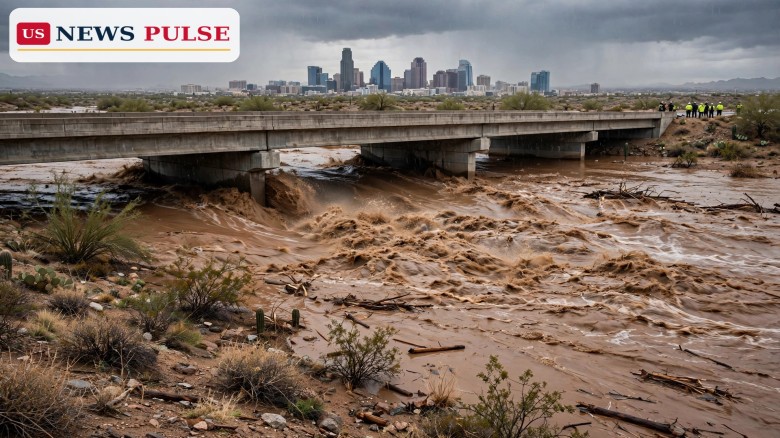
Water roared down the normally dry Salt River through metro Phoenix on Tuesday, November 3, 2026, as Arizona released the most water from its Verde River dams in more than three decades. The Salt River flooding in Phoenix turned a usually parched desert channel into a fast, muddy torrent, forced the suspension of water activities at Tempe Town Lake, and kept flood warnings in place for the Salt and Gila rivers into the weekend.
Key Points
- Salt River Project released the most water from its Verde River dams in more than 30 years on Tuesday, November 3, 2026.
- Releases from Bartlett and Stewart Mountain dams reached about 54,000 cubic feet per second and were likely to exceed 60,000.
- Releases over Granite Reef Dam topped 55,000 cubic feet per second early Tuesday, the highest since spring 2023.
- A gauge below the Salt-Gila confluence measured more than 61,000 cubic feet per second, affecting Goodyear and Arlington.
- The National Weather Service in Phoenix extended the Salt and Gila flood warning to 2 p.m. MST on Saturday, November 7.
What Happened
The surge arrived on Tuesday as controlled releases from upstream reservoirs moved downstream through the Valley. Water from Bartlett Dam and Stewart Mountain Dam on the Verde River combined with flows already in the system, and by early Tuesday releases over Granite Reef Dam, where the Verde meets the Salt, had topped 55,000 cubic feet per second. That was the highest flow over Granite Reef since spring 2023, and it was still rising as managers balanced the need to protect dam safety and reservoir capacity against the risk to low-lying areas downstream.
Farther downstream, a Maricopa County gauge below the confluence of the Salt and Gila rivers measured flows of more than 61,000 cubic feet per second. Those flows affected communities including Goodyear and Arlington, where river-adjacent roads, washes and low crossings are the first places to feel a swollen river. In a desert city, the sight of a river running bank to bank is itself a shock: the Salt River through much of Phoenix is normally dry or reduced to a trickle, a wide sandy bed used for recreation and trails.
Background: Why So Much Water, So Fast
The Phoenix surge did not come from a single day of rain. It was the downstream result of an extraordinary October and November across the Verde River watershed and the wider Four Corners region. Salt River Project senior hydrologist Jacob Richardson said inflow to Horseshoe Reservoir peaked at about 75,000 cubic feet per second, compared with a normal flow of about 600 cubic feet per second. October and November inflows into the Verde system were the highest since 1972, at about eight times the average, and the utility said it had captured about 400,000 acre-feet of water.
That scale explains why releases were so large, and why they may last so long. When reservoirs fill during back-to-back storms, operators must release water in a controlled way to preserve storage space for the next storm and to keep dams safe. The alternative, an uncontrolled spill, would be far more dangerous. Salt River Project said releases could possibly continue for a week and a half to two weeks, meaning the Salt River may run high well beyond the initial surge.
Salt River Flooding in Phoenix: What the Numbers Mean
Cubic feet per second is a difficult number to picture, but the comparisons reported on Tuesday make the scale clear. A normal inflow of about 600 cubic feet per second at Horseshoe Reservoir became a peak of about 75,000 cubic feet per second, more than 100 times normal. Releases of 54,000 cubic feet per second from Bartlett and Stewart Mountain dams, likely to exceed 60,000, are the kind of flows that turn a dry riverbed into a major river in hours. For residents, the practical meaning is simpler: the river is not a place to walk, cycle, drive across or watch from a low bridge until warnings lift.
Reactions and Official Guidance
Water managers and emergency officials framed Tuesday as a controlled but serious event. Salt River Project explained the releases as necessary to manage record inflows and protect reservoir capacity, while the National Weather Service kept the public informed through the extended flood warning. Local fire departments, including Tempe, responded to individual rescues and closures, and county and city officials repeated the core safety message for desert flooding: turn around, do not drown, and treat every flooded road as impassable.
Why It Matters
The surge matters for three reasons. First, it shows how quickly a desert water system can flip from drought to flood, as Arizona captured 400,000 acre-feet in weeks after years worrying about scarcity. Second, it tests the Valley's flood defences in real time, revealing weak points from eroded banks to clogged crossings. Third, with releases possibly continuing for one to two weeks and soils saturated, further rain in the Verde watershed could quickly cause another rise, even on dry days in Phoenix.
What Happens Next
The immediate outlook is a slow, managed drawdown. Salt River Project will adjust releases from Bartlett, Stewart Mountain and Granite Reef dams as inflows ease. The flood warning runs to 2 p.m. MST on Saturday, November 7, and Tempe Town Lake activities will resume only when conditions allow, with road and trail closures lifted in stages after inspections.
For readers following the wider Southwest flooding, US News Pulse has also reported on the deadly Flagstaff flooding and Arizona's statewide emergency declaration, and on the two deaths in the 1,000-year flooding in Palm Bay, Florida, where hundreds were rescued. Together, those stories show a country facing very different floods at the same time, and the same simple rule in every case: never enter floodwater, on foot or in a vehicle.
Frequently Asked Questions
Why is the Salt River flooding in Phoenix?
Record October-November inflows into the Verde River system, the highest since 1972 at about eight times average, filled reservoirs and forced Salt River Project to release the most water from its Verde dams in more than 30 years. That water flows down the Salt River through Phoenix.
How much water is being released?
Releases from Bartlett and Stewart Mountain dams reached about 54,000 cubic feet per second and were likely to exceed 60,000, while releases over Granite Reef Dam topped 55,000 cubic feet per second early Tuesday, the highest since spring 2023.
How long will the flood warning last?
The National Weather Service in Phoenix extended the Salt and Gila flood warning to 2 p.m. MST on Saturday, November 7, 2026, and releases could possibly continue for a week and a half to two weeks.
Is Tempe Town Lake open?
Water activities at Tempe Town Lake were suspended on Tuesday as a precaution while the river system remained swollen. Activities will resume only when river conditions allow.
Is it safe to go near the Salt River?
No. Officials urge residents to stay away from riverbanks, flooded roads and closed crossings, and never to drive through flooded streets, even when the weather in Phoenix itself is dry, because the danger can come from upstream releases.
© 2026 US News Pulse. All rights reserved.
 Print
 Save