
Jeff Hurd Edges Ahead of Dwayne Romero in Uncalled Colorado 3rd District Race
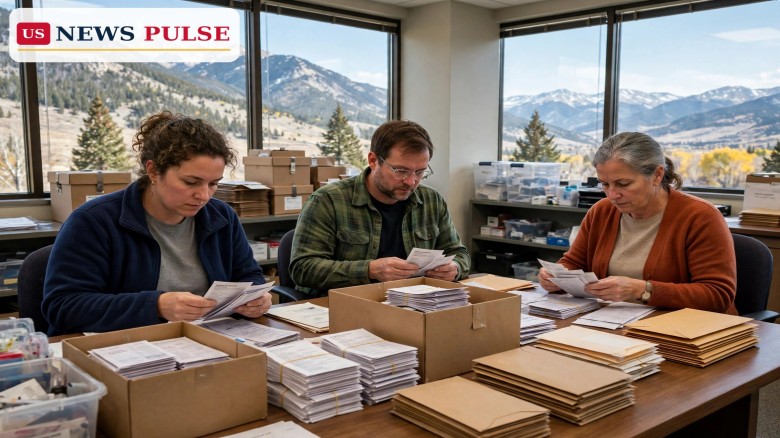
Jeff Hurd has edged ahead of Dwayne Romero in Colorado's 3rd Congressional District, flipping a race that Romero led throughout election night and leaving one of the closest House contests of the 2026 midterms still uncalled on Wednesday, November 4, 2026. The Jeff Hurd Colorado 3rd District race now stands as a genuine cliffhanger: the Associated Press listed the Republican incumbent ahead by just 1,211 votes, with roughly a fifth of the expected vote still to be counted and counting still under way across the sprawling Western Slope district.
According to the Associated Press count on Wednesday morning, Hurd led Romero 146,913 to 145,702, with 520 of 643 precincts reporting, or 80.87 percent, and an estimated 80.93 percent of the expected vote counted. Decision Desk HQ, at 4:49 a.m. Eastern time on Wednesday, put the margin in percentage terms at Hurd 48.63 percent to Romero 48.23 percent, on 302,108 votes counted, or about 83 percent. The two tallies differ slightly because outlets model the outstanding vote differently, but both point to the same reality: a lead of less than half a percentage point, with thousands of ballots still to be processed before either side can claim victory.
Key Points
- Republican incumbent Jeff Hurd led Democrat Dwayne Romero 146,913 to 145,702 in the Associated Press count on Wednesday, a margin of 1,211 votes.
- Decision Desk HQ put Hurd ahead 48.63 percent to 48.23 percent at 4:49 a.m. Eastern time on Wednesday, on 302,108 votes counted.
- Romero led all election night, by more than 2,200 votes at one point, before Hurd gained ground in every successive batch of ballots.
- Hurd's late gains were driven in part by Mesa County, the district's largest population centre, according to local reporting.
- The race remains uncalled and unofficial, and results will not be final until they are certified by Colorado election officials.
What Happened
Election night in Colorado's 3rd District told one story, and Wednesday morning told another. As returns came in on Tuesday evening, Romero was in front, and his lead at one stage stretched beyond 2,200 votes, with about 88 percent counted, according to Colorado Public Radio. By midnight, the Alamosa Citizen reported, that advantage had shrunk to under 1,000 votes. Then, as later batches of ballots were added through the night, the lead changed hands entirely, and Hurd moved in front.
Neither candidate had conceded or claimed victory by Wednesday morning. Romero had said earlier that the race was too close to call, a judgement the overnight numbers have borne out. Hurd told supporters he remained "cautiously optimistic", a careful formulation that reflects both his new lead and the size of the vote still outstanding. With roughly 19 percent of the expected vote yet to be counted in the Associated Press estimate, and about 17 percent in the Decision Desk HQ estimate, the contest is far from settled.
Background and Context
Hurd is a first-term Republican incumbent, elected to the House in 2024, and Romero is his Democratic challenger in a district that has long been a bellwether for the political mood of the rural West. The seat was held for years by Lauren Boebert before she moved to Colorado's 4th District in December 2023, and it has been fought over fiercely ever since. In 2024, Hurd won the seat and Boebert won her new district by 11 points, but the political ground has shifted since then, and this year's contest has been far closer than many forecasters expected.
One striking figure from the queue of results is the district's movement relative to the last presidential election. The district shifted about 11 points toward Democrats compared with the 2024 presidential result, according to the analysis cited in the returns coverage. That shift does not by itself decide a House race, but it helps explain why a seat Republicans expected to defend comfortably has instead become one of the last uncalled contests of the midterms, and why Romero was able to lead for most of election night.
Jeff Hurd Colorado 3rd District: How the Lead Flipped
The Jeff Hurd Colorado 3rd District lead flip came down to the counting order. Early returns, which tend to reflect in-person and early-counted ballots, favoured Romero. Later batches, which included ballots from Mesa County and other areas that report later, favoured Hurd, and each successive batch narrowed the gap until it disappeared. Mesa County, home to Grand Junction and the district's largest bloc of voters, was singled out in local reporting as a driver of Hurd's late gains, and its remaining ballots will be among the most closely watched as counting continues.
Reactions and Quotes
The campaigns have been notably restrained in their public statements, reflecting the uncertainty of the count. Romero, challenging the first-term incumbent, had said the race was too close to call, and the overnight developments have confirmed that assessment rather than resolved it. Hurd, for his part, told supporters he remained "cautiously optimistic", a phrase that acknowledges his new lead without claiming a victory that the numbers do not yet support.
Why It Matters
This race matters for three reasons. The first is representation: whoever wins will speak for a vast, diverse district that spans ranching country, energy-producing areas, ski towns and the city of Pueblo, and whose voters have now split almost evenly between the two major parties. A representative elected by a margin of a few hundred votes will know that mandate is narrow, and will govern accordingly.
What Happens Next
Counting will continue as election officials verify and tabulate the remaining ballots, including mail ballots that arrived after election night and any ballots requiring additional verification. Outlets will call the race only when the outstanding vote cannot plausibly change the outcome, which could take several more days given the size of the remaining pool and the narrowness of the margin.
For now, the only certainty is the closeness itself. Hurd leads by 1,211 votes in the Associated Press count, Romero led all election night, and the ballots still to come are numerous enough to reverse the lead again. In a midterm cycle full of surprises, Colorado's 3rd District has delivered one of the closest finishes of all, and its outcome is still to be decided.
Frequently Asked Questions
Who is leading in Colorado's 3rd District?
Republican incumbent Jeff Hurd led Democrat Dwayne Romero 146,913 to 145,702 in the Associated Press count on Wednesday morning, November 4, 2026, a margin of 1,211 votes.
Has the race been called?
No. The race remains uncalled, with about 19 percent of the expected vote still to be counted in the Associated Press estimate.
How did the lead change?
Romero led all election night, by more than 2,200 votes at one point, before Hurd gained ground in every successive batch of ballots, driven in part by Mesa County.
Who are the candidates?
Jeff Hurd is the first-term Republican incumbent, and Dwayne Romero is his Democratic challenger in a district covering the Western Slope and south-western Colorado.
What happens next?
Counting continues until the outstanding vote cannot change the result, followed by certification, and a possible recount if the final margin falls within Colorado's threshold.
© 2026 US News Pulse. All rights reserved.
 Print
 Save