
Hispanic Voters Swung Back to Democrats in 2026 Midterms, AP Voter Poll Finds
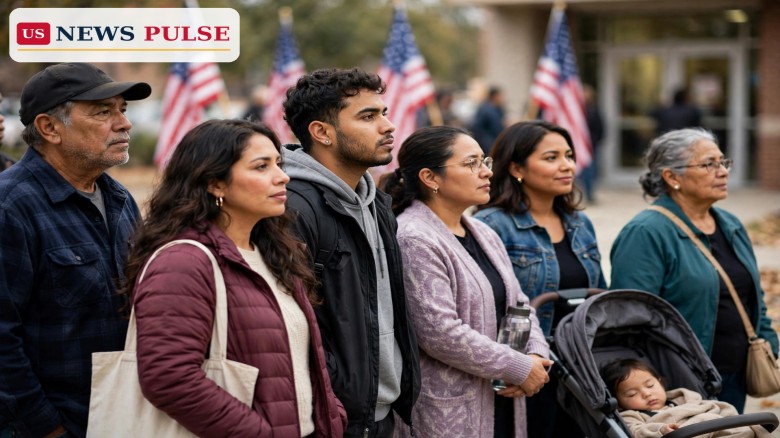
Hispanic voters swung back hard to Democrats in the 2026 midterm elections, reversing many of the gains President Donald Trump made with the group in 2024, according to the AP Voter Poll. About six in 10 Hispanic voters backed the Democrat in their local House race, compared with about one-third who voted Republican — a sharp reversal from 2024, when roughly four in 10 backed Trump. The shift was led by Texas and Florida, the states with the largest Hispanic electorates, where Latino voters moved decisively toward Democrats in the marquee Senate and governor races.
Key Points
- About 6 in 10 Hispanic voters backed Democrats in their House race, versus about one-third for Republicans, the AP Voter Poll found.
- In Texas, about 6 in 10 Hispanic voters backed Democrat James Talarico over Republican Ken Paxton — reversing 2024, when Trump won 55% of Texas Latino voters.
- Democrat Gina Hinojosa carried Hidalgo County by double digits, beating Governor Greg Abbott 70.5% to 28.5%.
- In Florida, Republican Senator Ashley Moody won re-election but with fewer than half of Hispanic voters, with sharp splits by community of origin.
- Strategists cited the economy and cost of living, plus immigration enforcement; ICE made more than 63,000 arrests in Texas and about 29,000 in Florida between January and August 2026.
What Happened
The AP Voter Poll, conducted by SSRS for the Associated Press, ABC News, CBS News, CNN, Fox News Media, NBC News and Versant, surveyed more than 100,000 registered voters in all 50 states between October 22 and November 3, with Alaska surveyed from October 19. The margin of error was plus or minus 0.6 points.
Its headline finding was unambiguous: a group that drifted toward Trump in 2024 moved back toward Democrats in 2026, by a wide margin. About six in 10 Hispanic voters chose the Democrat in their local House race, while only about one-third chose the Republican. The same pattern held in the big statewide races in Texas and Florida.
The poll also found voters under 30, Black voters, moderates and lower-income households shifted toward Democrats. But the Hispanic swing stood out for its size and where it happened: in the two states Republicans counted on to keep Latino voters, the movement ran the other way.
Background and Context
The 2024 election had been read as a turning point. Trump won roughly four in 10 Hispanic voters nationally, and in Texas he carried 55% of Latino voters, including all four Rio Grande Valley counties — Cameron, Hidalgo, Starr and Willacy — a region that had voted Democratic for generations. Republican strategists argued the shift reflected the party's strength on the economy and border security, and that it could prove durable.
The 2026 results suggest otherwise. Two years of high prices and aggressive immigration enforcement appear to have changed the calculation for many Hispanic voters. The Deportation Data Project recorded more than 63,000 ICE arrests in Texas between January and August 2026 and about 29,000 in Florida, putting both states at the centre of enforcement.
Hispanic Voters 2026 Midterms: The Texas Shift
Texas delivered the clearest evidence. In the Senate race, about six in 10 Hispanic voters backed Democrat James Talarico, versus about three in 10 for Republican Ken Paxton — a near-mirror image of Trump's 55% share in 2024. Talarico's Hispanic support was central to his victory in a race Republicans had expected to hold.
The governor's race told the same story. Democrat Gina Hinojosa carried Hidalgo County, in the heart of the Rio Grande Valley, by double digits, and beat Governor Greg Abbott 70.5% to 28.5% among voters surveyed. The Valley moved back toward Democrats in force.
Reactions and Quotes
Equis Research president Stephanie Valencia, whose firm studies Latino voters, called the group "the swinging giant" — capturing both its size and its willingness to move between parties.
Strategists pointed to two forces above all: the economy and the cost of living, which dominated voters' concerns in 2026, and immigration enforcement, which landed hardest in Hispanic communities in Texas and Florida.
The Florida results added nuance. Republican Senator Ashley Moody won re-election, but with fewer than half of Hispanic voters. In majority-Hispanic precincts, Moody won Cuban-majority areas by 7.5 points, while Democrat Angie Nixon carried South American-majority precincts by nearly 12, mixed precincts by 23 and Puerto Rican precincts by 33 points. The splits underline that there is no single Hispanic vote.
Why It Matters
The Hispanic swing is one of the most consequential findings of the 2026 midterms because it reshapes the map for 2028. Hispanic voters are the fastest-growing part of the electorate, and their 2024 movement had encouraged heavy Republican investment in Latino outreach in Texas, Florida, Arizona and Nevada. A reversal of this scale forces both parties to rethink those plans.
For Democrats, the results validate a campaign built around affordability and a challenge to the administration's enforcement record. For Republicans, they warn that gains with a group can evaporate in one cycle when economic conditions sour and enforcement touches families directly. With Democrats taking both chambers, Hispanic-heavy districts will shape the agenda on immigration, health care and the economy from January 2027.
More: 2026 midterm exit polls and Xavier Becerra's California governor win.
What Happens Next
Both parties will now mine the poll's breakdowns for lessons ahead of the 2028 presidential race. Democrats will test whether the 2026 coalition — younger voters, Black voters, moderates, lower-income households and Hispanic voters — can be held together when Trump is not on the ballot. Republicans will examine whether their 2024 gains can be rebuilt, and whether the enforcement-first approach of 2026 cost them more votes than it won.
The immediate test comes in Congress. Democrats take control of both chambers in January 2027 with an agenda including restoring Affordable Care Act subsidies and reversing Medicaid cuts, issues that poll strongly with the lower-income and Hispanic voters who powered their win. How far they advance that agenda against a presidential veto will shape whether the 2026 swing hardens into a realignment — or proves, like 2024, one more swing of the giant.
Frequently Asked Questions
What did the AP Voter Poll find about Hispanic voters in 2026?
About six in 10 backed the Democrat in their House race, versus about one-third for Republicans, reversing the drift toward Trump seen in 2024.
How did Hispanic voters vote in the Texas Senate race?
About six in 10 backed Democrat James Talarico, versus about three in 10 for Republican Ken Paxton, reversing 2024, when Trump won 55% of Texas Latino voters.
What happened with Hispanic voters in Florida?
Republican Senator Ashley Moody won re-election with fewer than half of Hispanic voters: she won Cuban-majority precincts by 7.5 points, while Democrat Angie Nixon carried Puerto Rican precincts by 33 points.
Why did Hispanic voters shift back to Democrats?
Strategists cited the economy, cost of living and immigration enforcement: ICE made over 63,000 arrests in Texas and about 29,000 in Florida between January and August 2026.
How large was the AP Voter Poll?
It surveyed over 100,000 registered voters in all 50 states from October 22 to November 3, 2026, with a margin of error of plus or minus 0.6 points.
© 2026 US News Pulse. All rights reserved.
 Print
 Save