
Joshua Wong Handed Another 10-Year Sentence in Hong Kong Security Case
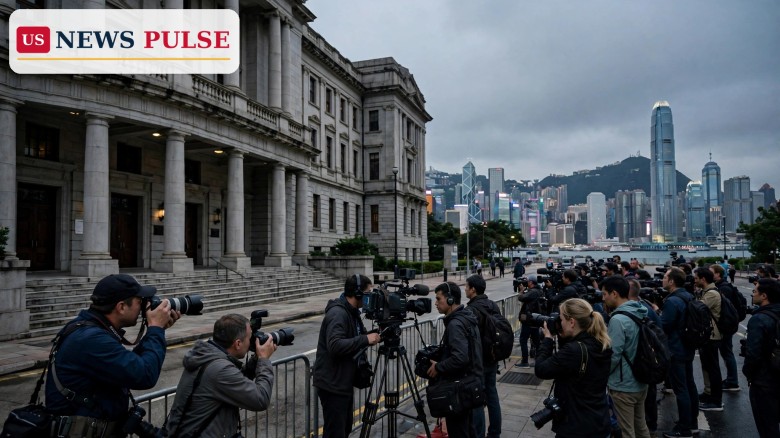
Hong Kong pro-democracy campaigner Joshua Wong was handed another 10-year prison sentence on Thursday, November 5, 2026, over a second national security conviction, extending a jail term that has already kept him behind bars since he was 23. The sentence followed Wong's guilty plea in September 2026 to conspiring to invite foreign sanctions against China and Hong Kong. He had been due for release in January, after serving a separate sentence of four years and eight months imposed in the landmark subversion trial of 2024.
Wong, who turned 30 last month, first became known around the world as a teenager, when he led student protests that helped to shape Hong Kong's pro-democracy movement. A decade later, he is again at the centre of a case that critics say shows how far the city's political space has narrowed since Beijing imposed the National Security Law in 2020.
Key Points
- Joshua Wong received a 10-year prison sentence on Thursday, November 5, 2026, in a second national security case.
- He pleaded guilty in September 2026 to conspiring to invite foreign sanctions against China and Hong Kong in 2020.
- Wong, who turned 30 last month, first entered prison at 23 and had been due for release in January.
- He is already serving four years and eight months after pleading guilty in a landmark subversion trial in 2024.
- The case centres on conduct in 2020, the year Beijing introduced Hong Kong's National Security Law.
What Happened
The sentence was handed down on Thursday, adding a decade to the time Wong still faces in prison. The charge related to a conspiracy, in 2020, to invite foreign sanctions against China and Hong Kong. Wong pleaded guilty in September 2026, and the court has now set the punishment at 10 years.
The timing matters. Wong had been counting down to a release date in January, after his earlier sentence in the 2024 subversion case. Instead of walking free, he now faces a substantially longer period in custody, with the new sentence extending his imprisonment well into the next decade.
The 2020 conduct at the heart of this case took place in a year of extraordinary change in Hong Kong. Beijing imposed the National Security Law in June 2020, after months of large and sometimes violent protests in 2019. The law criminalised secession, subversion, terrorism and collusion with foreign forces, carrying a maximum penalty of life imprisonment for the most serious offences.
Background: From Teenage Activist to Prisoner
Wong's public life began when he was barely out of childhood. As a teenager, he helped to found Scholarism, a student group that campaigned against a proposed national education curriculum in 2012, and he later became a leading figure in the 2014 Umbrella Movement, when tens of thousands of protesters occupied parts of Hong Kong for 79 days to demand greater democracy.
Those campaigns made him famous, and they also brought repeated arrests. He was jailed for his role in the 2014 protests, and he continued to campaign as Hong Kong's political climate hardened. By 2019, when mass protests erupted over a proposed extradition bill, Wong was already one of the movement's best-known voices, travelling abroad to urge foreign governments to press Beijing over democratic freedoms.
The National Security Law changed the legal landscape completely. Vocal news outlets were shut down, civic groups dissolved, and many activists left the city, were arrested, or fell silent. Wong was among those who stayed and faced prosecution. In the landmark subversion trial that concluded in 2024, he pleaded guilty, and he was sentenced to four years and eight months.
Joshua Wong 10-Year Sentence: What the New Conviction Means
The Joshua Wong 10-year sentence is significant for several reasons. First, it is a second national security conviction, not a repeat of the first. The earlier subversion case concerned an unofficial primary election held by the pro-democracy camp in 2020. This new case concerns a separate allegation: conspiring to invite foreign sanctions.
Second, the sentence is long, and it resets expectations about when Wong will return to public life. A release in January would have allowed him, at 30, to rebuild a life outside prison. A further 10 years means he will be in his forties before he is free, and the movement he once led will have changed beyond recognition by then.
Reactions and Quotes
Reaction to the sentence has followed the familiar divide over Hong Kong's national security prosecutions. Supporters of Wong describe the sentence as a punishment for peaceful political activity, and they point to his age, and to the years already served, as evidence of its harshness.
Supporters of the law take the opposite view. They argue that inviting foreign sanctions against one's own country is not peaceful protest but a direct challenge to national sovereignty, and that the law was introduced precisely to deal with such conduct after the unrest of 2019. They also note that Wong pleaded guilty, rather than contesting the charge at trial.
Why It Matters
For Hong Kong, the sentence closes, for now, the question of whether its most famous young activist would soon be free. It also confirms that the national security era, now in its seventh year, is not easing. If anything, the length of the sentence suggests it is hardening.
For China, the case is part of a broader assertion of control over Hong Kong, a city promised a high degree of autonomy under the "one country, two systems" formula when Britain handed it back in 1997. Beijing says that formula remains intact. Critics say the law has hollowed it out, and they cite cases like Wong's as proof. For the United States and its allies, the sentence will feed into an ongoing debate about how to respond to Hong Kong's political crackdown.
What Happens Next
In the short term, attention will turn to whether Wong appeals the sentence, and to how the authorities handle the remainder of his imprisonment. Appeals in national security cases are possible, but they rarely overturn convictions, and a guilty plea narrows the grounds further. In the longer term, the question is what Hong Kong becomes, and Wong's continued imprisonment will remain, for many outside China, a symbol of the gap between Beijing's promise of autonomy and the reality they see.
Frequently Asked Questions
Why was Joshua Wong given another 10 years?
He pleaded guilty in September 2026 to conspiring to invite foreign sanctions against China and Hong Kong in 2020.
Was Wong about to be released?
Yes. He was due for release in January after a four-year, eight-month sentence in the 2024 subversion trial.
How old is Joshua Wong?
He turned 30 last month and first entered prison at the age of 23.
What is Hong Kong's National Security Law?
It is a law imposed by Beijing in 2020 criminalising secession, subversion, terrorism and collusion with foreign forces.
Can Wong appeal the new sentence?
Appeals are possible, but a guilty plea narrows the grounds, and national security convictions are rarely overturned.
Related coverage: Zelenskyy hopes Democratic midterm wins will bring more US aid for Ukraine, China AI law speeds up to cover DeepSeek, Alibaba and Moonshot AI models.
© 2026 US News Pulse. All rights reserved.
 Print
 Save