
FAA Orders Fuel-Tank Sealant Checks on 60 Boeing 787s and 31 747s Over Lightning Risk
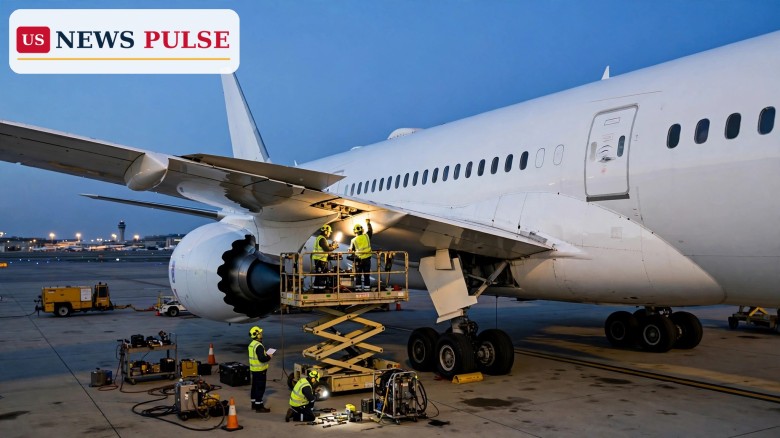
WASHINGTON — The Federal Aviation Administration has ordered fuel-tank sealant inspections on 60 Boeing 787 Dreamliners and 31 Boeing 747s after finding that required production checks were never properly documented, warning that defective sealant could create an ignition source inside a fuel tank during a lightning strike. The FAA Boeing 787 fuel tank inspection order was published in the Federal Register on Monday, November 2, 2026, and takes effect on December 7, 2026.
Key Points
- The FAA issued two airworthiness directives on November 2, 2026: AD 2026-22-05 for certain Boeing 787-8, 787-9 and 787-10 aircraft, and AD 2026-22-04 for 31 Boeing 747s.
- On the 787s, sealant inside the centre wing fuel tank missed required visual and adhesion inspections in production, and Boeing could not produce records confirming the checks.
- Operators must inspect the sealant in the left, right and centre wing side-of-body areas, run adhesion tests and repair any defects.
- The FAA estimates 34 hours and $2,890 per aircraft, or $173,400 across the 60 US-registered 787s, not counting repairs.
- The order requires inspections, not a grounding: the affected jets keep flying while operators complete the checks.
What Happened
The FAA published the two directives after discovering a gap in Boeing's production records. Sealant inside the centre wing fuel tank of certain 787s was supposed to receive a visual inspection and an adhesion inspection before delivery. The FAA found those checks were not carried out, and Boeing could not produce records showing they had been completed.
The agency spelled out the risk in plain terms. If the sealant is defective and left unaddressed, it "could result in development of an ignition source within the fuel tank volume and a risk of a fuel tank explosion during a lightning strike event". The fuel system is designed so that a strike cannot ignite fuel vapour; a failed sealant bond would undermine that protection.
The 787 directive covers 60 US-registered aircraft across all three Dreamliner variants. Airlines must inspect the sealant in the left, right and centre wing side-of-body areas, test its adhesion, and repair any defects. The second directive, covering 31 Boeing 747s, addresses wear between the inlet check valve and the inlet adapter that could also create an ignition source in the horizontal stabiliser fuel tank.
Background: Why Fuel-Tank Sealant Matters
Sealant inside a fuel tank does more than stop leaks: it seals joints and fasteners so fuel vapour cannot reach a spark, and protects the structure from corrosion. The centre wing tank sits inside the fuselage, beneath the cabin, so its integrity is critical — which is why production inspections are mandatory, and why missing records alone can trigger a fleet-wide directive.
American carriers operate more than 170 Boeing 787s, including about 97 at United Airlines, 70 at American Airlines and six at Alaska Airlines. Only 60 fall within the directive's scope, because the problem is tied to specific production batches. The FAA says the required production inspections are now being carried out on aircraft outside the directive's scope. The order also lands at a sensitive moment for Boeing, which has spent two years under intense scrutiny over production quality. Our earlier coverage: Boeing Q3 loss widens as jet division loses $697 million.
FAA Boeing 787 Fuel Tank Inspection: What Airlines Must Do
For the 787s, the work is a detailed visual inspection of the sealant in the side-of-body areas of the left, right and centre wing tanks, followed by adhesion testing. Cracked, detached or defective sealant must be repaired before the aircraft returns to service. The FAA's estimate — 34 work-hours and $2,890 per jet — covers the inspection alone; repairs would add time and expense.
The directive takes effect on December 7, 2026, giving operators about five weeks to plan the work. Because the inspections can be scheduled during routine maintenance, the FAA has not ordered the aircraft grounded, and passengers should see no disruption. For the 747s, the required action targets wear at the inlet check valve and inlet adapter in the horizontal stabiliser tank.
Reactions
The FAA's own language in the directives is the clearest statement of the stakes. The agency warned that defective sealant "could result in development of an ignition source within the fuel tank volume and a risk of a fuel tank explosion during a lightning strike event" — the kind of failure the fuel-system rules exist to prevent. The directives report no in-service incident, fire or injury linked to the sealant; the order is precautionary, based on the missing production inspections rather than a failure in flight. Boeing has not been cited in the directives as disputing the findings.
Why It Matters
First, fuel-tank ignition is one of the most serious failure modes in aviation, and the FAA treats even a theoretical ignition source as a mandatory fix. The directives show the system working as designed: a records gap found in production triggers a fleet-wide inspection before anything goes wrong.
Second, the order adds to the compliance burden on US airlines at a busy time of year. Sixty Dreamliners is roughly a third of the US 787 fleet, and each jet needs more than four working days of inspection time, with any defects found meaning more repairs and out-of-service time.
Third, it is another reminder of how closely Boeing's production processes are now watched. Every new directive is read by airlines, investors and regulators as a measure of whether the company's quality controls are improving. The technology sector is under the same kind of scrutiny this week: CrowdStrike to buy AI security startups Fiddler AI and Dreadnode in reported $495 million deal.
What Happens Next
The directives take effect on December 7, 2026. US operators of the affected 787s and 747s must complete the inspections and any required repairs within the compliance window the FAA sets. If inspectors find widespread sealant defects, the FAA could expand the directive to more aircraft or require repeat inspections. If the checks come back clean, the episode will close as a paperwork-driven precaution. Boeing, meanwhile, will need to show that the production inspections now being done on new aircraft are properly recorded and auditable — because the missing records, not a confirmed defect, are the heart of this case.
Frequently Asked Questions
Which aircraft are affected by the FAA order?
Sixty US-registered Boeing 787-8, 787-9 and 787-10 aircraft under AD 2026-22-05, and 31 Boeing 747s under AD 2026-22-04.
Are the planes grounded?
No. The directives order inspections, not a grounding. The affected jets keep flying while operators complete the checks.
What is the risk if the sealant is defective?
The FAA says defective sealant could create an ignition source inside the fuel tank, with a risk of a fuel tank explosion during a lightning strike.
When do the directives take effect?
Both were published in the Federal Register on November 2, 2026, and take effect on December 7, 2026.
How much will the inspections cost?
The FAA estimates 34 work-hours and $2,890 per 787, or $173,400 across the 60 jets, not counting repairs.
© 2026 US News Pulse. All rights reserved.
 Print
 Save