
Micron Pauses $4.5 Billion Taiwan Chip Plant as Labour Dispute Freezes HBM Build
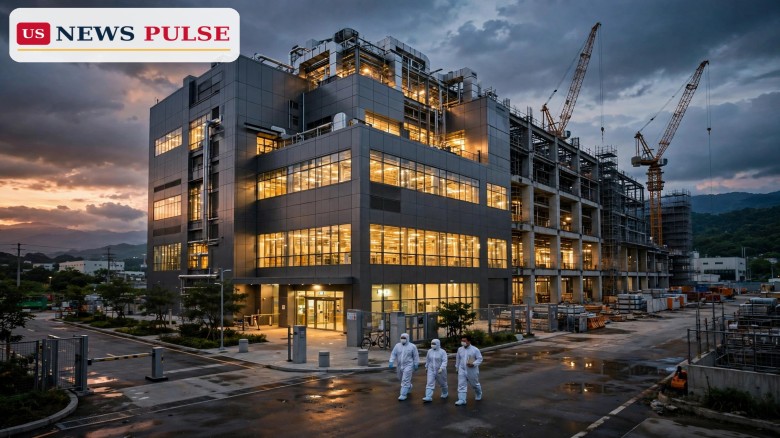
Micron Technology has suspended work on a multibillion-dollar memory chip plant in Taiwan after a labour dispute threw an October pay agreement into doubt, Bloomberg News reported on Thursday, putting a key piece of the AI hardware supply chain on hold.
The paused facility is the Fab 11E complex in Taoyuan, budgeted at between $3 billion and $4.5 billion and scheduled to come online in 2028 to make DRAM and high-bandwidth memory (HBM) for AI hardware. According to people familiar with the matter cited by Bloomberg, a local union representing fewer than 3,000 workers is recruiting staff to annul the October pay deal and demand 15 per cent of operating profit in cash incentives. Micron has reportedly informed Taiwanese officials and a supplier of the freeze, although the Taoyuan city government said it had not been notified. Reuters said it could not immediately verify the report, and Micron did not immediately respond to a request for comment.
Key Points
- Micron has paused its Fab 11E complex in Taoyuan, Taiwan, a $3 billion to $4.5 billion plant due to make DRAM and high-bandwidth memory for AI hardware from 2028.
- A local union of fewer than 3,000 workers is trying to annul an October pay deal and is demanding 15 per cent of operating profit in cash incentives.
- Micron has reportedly told Taiwanese officials and a supplier about the freeze, although the Taoyuan city government said it had not been notified.
- Taiwan accounts for about 60 per cent of Micron's global DRAM output, so the pause puts a major base for crucial AI components in question.
- Reuters could not immediately verify the Bloomberg report, and Micron did not respond to a request for comment.
What Happened
Bloomberg News reported on Thursday, November 5, 2026, that Micron had suspended plans for the memory chip plant in Taiwan because of an extended labour dispute. The report, citing people familiar with the matter, said the company had put the Fab 11E complex in Taoyuan on hold while the pay dispute continues.
The plant was planned as a major addition to Micron's manufacturing footprint. Budgeted at $3 billion to $4.5 billion, it was scheduled to come online in 2028 to produce DRAM and high-bandwidth memory, the fast memory stacked alongside AI accelerators in data centres. That makes the project central to Micron's ambitions in the AI hardware market, where demand for HBM has surged.
Background and Context
Taiwan is one of the most important places in the world for making memory chips, and a cornerstone of Micron's global operations. The island accounts for about 60 per cent of the company's global DRAM output, the workhorse memory used in everything from personal computers to servers. A pause at a plant of Fab 11E's scale matters well beyond a single construction site.
The dispute also lands at a moment of intense pressure across the memory industry. Demand for high-bandwidth memory has soared with the AI boom, while supply has struggled to keep pace, pushing memory prices higher. Micron, Samsung and SK Hynix, the three big DRAM makers, have all been racing to add HBM production, and any delay feeds directly into that tight market.
Micron Taiwan Chip Plant: Why the Pause Matters for AI Memory
The Micron Taiwan chip plant matters because high-bandwidth memory has become one of the tightest bottlenecks in the AI supply chain. HBM is stacked directly beside the graphics processors and AI accelerators that train and run large AI models, and demand has outstripped supply for two years. Micron is one of only three companies in the world that can make HBM at scale.
A delay to Fab 11E would not hit supply tomorrow — the plant was not due to come online until 2028 — but it would push back the extra capacity Micron had planned as AI demand keeps growing. For customers planning data centre builds years in advance, that slippage can feed into pricing and availability across the memory market.
Reactions and Quotes
Micron did not immediately respond to a request for comment, according to Reuters, and the company has made no public statement about the reported pause. Bloomberg's report was based on people familiar with the matter rather than an official announcement, and Reuters said it could not immediately verify the report.
The Taoyuan city government said it had not been notified of any construction freeze, leaving the official position of the project unclear. The episode is being watched against a backdrop of volatility in the wider chip sector: last week Intel's shares plunged after a weak outlook deepened fears about AI spending. Read our report on the Intel stock crash for the full picture.
Why It Matters
The pause matters because Taiwan produces about 60 per cent of Micron's DRAM, and Fab 11E was meant to add capacity for the memory that AI hardware needs most. Any delay to that capacity lands in a market where high-bandwidth memory is already scarce and expensive, and where data centre builders are planning years ahead.
It also matters for Taiwan, whose chip industry is the backbone of its economy and a pillar of the global technology supply chain. A freeze at a multibillion-dollar plant shows even the most established chipmakers can run into trouble on the ground. CrowdStrike's move this week to buy two AI security startups shows how fast the AI sector is consolidating — read our report on the CrowdStrike acquisitions — but consolidation cannot fix a shortage of physical memory.
What Happens Next
The immediate question is whether Micron confirms the pause and how long it lasts. A short freeze while the pay dispute is negotiated would be a footnote; a longer stoppage would push back the 2028 start date and force the company to rethink its AI capacity plans.
The union's campaign to annul the October deal will be the next thing to watch. If it succeeds, Micron will have to renegotiate pay terms with a workforce organised around a much larger demand. Micron's next earnings update will give investors a clearer read on whether the pause is a brief interruption or a longer delay.
Frequently Asked Questions
Why has Micron paused its Taiwan chip plant?
According to Bloomberg, Micron suspended work on the Fab 11E complex in Taoyuan over a labour dispute, with a local union seeking to annul an October pay deal and demanding 15 per cent of operating profit in cash incentives.
How big is the plant?
The Fab 11E complex is budgeted at $3 billion to $4.5 billion and was scheduled to come online in 2028, making DRAM and high-bandwidth memory for AI hardware.
How important is Taiwan to Micron?
Taiwan accounts for about 60 per cent of Micron's global DRAM output, its most important production base for memory chips.
Has Micron confirmed the pause?
Not publicly. Micron did not respond to a request for comment, Reuters could not verify the Bloomberg report, and the Taoyuan city government said it had not been notified.
What is high-bandwidth memory?
High-bandwidth memory, or HBM, is fast memory stacked beside AI accelerators in data centres. It is essential for training and running large AI models, and only three companies make it at scale.
© 2026 US News Pulse. All rights reserved.
 Print
 Save