
Cristiano Ronaldo Retires From International Football After Record 234 Caps
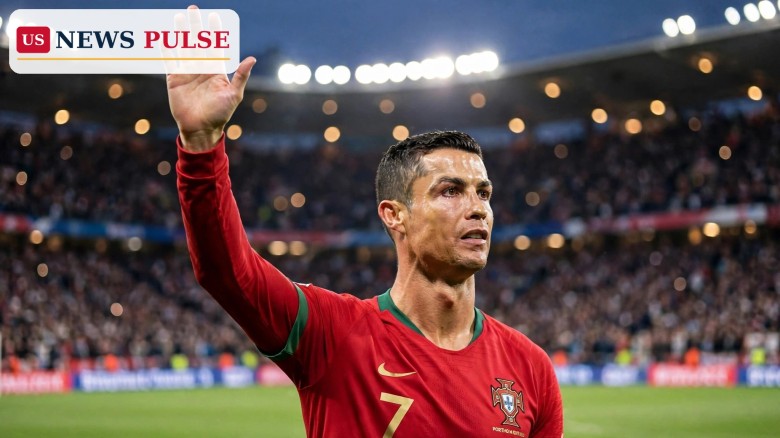
Cristiano Ronaldo has announced his retirement from international football, closing the book on a 23-year Portugal career that rewrote the record books and carried a small Atlantic nation to the summit of European football. The 41-year-old confirmed the decision on Thursday, November 5, 2026, in a five-minute video posted on his social media accounts, reading a letter to supporters. Ronaldo leaves the international stage as the most-capped men's player in history, with a world-record 234 appearances and 146 goals for Portugal.
The announcement ends one of the great international careers in the history of the sport, closing a turbulent final chapter marked by a fallout with coach Jorge Jesus, a fine and a provisional suspension. Yet the numbers, the trophies and the transformation of Portuguese football under his leadership will define how this era is remembered.
Key Points
- Cristiano Ronaldo, 41, announced his international retirement on Thursday, November 5, 2026, in a five-minute video, saying he will hand back Portugal's number 7 shirt after the November international break.
- He retires with men's world records of 234 caps and 146 international goals, in a Portugal career that began with his debut in August 2003.
- His honours with Portugal include Euro 2016, the country's first major trophy, and two UEFA Nations League titles, in 2019 and 2025.
- His final appearance came in the 1-0 Nations League win over Wales in September 2026.
- The decision follows a fallout with coach Jorge Jesus, who benched him for the 2-1 Nations League win over Norway. Ronaldo left the camp on September 30, 2026, and the federation later fined him 255 euros and imposed a 30-day provisional suspension.
What Happened
Ronaldo chose a simple, personal format: a five-minute video, posted on his own social media accounts, in which he read a letter addressed to supporters. There was no press conference and no staged farewell match. The message was direct, and it was final.
"The day has come for me to hand back the number 7 shirt of our national team," Ronaldo said, adding that he would do so after the November international break. "Today I finish my walk on the pitch with the national team. I leave with my head held high, with pride in the path I took, and with the awareness that I gave everything I had for Portugal." His last match, the 1-0 win over Wales in September 2026, closes a career that began when he was an 18-year-old winger in August 2003.
Background: From Madeira to 234 Caps
Ronaldo was born in Funchal, Madeira, in 1985, and came through Sporting Lisbon's academy before starring for Manchester United, Real Madrid and Juventus. He made his senior debut in August 2003, and within a year he was carrying a nation's hopes at Euro 2004 on home soil, where Portugal reached the final and lost to Greece. Two years later he helped Portugal to a World Cup semi-final in Germany in 2006.
Everything changed in France in the summer of 2016, when Portugal won Euro 2016, the country's first major trophy, beating the hosts in the final in Paris despite Ronaldo leaving the match injured in the first half. Two UEFA Nations League titles followed, in 2019 and again in 2025.
Cristiano Ronaldo Retirement: The Numbers Behind the Legend
The headline figures of the Cristiano Ronaldo retirement will stand in the record books for years. His 234 caps are a men's world record, and so are his 146 international goals. No other man has played more games or scored more goals for his country, and the gap is large enough that neither record is likely to be threatened soon.
Those numbers only tell part of the story. Ronaldo scored in tournament after tournament across 23 years, adapting his game from flying winger to penalty-box finisher. He played in five World Cups, from Germany 2006 to Qatar 2022, and six European Championships, a run no outfield player has matched, delivering in the biggest moments, from the hat-trick against Spain at the 2018 World Cup to the goals that won Euro 2016 and the 2019 and 2025 Nations League titles.
Reactions and Quotes
Ronaldo's own words framed the announcement. "The day has come for me to hand back the number 7 shirt of our national team," he said, a line that immediately became the story's defining quote. It was not the language of a player pushed out, but of one deciding, on his own terms, when the walk ends.
Coach Jorge Jesus benched Ronaldo for the 2-1 Nations League win over Norway, and Ronaldo left the camp on September 30, 2026. The federation then fined him 255 euros and imposed a 30-day provisional suspension. Neither the federation nor Jesus has yet commented publicly on the announcement.
Why It Matters
Ronaldo's retirement matters far beyond Portugal because he was, for two decades, the most recognisable footballer in the world, and the international game was the stage where his legend was completed. Club football made him rich and famous; Portugal made him a national hero, and Euro 2016 made him a champion who delivered for his country.
For Portugal, the impact is practical as well as emotional: the team must rebuild its identity around a new generation, and the question of who wears the number 7 shirt next will be asked from November. For the wider sport, the announcement marks the end of an era.
What Happens Next
Portugal finish their Nations League group against Denmark in Braga on November 14 and away to Wales in Cardiff on November 17, the first matches of the post-Ronaldo era. Coach Jorge Jesus must pick a side, and a captain, without the player who has defined the team for 23 years. The announcement covers international football only.
Frequently Asked Questions
When did Cristiano Ronaldo announce his international retirement?
On Thursday, November 5, 2026, in a five-minute video posted on his social media accounts, in which he read a letter to supporters.
How many caps and goals did Ronaldo finish with for Portugal?
He retires with a men's world-record 234 caps and 146 goals for Portugal, in a career that began with his debut in August 2003 and lasted 23 years.
What trophies did Ronaldo win with Portugal?
Euro 2016, Portugal's first major trophy, and two UEFA Nations League titles, in 2019 and 2025. His final appearance was the 1-0 win over Wales in September 2026.
Why did Ronaldo retire from international football now?
Ronaldo said the day had come to hand back the number 7 shirt. The decision follows a fallout with coach Jorge Jesus, who benched him for the win over Norway, after which Ronaldo left the camp on September 30, 2026, and was fined 255 euros with a 30-day provisional suspension.
What is next for Portugal without Ronaldo?
Portugal play Denmark in Braga on November 14 and Wales in Cardiff on November 17, the first matches of the post-Ronaldo era, with a new generation set to take over the number 7 shirt.
Related: Connor McDavid breaks Wayne Gretzky's record as fastest to 30 assists in NHL history; Luka Doncic drops 42 as Lakers rout Heat 138-117; Wembanyama's career-high 52 points lift Spurs past Mavericks.
© 2026 US News Pulse. All rights reserved.
 Print
 Save