
Georgia Flash Flood Emergency as Toccoa River Nears Record Crest, 30 Rescued in McCaysville
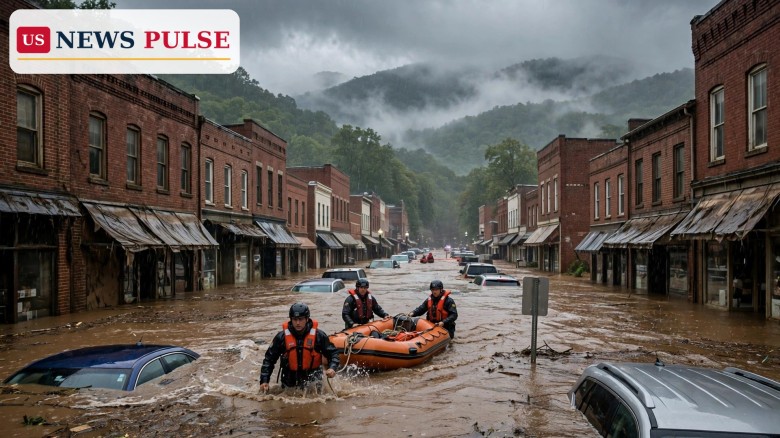
A rare flash flood emergency struck the Georgia-Tennessee border early on Thursday, November 5, 2026, as the Toccoa River surged toward its 1990 record crest and floodwater up to 7 feet deep swamped downtown McCaysville, Georgia. Police ordered immediate evacuations just before 3 a.m. local time, and rescue crews pulled more than 30 people from homes and vehicles overnight. The Georgia flash flood emergency closed the small mountain city until further notice, with several people still trapped in homes at last report and no deaths or injuries confirmed.
Key Points
- A flash flood emergency was issued early Thursday, November 5, 2026, for McCaysville, Georgia, and Copperhill, Tennessee, on the Georgia-Tennessee border.
- More than 30 water rescues were carried out overnight in McCaysville, where downtown water reached 6 to 7 feet deep.
- The Toccoa River, which becomes the Ocoee in Tennessee, rose to near or above its 1990 record of 17.8 feet, with one reading of 18.05 feet from NOAA data.
- Up to 6 inches of rain fell in six hours at several gauges, a rainfall described by CNN as at least a 1-in-200-year event.
- Schools closed Thursday in Fannin and Gilmer counties, and shelters opened in Blue Ridge, McCaysville and Copperhill as mudslides complicated rescue work.
What Happened
Heavy overnight rain fell across the North Georgia mountains, with parts of northern Gilmer and southern Fannin counties receiving over 5 inches in 24 hours, and over 6 in places. Much of that rain drained into the Toccoa River, sending water levels rising fast downstream near McCaysville and the Tennessee border. At several gauges, up to 6 inches fell in just six hours.
In McCaysville, police ordered immediate evacuations just before 3 a.m., telling residents along the river to leave at once and seek higher ground. Emergency crews began receiving calls overnight from residents unable to escape their homes and motorists trapped in vehicles as water rose in low-lying areas. Swift-water rescue teams were called in, and crews made more than 30 water rescues overnight.
Downtown McCaysville was under 6 to 7 feet of water, with floodwater over the roofs of some homes. The city declared a state of emergency shortly after 5 a.m. and is closed until further notice. Across the border in Copperhill, Tennessee, the Ocoee River hit major flood stage, putting homes and businesses under water, and flooding was also reported in downtown Blue Ridge and near Ducktown, Tennessee.
Background and Context
McCaysville sits on the Toccoa River in Fannin County, in the far north Georgia mountains, across the state line from Copperhill, Tennessee. The same river is known as the Ocoee once it crosses into Tennessee, so one flood wave hits both towns in turn — which is why one storm produced two emergencies, one on each side of the border, within hours.
The storm is the same cross-country system that flooded the Southwest earlier in the week, where record flooding and a statewide emergency in Arizona came before the rain moved east. In Georgia, the system stalled over the mountains, dropping its heaviest rain on the steep valleys of the Toccoa basin, where runoff gathers fast and rivers can rise feet in an hour.
Georgia Flash Flood Emergency: Toccoa River Record Crest
The central question on Thursday morning was whether the Toccoa River had beaten its long-standing record. Atlanta News First cited NOAA data showing a reading of 18.05 feet, above the 17.8-foot record set on February 16, 1990. Other reports put the crest just below the record, and the official gauge reading may be revised, so the final figure remains uncertain.
Either way, the river reached a level not seen in more than 35 years, and the damage in McCaysville, where homes were submerged to their roofs and bridges were swept away, matches that scale. The rainfall itself was extraordinary: up to 6 inches in six hours at several gauges, which CNN described as at least a 1-in-200-year rainfall event, meaning rain of this intensity would be expected only about once in two centuries.
Reactions
An emergency official described how quickly the situation turned dangerous overnight. "The water levels begin to rise rapidly around some of the low lying areas along the creeks and rivers, and started getting calls with people unable to get out of their homes, trapped in vehicles," the official said. "So we had to call in swift water rescue teams and start rescuing and evacuating people."
Police issued the evacuation order before 3 a.m., the city declared a state of emergency shortly after 5 a.m., and shelters opened in Blue Ridge, McCaysville and Copperhill. Officials also repeated the warning that applies to every flood: never drive through flooded roads.
Why It Matters
The McCaysville flood shows how fast a mountain river can turn deadly when a slow-moving storm drops a season's worth of rain in a few hours. The town had little warning between the rain falling and the river leaving its banks, and the rescues that followed happened in the dark, in fast-moving water, with mudslides blocking some of the roads crews needed. The same storm had already flooded the Southwest earlier in the week, killing people in Arizona and forcing a statewide emergency there, and a single storm crossing the country can keep producing emergencies for days.
What Happens Next
Rescue work will continue until every trapped resident is accounted for, with swift-water teams still working in McCaysville and Copperhill. Officials will then turn to damage assessment, checking homes, businesses, roads and bridges, including the bridges reported swept away around McCaysville.
The National Weather Service will confirm the final crest of the Toccoa River, settling whether Thursday's flood officially beat the 1990 record. Residents should keep watching emergency alerts and avoid travelling through flooded areas as water keeps draining into rivers and streams.
Frequently Asked Questions
Where did the flash flood emergency happen?
It covered McCaysville, Georgia, and Copperhill, Tennessee, where the Toccoa becomes the Ocoee. Flooding was also reported in downtown Blue Ridge and near Ducktown, Tennessee.
How many people were rescued in McCaysville?
More than 30 water rescues were carried out overnight, with several people still trapped at last report. No deaths or injuries had been confirmed by Thursday morning.
Did the Toccoa River beat its 1990 record?
Not yet certain. Atlanta News First cited NOAA data showing 18.05 feet, above the 17.8-foot record set on February 16, 1990, but other reports put the crest just below it, and the official gauge reading may be revised.
How much rain fell in the McCaysville flooding?
Up to 6 inches fell in six hours at several gauges, with more than 5 inches over 24 hours in northern Gilmer and southern Fannin counties. CNN called it at least a 1-in-200-year event.
Are schools and roads closed in the area?
Schools closed Thursday in Fannin and Gilmer counties, and McCaysville is closed until further notice. Shelters are open in Blue Ridge, McCaysville and Copperhill.
Related coverage: Southwest Flooding Turns Deadly as 2 Die in Flagstaff and Arizona Declares Emergency and Flash Flood Emergency as 15 to 20 Inches of Rain Swamp Palm Bay, Florida. Sources: Fox 5 Atlanta, Atlanta News First, CNN, November 5, 2026.
© 2026 US News Pulse. All rights reserved.
 Print
 Save