
Zelenskyy Doubts Elon Musk Acted Alone in Starlink Slowdown in Ukraine
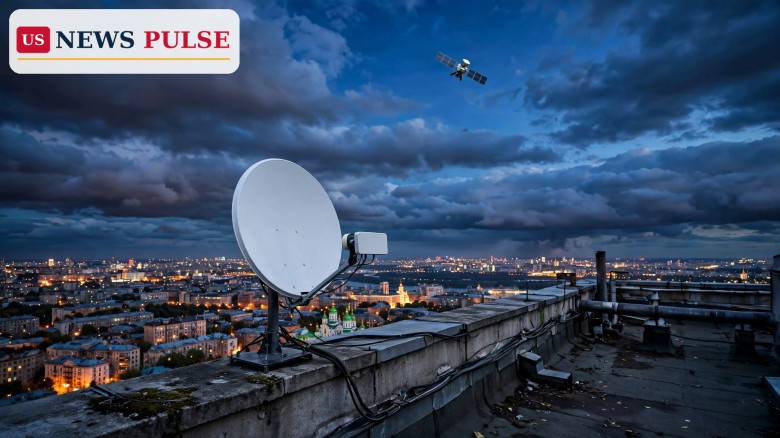
Ukrainian President Volodymyr Zelenskyy has said he does not believe Elon Musk acted alone when Starlink slowed down over Ukraine last month, telling PBS NewsHour that the decision must have involved representatives of the American government. The claim, made in an interview from Kyiv that aired on November 2, 2026, puts Musk and Washington at the centre of a dispute over the satellite network Ukraine's military depends on.
"I'm not sure that he could do it personally alone, without any representatives from American government," Zelenskyy told anchor Amna Nawaz, pointing out that the restriction hit Starshield, the government and military version of the network, not the ordinary civilian service. The slowdown cut Ukrainian drone links for ten days in October, and Zelenskyy said he still does not know who, on the American side, made the call.
Key Points
- Zelenskyy told PBS NewsHour he doubts Elon Musk acted alone in slowing Starlink in Ukraine, saying US government representatives must have been involved.
- A speed cap on Starshield from October 14 cut Ukrainian drone links above 161 km/h until October 24.
- Musk has said SpaceX simply enforced its own terms, but earlier said such limits were decided by the US military and "ultimately" the president.
- Defence Secretary Pete Hegseth has denied that the United States issued any directive to slow the network.
- Zelenskyy has asked President Donald Trump about four times to lift Starshield restrictions so Ukraine can strike Russian ballistic launchers, without success.
What Happened
The interview, recorded in Kyiv and broadcast on November 2, was Zelenskyy's fullest account yet of the episode. From October 14, a speed cap on Starshield cut the links Ukrainian forces use to steer drones flying faster than 161 kilometres per hour. The restriction lasted ten days, until full speed returned on October 24.
Zelenskyy said he asked to speak to Musk after the slowdown, but SpaceX did not respond. He said he does not know whether Musk supports Ukraine, though he stays grateful for Starlink. What he questioned was the idea that a decision with such military consequences could have been taken by one man alone. "I don't know who from the American side of the government did it, who allowed him," he said. "I think it was a dialogue between some people, and during this dialogue, the decision was negative for us."
Background and Context
Starlink has carried Ukraine's battlefield communications and drone feeds since the first weeks of the full-scale invasion in 2022. Starshield is its restricted sibling, a service SpaceX sells to governments for military use, with tighter controls and different terms. The October slowdown hit that military tier, which is why Zelenskyy's questions are aimed as much at Washington as at SpaceX.
Musk's own explanations have shifted. After the slowdown he said SpaceX had simply enforced its own terms of service. But he had earlier said that such limits were decided by the US military and "ultimately" the president. Defence Secretary Pete Hegseth has denied any US directive was issued, leaving the accounts in direct conflict.
The Starlink Slowdown That Sparked the Question
The practical effect of the cap was narrow but sharp. Drones flying above 161 kilometres per hour lost their full-speed link, the fast connection that lets an operator steer a drone onto a moving target. For ten days, Ukrainian units flying their fastest drones worked around a slower connection, showing how much of the war effort runs through a network owned by one private company.
That dependence is what makes the question of who decided so sensitive. If Musk acted alone, the episode is a dispute between a government and a contractor over terms of service. If Washington was involved, it becomes a policy decision by an ally to limit a weapon Ukraine was using in war, taken without telling Kyiv. Zelenskyy was careful not to claim he knows which it was. He said only that the first explanation does not convince him.
Reactions and Quotes
The most direct reaction has come from Congress. Senator Richard Blumenthal has opened a congressional inquiry into the Starlink and Starshield restrictions, to find who ordered the slowdown and on what authority. Nine senators had asked the Pentagon inspector general for an independent investigation, but it was rejected, leaving Blumenthal's inquiry as the main route for answers.
Musk has not responded publicly to the interview, and SpaceX did not answer Zelenskyy's request for a conversation after the slowdown. Hegseth's denial stands as the administration's position: no directive was given. That gap is now the central question for Blumenthal's inquiry.
Why It Matters
The row matters because it is about control, not just connectivity. Ukraine's military runs much of its drone war and battlefield communications through a network that belongs to one man and is governed by contracts written in the United States. When it slows, Ukrainian operations slow with it, and Kyiv has no lever of its own to pull.
It also matters because it tests the trust between allies. Ukraine has asked the United States to lift the Starshield restrictions so it can strike the launchers behind Russian missile attacks, and it has been refused four times. If the slowdown was also a government decision, Kyiv will want to know what else Washington might decide. If it was Musk alone, the question is whether a private company should hold that power over an ally's war effort.
What Happens Next
Blumenthal's inquiry is now where the question will be tested. Congress can demand documents from SpaceX and the Pentagon and call officials to testify. Whether it gets cooperation, and how quickly, will decide whether Zelenskyy's doubt is answered with evidence or left hanging.
Zelenskyy, meanwhile, will keep pressing his separate request to lift the Starshield restrictions on striking Russian ballistic launchers. He has raised it with Trump about four times without success, and will keep raising it, with a sharper argument: if Washington can slow the network, it can also free it.
Frequently Asked Questions
What did Zelenskyy actually say?
In an interview with PBS NewsHour anchor Amna Nawaz from Kyiv, aired on November 2, 2026, he said he doubts Elon Musk acted alone in slowing Starlink in Ukraine, because Starshield is the government and military version of the network.
What is Starshield?
Starshield is the government and military version of SpaceX's Starlink network, sold to governments for defence use under different terms from the civilian service.
When did the slowdown happen, and what did it do?
From October 14, 2026, a speed cap on Starshield cut Ukrainian drone links above 161 kilometres per hour. Full speed was restored on October 24, after ten days.
What has Musk said about it?
Musk said SpaceX enforced its own terms, though he earlier said the US military and "ultimately" the president decide such limits. Defence Secretary Pete Hegseth has denied any US directive.
What is Congress doing about it?
Senator Richard Blumenthal has opened a congressional inquiry into the restrictions. The Pentagon inspector general rejected nine senators' request for an independent investigation.
Related coverage: SpaceX NASA Moon landing at risk as Starlink and AI take priority and Trump says he would pardon Musk and aides if Democrats investigate.
© 2026 US News Pulse. All rights reserved.
 Print
 Save