
MAGA Coalition Fracturing as One in Ten Trump Voters Backed Democrats in Midterms
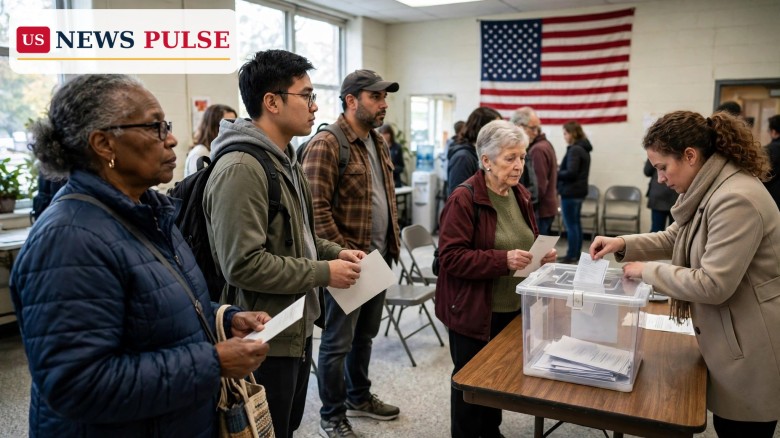
The MAGA coalition is fracturing. A sweeping CNN Voter Poll of about 100,000 voters finds that roughly one in ten Americans who voted for Donald Trump in 2024 backed Democratic candidates in this week's midterm elections — a defection big enough to help hand Democrats control of both chambers of Congress. Conducted by SSRS between October 19 and November 3, the poll shows a movement losing its grip on the very voters who powered it, with the economy, the war in Iran and a sense that Trump no longer fights for people like them driving the break.
Key Points
- Nationally, about 7% of 2024 Trump voters who turned out backed a Democratic candidate for Congress, against just 2% of 2024 Harris voters who voted Republican.
- In five Democratic Senate wins — Texas, Ohio, Iowa, Kansas and South Carolina — roughly one in ten Trump voters backed the Democrat; Georgia and North Carolina saw similar crossovers.
- One in five 2024 Trump voters now disapprove of the president, and similar shares say he does not fight for people like them or has the wrong priorities.
- Half of Trump voters say economic conditions are not so good or poor, and about 27% say Trump's economic policies have made things worse.
- A quarter say the US was wrong to take military action against Iran, and discontent runs deepest among young men, Latino voters and non-MAGA Republicans.
What Happened
The numbers land days after Democrats swept the November 3 midterms, winning both the House and the Senate and reshaping the final two years of Trump's presidency. The poll interviewed about 100,000 voters nationwide, with a margin of error of plus or minus 0.5 points.
The crossover was not confined to one region. In the five Democratic Senate wins in states where Trump voters made up the lion's share of the electorate — Texas, Ohio, Iowa, Kansas and South Carolina — about one in ten Trump voters backed the Democrat, as did more than one in ten in Georgia and North Carolina.
The flow ran almost entirely one way: about 7% of Trump voters who turned out backed a Democratic congressional candidate, against 2% of 2024 Harris voters who crossed over to vote Republican. For a coalition built on loyalty, the asymmetry is the story.
Background: The Coalition That Won in 2024
Trump's 2024 victory was built on an unusually broad coalition. He expanded his support among working-class voters, made gains with Latino voters and drew in younger men who had rarely voted Republican — a combination that returned him to the White House.
Two years on, that coalition is strained on every front the poll measured. The explanation is not a collapse in turnout, but a decision by a meaningful share of Trump voters to vote the other way.
Vice President JD Vance said as much after the vote. "The main problem is not turnout," he said. "The main problem is that many people who voted for Trump/Vance in 2024 voted for Democrats in 2026."
MAGA Coalition Fracturing: What the Numbers Show
The sharpest discontent sits inside the groups meant to be the coalition's future. Nearly half of male Trump voters under 30 now disapprove of the president, along with about a quarter of Latino Trump voters and about a third of Trump voters who call themselves non-MAGA Republicans.
The economy dominates the discontent. Half of Trump voters say conditions are not so good or poor, and around 27% say Trump's economic policies have actively made things worse — a striking verdict from voters who backed him to bring prices down.
Foreign policy is the other fault line. A quarter of Trump voters say the United States made the wrong decision in taking military action against Iran. The finding echoes the reckoning inside the party, where Vance has blamed the war for the defeat while Trump has insisted it was only "a piece of it".
The numbers describe a coalition that has not so much shrunk as splintered: its voters still turn out, but a growing share no longer believes the movement fights for them.
Reactions: Vance and the Blame Game
Vance has been the most outspoken voice in the Republican reckoning. In a post on X the day after the election, he wrote that "the reason we lost is the war" and that "everyone knows why we lost," arguing that the Iran war and the cost of living drove his 2024 voters to the Democrats. Read more: Vance blames Iran war for midterm losses.
Trump has pushed back, telling Fox News and the Wall Street Journal that Iran was only "a piece of it" and defending the war as "very wise", while conceding it cost Republicans votes.
The debate matters because Vance is widely seen as a leading contender for the 2028 Republican nomination, and his public break with the president has opened the race wide. He has also begun courting disaffected Trump voters for a "new right" alliance ahead of 2028. Read more: Vance courts disaffected Trump voters for 2028.
Why It Matters
The fracturing of the MAGA coalition changes the arithmetic of American politics in both directions. For Democrats, the midterm sweep delivers control of Congress and with it the power to set the agenda, investigate the administration and block the president's programme. Read more: Democrats' 100-day agenda after the sweep.
For Republicans, the poll warns that the 2024 coalition cannot be reassembled simply by turning out the same voters again. The defectors are not staying home — they are voting Democratic — so the party must win them back rather than merely mobilise them.
What Happens Next
The new Democratic Congress takes office on January 3, 2027, and party leaders are already debating how to use the mandate, from rapid-fire bills on wages, Medicaid and the child tax credit to oversight. How they use the next two years will decide whether the Trump voters who crossed over in 2026 become lasting Democratic voters or one-election defectors.
On the Republican side, the reckoning is only beginning, with Vance's open break with Trump over the war jump-starting the 2028 race.
Frequently Asked Questions
What is the CNN Voter Poll?
A survey of about 100,000 voters conducted by SSRS for CNN between October 19 and November 3, 2026, with a margin of error of plus or minus 0.5 points.
How many Trump voters backed Democrats in the midterms?
About 7% nationally. In five Democratic Senate wins — Texas, Ohio, Iowa, Kansas and South Carolina — roughly one in ten Trump voters backed the Democrat.
Why did Trump voters defect?
The economy and the war in Iran: half rate conditions as poor, 27% say Trump's policies made things worse, and a quarter call the Iran action a mistake.
Which Trump voters are most dissatisfied?
Nearly half of male Trump voters under 30 now disapprove of the president, along with about a quarter of Latino Trump voters and about a third of non-MAGA Republicans.
What does this mean for the 2028 election?
It leaves the 2028 Republican race wide open and gives Democrats a chance to keep the voters who crossed over — if they deliver on the cost of living.
© 2026 US News Pulse. All rights reserved.
 Print
 Save