
Sheikh Hasina's Return to Bangladesh Vowed for December Despite Death Sentence
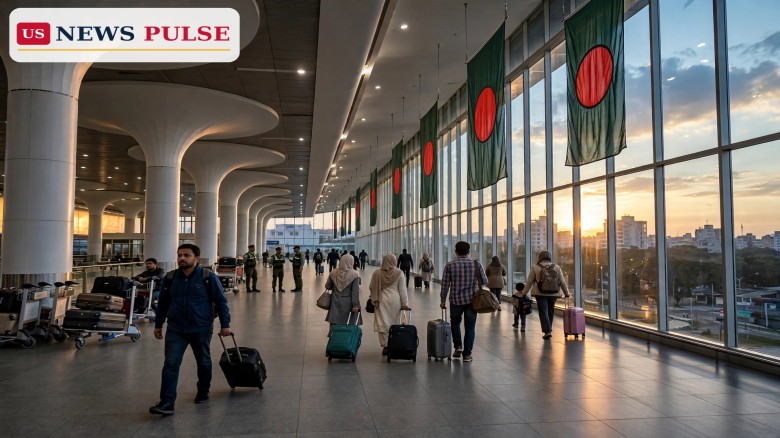
Ousted Bangladesh prime minister Sheikh Hasina has said she will return to her country from exile in December, even though a Bangladeshi court has sentenced her to death, declaring she would rather die on her own soil than spend the rest of her life watching her people suffer from a distance. In an email interview with The Associated Press, answered on Wednesday, November 4, Hasina said her decision to come home has not changed, and that she is fully aware she could be arrested, imprisoned, tortured or even killed when she arrives. The Sheikh Hasina return to Bangladesh would be one of the most dramatic homecomings in modern South Asian politics.
Key Points
- Hasina told The Associated Press she will return to Bangladesh in December 2026, despite a death sentence handed down in her absence.
- She said: "If death is my destiny, I would rather die on the soil of my own country, among my own people. So, I will return to Bangladesh. That decision has not changed."
- Bangladesh's International Crimes Tribunal sentenced her to death in November 2025 over the deadly 2024 crackdown on student protesters.
- That crackdown left hundreds dead and thousands injured; a United Nations report put the toll at nearly 1,400.
- Dhaka has repeatedly sought her extradition from India, which has declined to hand her over, and Hasina has not said how she plans to travel.
What Happened
Hasina answered the Associated Press's questions by email; the agency said it sent them last week and received her replies on Wednesday, November 4. It is her clearest statement yet since she fled Bangladesh in August 2024, and it sets a firm timetable: a return in December, a little more than a year after the verdict.
The interview leaves the practical questions unanswered. Hasina did not say how she plans to travel from India, which border crossing she would use, or on what day she would arrive. She said in September that she would announce the date, time and point of entry later. What she did make plain is that the death sentence has not changed her mind — and that she expects the worst on arrival.
"I know that I may be arrested when I return. I may be imprisoned, tortured or even killed. I am fully aware of those possibilities," she told the AP. "But I cannot spend the rest of my life watching my people suffer from a distance."
Background: The Fall of Hasina's Government
Hasina led Bangladesh as prime minister from 2009 to 2024. Her government fell in August 2024 after a student-led mass uprising that began as a protest over public-sector job quotas and grew into a nationwide movement demanding her resignation. After weeks of demonstrations and a violent crackdown, she left the country and has lived in India ever since.
The crackdown on the July and August 2024 protests left hundreds dead and thousands injured. A United Nations report later put the death toll at nearly 1,400. In November 2025, Bangladesh's International Crimes Tribunal sentenced Hasina to death in absentia for crimes against humanity over the crackdown. She denies any wrongdoing, rejects the verdict and questions the legitimacy of the trial. Bangladesh is also awaiting a World Court ruling on November 19 in the Rohingya genocide case against Myanmar, rooted in the 2017 offensive that forced at least 730,000 Rohingya into Bangladesh. Read our report on the Rohingya ruling date here.
Sheikh Hasina Return to Bangladesh: What She Told the AP
The heart of the interview is Hasina's insistence that returning is her own decision, not one that depends on any foreign government. Asked whether the United States and India should pressure Dhaka to ensure her safe return, she answered: "I do not need the blessing of a foreign power to return to my own country."
That line matters because her exile has always depended on New Delhi. India has sheltered her since August 2024 and has declined Bangladesh's repeated requests to extradite her. Whether she travels with India's knowledge or simply presents herself at the border will shape how Dhaka and New Delhi handle the moment.
Reactions and the Extradition Standoff
Dhaka has repeatedly sought Hasina's extradition since she fled, and India has declined to hand her over. A voluntary return would end that standoff directly: instead of Bangladesh asking India to send her back, she would arrive on her own terms, forcing Dhaka to decide at once whether to arrest her, detain her, or let her move freely.
That decision carries obvious risks for the government that replaced her. Arresting a former prime minister who returned voluntarily would be a powerful display of the tribunal's authority, but it would also hand her supporters a cause and a focal point. For India, the return would close a diplomatic problem it has carried for more than two years.
Why It Matters
A former head of government returning to face a death sentence is rare, and it would put Bangladesh's post-uprising settlement to its hardest test. The tribunal's verdict, the legitimacy of the trial and the future of her party will all be argued again in public the moment she lands.
The return also matters beyond Bangladesh. South Asia has watched the country's transition closely since 2024, and a dramatic homecoming could unsettle a region already dealing with war and political upheaval. For ordinary Bangladeshis, the stakes are simpler: the 2024 uprising divided families and neighbourhoods, and a return by the woman at the centre of it could reopen those wounds — or begin to close them.
What Happens Next
December is now the month to watch. Hasina has said she will announce the date, time and point of entry before she travels, and that announcement — if it comes — will be the first concrete sign of whether the return is real or rhetorical.
If she does return, the first hours will be decisive: whether she is arrested at the border or the airport, where she is taken, and what she says to the public.
Frequently Asked Questions
When will Sheikh Hasina return to Bangladesh?
She told The Associated Press she will return in December 2026, but has not announced the exact date, time or point of entry.
Why was Sheikh Hasina sentenced to death?
Bangladesh's International Crimes Tribunal sentenced her to death in absentia in November 2025 for crimes against humanity over the deadly crackdown on student protesters in July and August 2024. She denies wrongdoing and rejects the verdict.
Where is Sheikh Hasina now?
She has lived in exile in India since August 2024, when a student-led mass uprising ended her 15 years as prime minister.
Will India hand her over to Bangladesh?
India has declined Bangladesh's repeated extradition requests so far. A voluntary return would make the extradition question moot.
What did Hasina say about foreign help for her return?
Asked whether the US and India should pressure Dhaka to ensure her safe return, she said: "I do not need the blessing of a foreign power to return to my own country."
Related coverage: France protests: 70,000 police deployed and Zelenskyy doubts Musk acted alone on Starlink.
© 2026 US News Pulse. All rights reserved.
 Print
 Save