
Nvidia CEO Jensen Huang Asked to Brief Congress on Nov 18 Over China Spy Claims
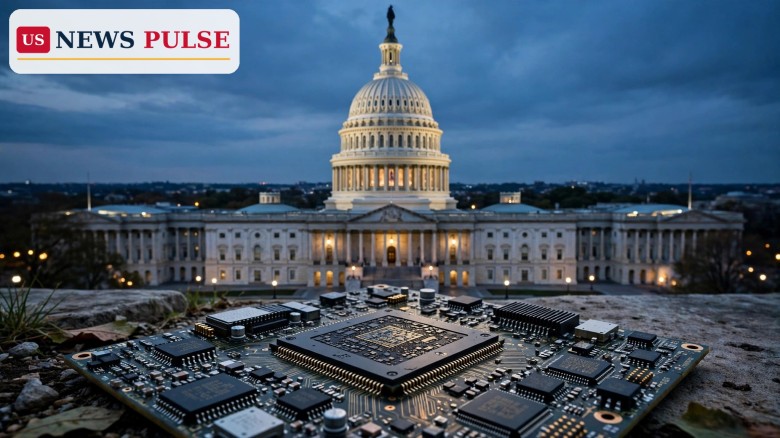
Washington — Top House Republicans have demanded a closed-door Nvidia CEO Jensen Huang Congress briefing on November 18, pressing the head of the world’s most valuable chipmaker to explain a reported Chinese espionage case that has put the company’s security controls under the microscope. The demand, in a letter dated November 4, is the sharpest congressional intervention yet since a New York Times report last month.
Key Points
- Three House Republican chairs — Brian Mast (Foreign Affairs), John Moolenaar (China Select Committee) and Eric Crawford (Intelligence) — signed a letter dated November 4 asking Jensen Huang to brief Congress in private on November 18.
- The briefing concerns a New York Times report that US authorities are investigating Alice Huang, a former Megaspeed executive, over suspicions she passed information to Beijing.
- Megaspeed, based in Singapore, buys AI chips from Nvidia. American officials have scrutinised it over suspicions it helped China obtain advanced AI chips barred from shipment to China.
- Nvidia did not comment on the letter, but said Huang meets “thousands of customer executives every year” and that Asian cloud customers receive only ordinary business information.
- The demand follows President Donald Trump’s public backing of Huang, whom he called a “great, brilliant person” and said he would keep as an adviser absent evidence to the contrary.
What Happened
The letter, seen by Reuters and published on Thursday, November 5, asks Huang to provide a closed-door briefing about the New York Times report and about Nvidia’s “security protocols against foreign adversary espionage.” The three chairmen want to hear directly from the chief executive of the company whose chips sit at the centre of the global race for artificial intelligence, with a private session letting lawmakers raise classified material.
The lawmakers wrote that the report raises “significant national security concerns regarding (China’s) access to sensitive U.S. technology and information,” adding that “it is vital that Congress determines the extent to which U.S. national security has been placed at risk.”
Background: The New York Times Report and the Alice Huang Investigation
The New York Times reported last month that United States authorities were investigating Alice Huang, a former executive of Megaspeed, a Singapore-based company that buys AI chips from Nvidia. American officials have scrutinised Megaspeed over suspicions it helped Beijing gain access to advanced AI chips barred from shipment to China. China dismissed the account as “groundless speculation.”
The report did not accuse Jensen Huang of wrongdoing. It described a Chinese businesswoman in Huang’s orbit who, according to United States intelligence, funnelled information to Beijing. The congressional letter is about what Huang knew, what Nvidia’s controls caught or missed, and whether sensitive technology reached China — not about any allegation that the chief executive himself passed secrets.
Export controls on advanced chips are one of Washington’s main tools for slowing China’s military and artificial intelligence development, and Nvidia’s most powerful processors are among the most sought-after items on the restricted list. Huang has also advised President Trump on AI policy and joined a CEO trip to Beijing in May that met Xi Jinping.
Nvidia CEO Jensen Huang Congress Briefing: What Lawmakers Want to Know
The November 18 briefing is expected to focus on three questions. First, what was the extent of Huang’s contact with Alice Huang, and what information, if any, changed hands? Second, what did Nvidia’s internal controls know about Megaspeed and its customers, and when? Third, could any restricted technology have reached China through Nvidia’s sales channels, and if so, how?
Lawmakers will also want to understand how Nvidia polices its distribution chain. Tracing where a chip ends up after the first sale is one of the hardest problems in export enforcement, and the chairmen’s reference to Nvidia’s “security protocols against foreign adversary espionage” suggests they want to hear, in detail, how the company vets customers and flags suspicious orders. If Huang declines, Congress can compel his testimony; for now the letter is a request, not a subpoena.
Reactions and Quotes
Nvidia did not comment on the letter, but denied sensitive information had changed hands. The company said Huang talks with “thousands of customer executives every year,” and that Asian cloud customers receive ordinary business information, “not sensitive Nvidia trade secrets or anything tied to US national security.” It added: “We often receive updates from the U.S. government regarding parties and entities of concern and always act accordingly.”
President Trump had already weighed in days earlier, speaking on Saturday at his Florida residence: “I have a lot of respect for Jensen… great, brilliant person… We’re going to check it out very closely.” He added that he would keep Huang as an adviser “unless we find out something to the contrary.” The White House has not commented on the letter.
Why It Matters
Nvidia’s graphics processors power most of the world’s leading artificial intelligence systems, from the data centres of the biggest American tech firms to the labs building the next generation of models. Whoever controls the supply of those chips has a decisive say in who leads the AI race, which is why Washington treats their movement as a national security issue rather than an ordinary trade matter.
The case also tests the credibility of the export-control system. If advanced chips are reaching China through intermediaries despite years of tightening rules, lawmakers will want to know whether the rules need to be stricter, enforcement needs more resources, or companies must do more to track their own products. For Nvidia, the stakes are commercial too: China is a huge AI hardware market, and tighter rules cost it billions in lost sales.
What Happens Next
The closed-door briefing is set for November 18, after which the three chairmen will decide whether a public hearing, further document requests or legislation should follow. The investigation into Alice Huang and Megaspeed continues separately.
Frequently Asked Questions
Why does Congress want to hear from Jensen Huang?
Three House Republican chairmen want him to brief them on November 18 about a New York Times report that US authorities are investigating a former Megaspeed executive over suspicions she passed information to Beijing.
Who is Alice Huang?
A former executive of Megaspeed, a Singapore-based company that buys AI chips from Nvidia. US authorities are investigating her over suspicions Megaspeed helped Beijing obtain advanced AI chips barred from shipment to China.
Has Jensen Huang been accused of wrongdoing?
No. The report concerns a businesswoman in his orbit, not an accusation against Huang himself. Trump has publicly backed him, and Nvidia says no sensitive trade secrets changed hands.
What are export controls on AI chips?
American rules barring shipment of the most advanced AI processors to China, because the chips could advance China’s military and AI capabilities. Enforcement focuses on stopping them reaching China through intermediaries.
What happens after the November 18 briefing?
The chairmen will decide whether to seek a public hearing, more documents or new legislation. The investigation into Alice Huang and Megaspeed continues.
Related coverage: Trump backs Huang amid China spy plot inquiry · Nvidia Hugging Face DOJ probe: antitrust questions hit $12.9bn AI deal · Apple overtakes Nvidia as most valuable company
© 2026 US News Pulse. All rights reserved.
 Print
 Save