
Mexican Judge Arrested in Colombia Over $2 Million Bribe in Ryan Wedding Drug Case
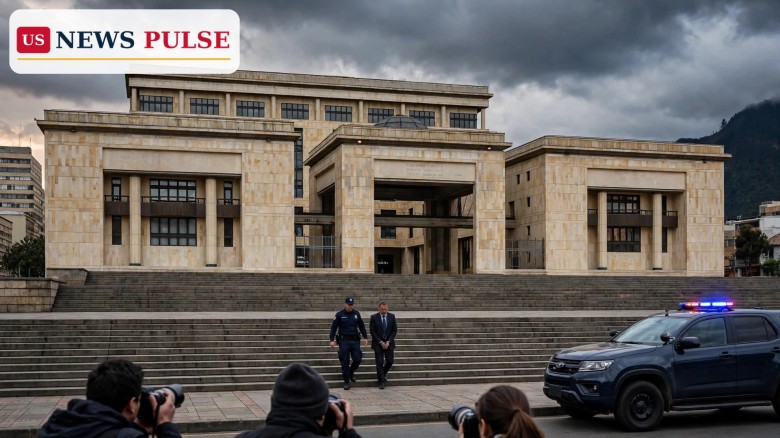
A Mexican judge accused of selling justice to one of North America's most wanted drug traffickers is now in custody in Colombia, facing a nine-count United States indictment that alleges he accepted a $2 million bribe to free a senior figure in the billion-dollar cocaine network run by former Canadian Olympic snowboarder Ryan Wedding.
Luiz Benítez Alcántara, 49, was arrested in Colombia on Sunday, November 2, 2026, US officials announced on Thursday, November 5. He is charged with being an accessory after the fact, and American authorities say they will ask Colombia to extradite him. Prosecutors say Benítez took the bribe to release Canadian citizen Andrew Clark from custody in Mexico in 2025 — the man US authorities call the second-in-command of Wedding's network. Clark had fought extradition in proceedings overseen by Benítez in 2024; after his release he was rearrested within days and taken to the United States.
Key Points
- Mexican judge Luiz Benítez Alcántara, 49, was arrested in Colombia on November 2, 2026, on a nine-count US grand jury indictment charging him with being an accessory after the fact.
- Prosecutors accuse him of accepting a $2 million bribe to release Canadian citizen Andrew Clark from custody in Mexico in 2025.
- Benítez had overseen Clark's extradition proceedings in Mexico in 2024.
- Clark is accused of helping run a billion-dollar cocaine network allegedly headed by former Canadian Olympic snowboarder Ryan Wedding.
- US officials say they will request Benítez's extradition from Colombia, where he had travelled for personal reasons.
What Happened
US officials announced the arrest on Thursday, November 5, 2026, three days after Benítez was taken into custody in Colombia, where he had travelled for personal reasons. The grand jury indictment contains nine counts and charges Benítez with being an accessory after the fact — a charge that, in this case, centres on his alleged role in helping Clark escape US justice after the Canadian was detained in Mexico.
According to the allegations, Benítez accepted a $2 million payment in exchange for ordering Clark's release in 2025, after presiding over his extradition proceedings in Mexico in 2024. The release did not keep Clark free for long: he was arrested again within days and taken to the United States, where he now faces drug trafficking and murder charges. US authorities have confirmed they will formally request his extradition, though no date has been announced for a hearing.
Background: The Ryan Wedding Drug Network
The case sits at the centre of one of the most closely watched drug trafficking prosecutions in North America. US authorities say the network allegedly headed by Ryan Wedding moved cocaine from Mexico to stash houses in Los Angeles, and then onward to Canada hidden in long-haul semi-trucks. Prosecutors describe the operation as a billion-dollar enterprise; dozens of people have been arrested in connection with it, and investigators have seized large volumes of drugs, weapons and cash.
Wedding himself was arrested in Mexico earlier in 2026 and flown to California, where he pleaded not guilty to murder and drug charges. Within that organisation, US authorities say Clark was the second-in-command, a central figure in running its day-to-day operations. Clark's path through the Mexican courts is now a central part of the case against Benítez.
Mexican Judge Accused of Taking a $2 Million Bribe
The allegation against Benítez is simple and severe: that a sitting judge used his courtroom authority to sell a trafficker's freedom. The $2 million figure, if proven, would place the alleged bribe among the largest ever levelled against a Mexican judicial official in a US case. Clark was not a minor figure in the network — as the alleged second-in-command under Wedding, he is accused of helping direct a pipeline that moved cocaine across two international borders and into Canada.
The nine-count indictment frames Benítez not as a bystander but as an accessory after the fact: someone who, prosecutors say, knowingly helped a fugitive from US justice evade capture. The charge does not accuse Benítez of trafficking drugs himself, but of using his office to shield a man accused of doing so.
Reactions: "Crooked Public Officials Will Face Justice"
Attorney General Todd Blanche announced the case in blunt terms, framing the arrest as a warning to corrupt officials anywhere in the world who help drug traffickers. "Crooked public officials, no matter where they are, who assist drug traffickers operating here at home will face justice in the United States," Blanche said. The statement captures the Justice Department's approach: that the alleged bribe was not a local Mexican matter, but an attack on American law enforcement that the United States intends to prosecute in its own courts.
Why It Matters
The arrest matters for three reasons. First, it strikes at the corruption that US officials say allows trafficking networks to survive: cartels do not rely on smugglers alone, but on officials — police, prosecutors and judges — who can be bought. Second, it is a test of cross-border law enforcement, since the case spans three countries. Third, it is part of the wider prosecution of the Wedding network, a priority for US authorities — and it underlines that the investigation is not only about drugs, but about murder, with both Wedding and Clark facing murder charges alongside the drug trafficking counts.
What Happens Next
The immediate next step is extradition. US officials say they will formally request that Colombia hand Benítez over, and Colombian courts will then decide whether the American indictment meets the requirements for extradition under the two countries' treaty. That process can take months, and Benítez is entitled to challenge it in Colombian courts. If extradition is granted, he would be flown to the United States to face the nine-count indictment. Other recent US crime cases include a fatal DUI sentencing in New York, a campus assault in Michigan and a Tampa shooting.
Frequently Asked Questions
Who is Luiz Benítez Alcántara?
Luiz Benítez Alcántara, 49, is a Mexican judge who oversaw extradition proceedings in Mexico in 2024 against Andrew Clark, a Canadian accused of helping run the Ryan Wedding drug trafficking network. He was arrested in Colombia on November 2, 2026, on a nine-count US grand jury indictment.
What is Benítez accused of?
US prosecutors accuse Benítez of accepting a $2 million bribe in exchange for releasing Andrew Clark from custody in Mexico in 2025. He is charged with being an accessory after the fact, and US officials say they will seek his extradition from Colombia.
Who is Ryan Wedding?
Ryan Wedding is a former Canadian Olympic snowboarder who US authorities allege headed a billion-dollar cocaine trafficking network that moved drugs from Mexico to Los Angeles and then to Canada in long-haul semi-trucks. He was arrested in Mexico earlier in 2026, flown to California, and pleaded not guilty to murder and drug charges.
Who is Andrew Clark?
Andrew Clark is a Canadian citizen who US authorities describe as the second-in-command in Wedding's trafficking network. He was released in 2025 after the alleged bribe, arrested again within days, and taken to the United States, where he faces drug trafficking and murder charges.
© 2026 US News Pulse. All rights reserved.
 Print
 Save