
NTSB Learjet Crash Investigation: Engine Piece Found in Florida Debris
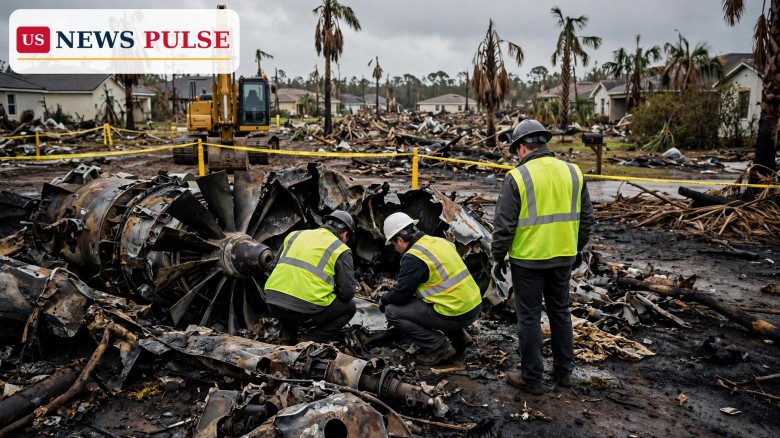
Federal investigators digging through the wreckage of the Learjet 60 that crashed into a Florida neighbourhood have found a portion of one of its engines, the National Transportation Safety Board said on Thursday, a discovery the agency called potentially important evidence.
The engine piece was uncovered as the NTSB's excavation of the crash site in Greenacres, Palm Beach County, continued into a second day. The dig, which began late on Tuesday, November 4, also turned up additional debris beyond the main impact site, and wreckage was found on the roofs of nearby homes and buildings.
Key Points
- The NTSB found part of one engine from the Learjet 60 on Thursday, November 5, during excavation at the Greenacres crash site.
- Excavation began late on November 4 and has also uncovered debris beyond the main impact site and on the roofs of nearby homes.
- The Learjet 60, flying from Austin, Texas, to the Bahamas, crashed on Sunday, November 1, killing all nine people aboard. One person on the ground suffered a leg injury.
- Investigators earlier located most of the jet's left elevator, and evidence suggests parts may have separated before impact.
- The search continues for the cockpit voice recorder; NTSB investigations generally take one to two years.
What Happened
The NTSB began excavation late on November 4, after spending days removing water from the impact crater, which had filled with rainwater when severe weather moved through as the jet went down. The dig continued through November 5, when investigators recovered a portion of one engine, along with further wreckage scattered beyond the crater.
The NTSB urged residents who find aircraft debris to contact the agency rather than keep, move or dispose of it. "Even small pieces of the wreckage may contain important evidence that could help investigators determine what happened," the agency said on social media. "Recovering all available wreckage is critical to the investigation."
Background: The Crash and the Investigation So Far
The Learjet 60 departed Austin, Texas, bound for the Bahamas, and slammed into a community in Palm Beach County on Sunday, November 1, 2026. All seven passengers and two crew members were killed, while one person on the ground suffered a leg injury. The crash scattered debris across the area, sparked fires and forced the evacuation of hundreds of residents.
Family members and friends identified the nine victims as a Texas family of four and their nanny, a couple described as "full of joy and adventure", and two beloved pilots. Residents of the nearby mobile home community reported hearing a thunderous boom, feeling their homes shake and briefly losing power; some initially feared they were under attack as flames and smoke rose from the wreckage.
The investigation quickly focused on the jet's final moments. Air traffic control audio captured the pilot reporting ice, with an outside air temperature of minus 47 degrees Celsius, and moderate turbulence bouncing the plane up to 700 feet, before the crew issued a "Mayday, mayday!" call. Tracking data showed the jet plunging 27,000 feet in about a minute before the signal cut off. At a November 3 news conference, NTSB member Thomas Chapman said investigators had located most of the jet's left elevator, the tail component that controls pitch, calling it a "very significant bit of evidence" suggesting parts may have separated before impact.
NTSB Learjet Crash Investigation: What the Engine Piece Could Reveal
Engine components are among the most telling pieces of wreckage an investigation can recover. The condition of fan blades, turbine parts and the engine casing can show whether the engines were producing power when the aircraft hit the ground, whether they were damaged in flight, or whether they were torn apart by the impact itself.
The engine piece will be examined alongside the left elevator recovered earlier, helping investigators build a picture of whether the jet broke up in the air and where the breakup began. The NTSB has not said which engine the recovered portion came from, or how large the piece is. Weather is also a major focus: the Learjet went down as heavy rain and thunderstorms moved through South Florida.
Reactions and Quotes
The crash has raised questions about what caused the crew to lose control and prompted some criticism of the pilots. Members of the aviation community have cautioned against rushing to judgment before investigators complete their work. "Let people investigate, learn, and share the facts," NASA Administrator Jared Isaacman wrote on social media. "Be respectful to those who perished and the families who carry their memories."
For the community around the crash site, the excavation is the latest stage of a week that began with terror. Hundreds were evacuated, and the area remained an active investigation scene days later as crews drained the crater and dug out the wreckage.
Why It Matters
The Greenacres crash is the second-deadliest aviation accident in the United States this year and the deadliest crash involving a Learjet 60, surpassing a 2008 crash in Columbia, South Carolina, that killed four people. What investigators learn could shape safety guidance for a widely used business jet, particularly around icing conditions and thunderstorms.
The engine find also shows the investigation moving from the first chaotic days into detailed evidence gathering. Earlier coverage of the NTSB's probe into icing after the 27,000-foot plunge established the key clues; recovering major components lets investigators test them against physical evidence, as in the NTSB's preliminary report on the fatal Yosemite helicopter crash.
What Happens Next
Excavation is expected to continue until investigators are satisfied they have recovered all accessible wreckage. The pieces will go to a secure facility for examination, while the search for the cockpit voice recorder goes on. Records indicate such a device was installed at some point, but it is not yet known whether it remained aboard.
The NTSB will issue a preliminary report in the coming weeks, but a final determination of the cause is much further off. The agency generally aims to complete an investigation within one to two years.
Frequently Asked Questions
What did the NTSB find? A portion of one of the Learjet 60's engines, recovered during excavation on November 5, along with debris beyond the main impact site and on nearby roofs.
How many people died? All nine aboard, seven passengers and two crew. One person on the ground suffered a leg injury.
What happened to the plane? The Learjet 60 left Austin, Texas, for the Bahamas and crashed into a Palm Beach County community on November 1, 2026, after the crew reported icing and issued a mayday call.
Why is the engine piece important? It can show whether the engines were producing power at impact and whether they were damaged in flight.
When will the cause be known? A preliminary report is expected in weeks; the full investigation generally takes one to two years.
© 2026 US News Pulse. All rights reserved.
 Print
 Save