
Netanyahu's Office Breaks Silence on US Aid Halt, Recasting It as 'Aid to Partnership'
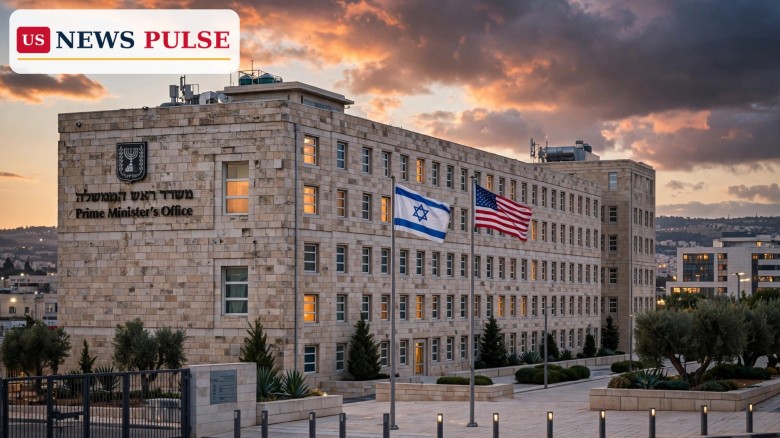
Prime Minister Benjamin Netanyahu's office broke three days of silence on Friday over President Donald Trump's plan to end American military aid to Israel, reframing the decision as a deliberate move "from aid to partnership" in its first public response.
The statement, posted on X, did not deny Trump's announcement that the United States will stop providing nearly $4 billion a year in military aid by the end of 2026, instead presenting the change as a joint project. "The move by PM Netanyahu and President Trump from aid to partnership shows the strength and sophistication of our relationship," the prime minister's office said.
Key Points
- Netanyahu's office said on Friday, November 6, 2026, that the move "from aid to partnership" with President Donald Trump "shows the strength and sophistication of our relationship."
- The statement did not deny Trump's announcement, made on Election Day, Tuesday, November 3, that the US will end nearly $4 billion a year in military aid to Israel by the end of 2026.
- Netanyahu has previously spoken of ending US military aid gradually over a decade, while the current memorandum runs until September 2028.
- Spokesman Doron Spielman said Netanyahu has been working with Trump "to make the correct transition out from aid towards partnership and mutual investment."
- The response contrasted with President Isaac Herzog's comment on Thursday that the aid cut hit "like a bolt out of the blue."
What Happened
Netanyahu's office issued its first response on Friday, three days after Trump revealed the decision on the morning of the American midterm elections. The brief statement embraced the change rather than disputing Trump's version of events, recasting it as a mark of maturity in the relationship.
The prime minister's office had said nothing publicly since Tuesday, even as President Isaac Herzog publicly described the decision as a shock. Trump said he had made a deal with Netanyahu "months ago" to end the aid because Israel "no longer need[s] it," while adding that the United States would still sell weapons to Israel and help if it needed it. Netanyahu's office did not confirm or dispute that account.
Background and Context
The aid at the centre of the dispute is worth nearly $4 billion a year, provided under a memorandum of understanding that gives Israel $3.8 billion annually, almost all of it spent on American-made weaponry. The agreement does not expire until the end of September 2028. The original announcement is covered here: Trump says US will stop $4 billion annual funding to Israel by end of 2026.
Netanyahu has long argued that Israel should eventually stand on its own feet, and has previously spoken of ending American military aid gradually over a decade. That history gave the prime minister's office a ready-made frame: the end of the aid, presented as a sudden cut by Trump, could instead be described as a transition Netanyahu himself had advocated.
Netanyahu Aid Partnership: From Grants to Investment
The phrase "from aid to partnership" is doing a lot of work in the prime minister's office statement. It turns a loss of $3.8 billion a year in grants into a story about equality: Israel, in this telling, is no longer a dependent but a partner, investing alongside the United States in shared defence projects.
Spokesman Doron Spielman gave the idea more shape in a Fox News clip, saying the prime minister has been working with Trump "to make the correct transition out from aid towards partnership and mutual investment." The words "mutual investment" suggest joint weapons development and co-production of missile defence systems in place of direct grants. But the statement leaves key questions unanswered: whether the aid ends in full at the end of 2026, or what Israel receives in return. If the aid stops two years early, Israel must find billions a year from its own budget while fighting its ninth month of war with Iran.
Reactions and Quotes
The prime minister's office statement was the headline, but the contrast with Herzog's reaction a day earlier was just as telling. On Thursday, the president told a meeting with the Yashar party that the decision came "like a bolt from the blue" and that "the issue of the American aid worries me greatly." That account is covered here: Israel's Herzog: Trump's aid cut hit 'like a bolt from the blue' as Netanyahu stays silent.
Herzog's words made it plain that the announcement had caught Israel's leadership by surprise. Netanyahu's office, by contrast, presented the same decision as a planned transition. Either the prime minister knew and agreed the change months ago, as Trump said, or the leadership was blindsided, as Herzog described. US Ambassador to Israel Mike Huckabee said on Thursday he was unsure whether the aid ends immediately or at the end of 2028.
Why It Matters
Netanyahu's response matters because it is the first time the prime minister's office has spoken about the biggest rupture in the US-Israel relationship in decades. For three days, the only Israeli voice was the president's, and his message was shock. Now the prime minister's office has offered a different story: a deliberate, jointly agreed transition to a new kind of relationship.
If that story holds, the change could reshape the alliance: a partnership built on joint investment would be very different from one built on annual grants. If it does not hold, the episode looks very different: a president ending a memorandum that runs to 2028 without warning, and a prime minister silent for three days.
What Happens Next
Clarification from Washington is the most immediate step. Huckabee said he is seeking it, and the questions are specific: whether the aid stops in full at the end of 2026, whether some programmes continue, and whether the shift is to commercial arms sales or to a new joint-investment arrangement. Until those questions are answered, Israel's defence planners cannot budget for 2027.
Netanyahu will also face questions at home about what was promised and what Israel received in return. Those questions will be sharper if Herzog tasks Eisenkot, rather than Netanyahu, with forming the next government on Sunday, November 8. The candidate chosen will have 28 days to build a coalition, and will inherit the aid question and the war with Iran.
Frequently Asked Questions
What did Netanyahu's office say about the aid cut?
On Friday, the office said on X: "The move by PM Netanyahu and President Trump from aid to partnership shows the strength and sophistication of our relationship." It did not deny Trump's announcement.
How much aid does the US give Israel each year?
Nearly $4 billion a year, $3.8 billion annually under a memorandum running until the end of September 2028, spent almost entirely on American weaponry.
When does the aid stop?
Trump said he agreed with Netanyahu months ago to stop the aid by the end of 2026. Ambassador Mike Huckabee said he is unsure whether it ends immediately or at the end of 2028.
What did President Herzog say?
On Thursday, November 5, President Isaac Herzog said the decision came "like a bolt from the blue" and that the aid issue "worries me greatly." He stressed that the memorandum is supposed to last until 2028.
© 2026 US News Pulse. All rights reserved.
 Print
 Save