
Trump Marks Diwali at White House With Oval Office Lamp-Lighting Ceremony
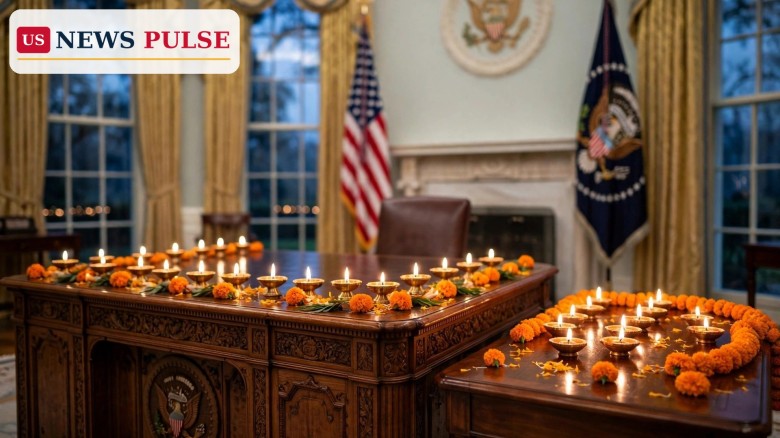
Washington — President Donald Trump is marking Diwali at the White House on Friday, November 6, 2026, taking part in a lamp-lighting ceremony in the Oval Office that continues a tradition begun under President George W. Bush. The celebration brings the festival of lights into the president’s own office, with the traditional lighting of a diya, the small oil lamp at the heart of Diwali.
Key Points
- President Donald Trump is taking part in a Diwali celebration at the White House on Friday, November 6, 2026, with the ceremony scheduled for the Oval Office.
- The celebration continues a White House tradition started by President George W. Bush, when Diwali was first formally marked at the White House.
- Earlier ceremonies were mostly held in the Eisenhower Executive Office Building, attended by Indian American community members and Indian diplomats.
- In 2009, President Barack Obama became the first president to light a lamp, or diya, at the White House, in a ceremony held in the East Room.
- Last year, India’s Ambassador Vinay Kwatra joined Trump in the Oval Office for the traditional lighting of the lamp.
What Happened
President Donald Trump will participate in a Diwali celebration at the White House on Friday, according to the White House schedule reported by the Press Trust of India. The celebrations are scheduled to be held at the Oval Office, the president’s working office.
The announcement, published on Friday, gave no further details of the guest list or the timing within the day. What is known is the setting and the ritual: the lighting of a diya, the small clay oil lamp whose flame is the central symbol of Diwali, the Hindu festival of lights that marks the victory of light over darkness and good over evil.
Background: How Diwali Came to the White House
Diwali, also known as Deepavali, is one of the most important festivals in the Hindu calendar, celebrated by Hindus, Jains, Sikhs and some Buddhists around the world. Families light rows of diyas, exchange sweets and gifts, and gather for prayers and fireworks, and in the United States it is marked by millions of Indian Americans.
The White House began marking Diwali under President George W. Bush, who started the tradition of a formal celebration at the presidential residence. In the years that followed it became a regular White House fixture, usually held in the Eisenhower Executive Office Building with Indian American community members and Indian diplomats attending.
A milestone came in 2009, when President Barack Obama became the first president to light a lamp at the White House, in the East Room. Since then, lamp-lighting ceremonies have been held in various locations inside the White House, including the Oval Office and the Roosevelt Room. Last year, India’s Ambassador to the United States, Vinay Kwatra, joined Trump in the Oval Office for the traditional lighting of the lamp. This year makes it two years in a row that Trump has marked the festival in the president’s own office.
Trump Diwali White House: A Tradition That Crosses Party Lines
Few White House traditions survive unchanged from one administration to the next, and fewer still are passed from a Republican president to a Democratic one and back again. The Diwali celebration is one of them. It was begun by George W. Bush, a Republican, carried on by Barack Obama, a Democrat, who became the first president to light the lamp himself, and continued by Donald Trump, who has now marked it in the Oval Office two years running.
That continuity is part of what makes the ceremony notable. The setting has moved — from the Eisenhower Executive Office Building to the East Room, the Roosevelt Room and now the Oval Office — but the ritual at its centre, the lighting of a single lamp, has stayed the same. The ceremony also reflects how the festival has grown in American public life: Diwali is now celebrated openly across the United States, in schools, in statehouses and in Congress, and the White House ceremony is the most visible of those public markings.
Reactions and Quotes
The White House announcement of the celebration, as reported, carried no prepared remarks from the president and no quoted comment from administration officials. The report stated simply that the president would take part on Friday, in the Oval Office, continuing the tradition begun by President George W. Bush.
That brevity is in keeping with how the ceremony has usually been presented: as a quiet, ceremonial moment rather than a policy event. In previous years, the ceremonies were attended by Indian American community members and Indian diplomats, and photographs of the lamp lighting were shared afterwards. The festival’s message needs little elaboration: Diwali celebrates the triumph of light over darkness, knowledge over ignorance and good over evil.
Why It Matters
The White House Diwali celebration matters because of where it happens. The Oval Office is the room where presidents make their hardest decisions, and a ceremony held there carries a weight that the same event in an annexe building would not. Placing Diwali in that room, two years in a row, signals that the festival is treated as part of the American story, not as a courtesy to a single community, and the image of a lamp lit there travels far beyond Washington.
What Happens Next
The Diwali celebration takes place at the White House on Friday, November 6, 2026, in the Oval Office. Photographs and any remarks are expected to be shared by the White House afterwards, as they were last year. Indian American families across the United States will be marking the festival itself in the days around the White House ceremony, with diyas lit in homes, temples and community centres.
Frequently Asked Questions
What is Diwali?
Diwali, also called Deepavali, is the Hindu festival of lights, celebrated by Hindus, Jains, Sikhs and some Buddhists. It marks the victory of light over darkness and good over evil, and families celebrate by lighting small oil lamps called diyas and gathering for prayers and fireworks.
Where is the White House Diwali celebration held?
This year’s celebration is scheduled for the Oval Office. Earlier ceremonies were mostly held in the Eisenhower Executive Office Building, and ceremonies have also been held in the East Room and the Roosevelt Room.
Who started the White House Diwali tradition?
President George W. Bush started the tradition of a formal Diwali celebration at the White House. It has been continued by every president since.
Who was the first president to light a diya at the White House?
President Barack Obama became the first president to light a lamp at the White House, in 2009, during a ceremony in the East Room.
Who joined President Trump for Diwali at the White House last year?
India’s Ambassador Vinay Kwatra joined Trump in the Oval Office last year for the traditional lighting of the lamp.
Related coverage: Melania Trump to host Russia and Ukraine at the White House on November 5 · Trump signs order making Oval Office and Cabinet Room national landmarks · Trump signs American Declaration of Freedom in Space
© 2026 US News Pulse. All rights reserved.
 Print
 Save