
Two More Tankers Catch Fire in Strait of Hormuz After Mine Strikes, Iran Says
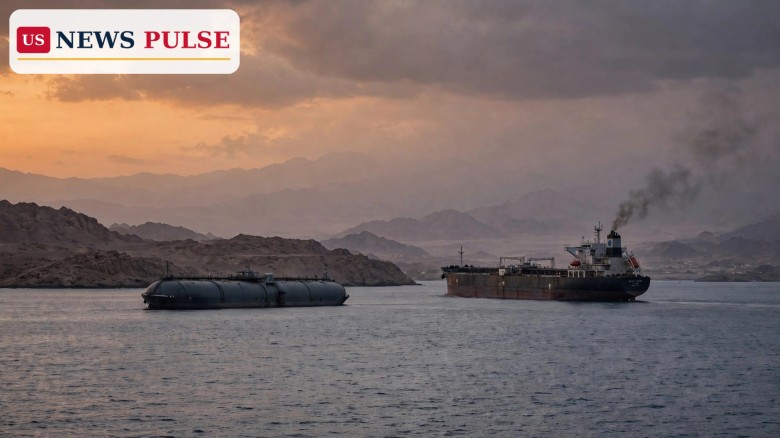
Two more oil tankers caught fire in the Strait of Hormuz on Friday after striking naval mines, Iran's Islamic Revolutionary Guard Corps (IRGC) said, a day after Tehran made a similar claim about five tankers and a tugboat in the same waterway. The new claim, which has not been independently confirmed, keeps the world's most important oil chokepoint at the centre of a war now in its ninth month.
Key Points
- Iran's Revolutionary Guard Corps said on Friday, November 6, 2026, that two oil tankers caught fire in the Strait of Hormuz after hitting naval mines.
- One tanker was east of the strait and the other was inside it, according to the IRGC Navy.
- The Guard said both vessels had switched off their navigation and identification systems and were trying to leave through an "unauthorised" route with US support.
- The IRGC said the strait will stay closed unless Washington meets Iran's seven conditions, and warned US attempts to force tankers through would end in "consecutive and abject" defeats.
- None of the claims has been independently confirmed, and the Guard also claimed its naval electronic-warfare unit seized two US drones over the strait.
What Happened
The IRGC said on Friday that two tankers had struck naval mines and caught fire while trying to cross the Strait of Hormuz, the narrow passage between Iran and Oman through which about one-fifth of the world's oil consumption normally passes. One vessel was east of the strait and the other was inside the waterway when the mines detonated, bringing both to a halt.
The IRGC Navy said the tankers had switched off their navigation and identification systems and were attempting to exit through what it called an "unauthorised" route, with US military support. It gave no vessel names or casualty figures, and no independent maritime authority had confirmed the account by Friday evening.
The claim came a day after Tehran said five other tankers and a tugboat had met a similar fate on Thursday, as reported in Hormuz Tankers on Fire After Mine Strikes, Iran Guards Say, as Oil Route Fear Grows. Together, the two days of claims would amount to seven tankers and a tugboat hit by mines within 48 hours, although none has been independently verified. US Central Command has pushed back, saying last month that it helped Gulf states export 1.5 billion barrels of oil via the strait since the summer and that all mines had been cleared from the waterway.
Background: A Strait Closed Since February
The Strait of Hormuz has been closed by Tehran since the US-Israeli war against Iran began on February 28, 2026. The channel, only about 21 miles wide at its narrowest, is the only sea route out of the Persian Gulf, carrying crude from Saudi Arabia, Iraq, Kuwait, the United Arab Emirates, Qatar and Iran to world markets.
Shipping in the Gulf has been under attack for months. A tanker was hit by explosive devices attached by a small boat on October 30, and on November 4 CENTCOM said the United States had destroyed five Iranian oil tankers after the IRGC twice tried to target a US warship with ballistic missiles, as reported in US Destroys Five Iranian Oil Tankers After Warship Missile Attacks, CENTCOM Says. After the United States struck Iran's Qeshm Island this week, Brent crude rebounded to about $106.57 a barrel, as reported in Oil Prices Head for 12% Weekly Drop Despite Friday Rebound as Tanker Attacks Rattle Hormuz. Vice President JD Vance said on Monday that Washington had made "progress" in talks with Iran, with no deadline set, and Qatari mediators have been shuttling between the two sides.
Strait of Hormuz Tankers: Claims, Gaps and Contradictions
The Friday claim follows a pattern that has made the Hormuz tanker story hard to pin down. Iran announces an incident, often with dramatic detail about mines, fires and foreign support, and then no independent confirmation follows. No shipping company, insurer or maritime security agency had publicly corroborated the claim by Friday evening. Both sides have reasons to shape the story: for Tehran, mine-strike claims show its closure is real and enforceable; for Washington, the assertion that the mines have been cleared supports the argument that the blockade is failing.
Reactions and Statements
The IRGC said there would be no change to the closure unless the United States meets Iran's seven conditions, including easing sanctions, lifting the naval blockade and releasing frozen assets, and warned that attempts by US Central Command to force tankers through would end in "consecutive and abject" defeats. Washington has not confirmed or denied the claim; its public position is that the waterway has been cleared of mines and that Gulf oil continues to flow.
Why It Matters
The Strait of Hormuz is the single most important oil chokepoint in the world. Roughly one-fifth of global oil consumption passes through it, along with a large share of the world's liquefied natural gas. A sustained closure, or a series of confirmed attacks on tankers, would push oil prices higher, raise shipping insurance costs and force exporters to consider longer, more expensive routes. The stakes go beyond energy: Tehran is using the strait as leverage in talks over sanctions, the blockade and its nuclear programme, while Washington argues its military presence and the cleared waterway weaken that leverage.
What Happens Next
The first test will be verification: maritime security agencies, insurers and satellite analysts will look for fire damage, a change in shipping traffic, or a distress signal. Confirmation would strengthen Tehran's hand and pressure oil prices; without it, the claim joins a growing list of unverified incidents markets have learned to discount. The second test is diplomatic: Qatari mediators have been carrying proposals between Washington and Tehran, and Iran's seven conditions for reopening the strait remain the central demand. The third test is military: whether Washington responds with a show of force, a renewed mine-clearing operation or silence will signal how seriously it takes the announcement.
Frequently Asked Questions
What happened to the two tankers in the Strait of Hormuz on Friday?
Iran's Revolutionary Guard Corps said two oil tankers caught fire after striking naval mines on Friday, November 6, 2026, one east of the strait and one inside it. It has not been independently confirmed.
Have the claims been confirmed?
No. No vessel names or casualty figures were given, and no maritime authority had confirmed it by Friday evening. US Central Command has said the strait was cleared of mines.
Why does the Strait of Hormuz matter for oil?
About one-fifth of global oil consumption passes through the strait, the only sea route out of the Persian Gulf. A closure or attacks on tankers would push up oil prices and shipping costs.
What happened on Thursday?
Tehran claimed on Thursday that five other tankers and a tugboat had struck mines and caught fire in the strait. That claim also remains unverified.
Is the strait open to shipping?
Tehran says it remains closed unless the United States meets Iran's seven conditions. Washington says Gulf oil continues to move through the waterway and that mines have been cleared.
© 2026 US News Pulse. All rights reserved.
 Print
 Save