
Houston Mayor Orders Police to Stop Alerting ICE During Traffic Stops in Texas
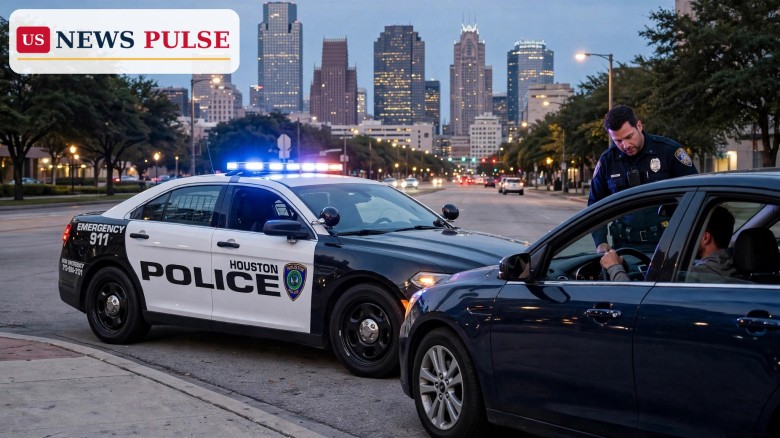
Houston Mayor John Whitmire signed an executive order on Friday, November 6, 2026, ordering Houston police to stop contacting US Immigration and Customs Enforcement (ICE) over nonviolent, non-jailable offences such as traffic stops and minor offences. The Houston ICE order reverses a policy the mayor adopted under pressure from the state, and it comes three days after Democrats swept the Texas elections.
Under the order, officers may contact ICE only when a person is already going to jail on new charges or warrants and a federal check shows an ICE administrative warrant. Anyone else will be warned or ticketed.
Key Points
- Houston Mayor John Whitmire signed an executive order on Friday, November 6, 2026, telling police to stop alerting ICE over nonviolent, non-jailable offences.
- Officers may contact ICE only if a person is already headed to jail and a federal check shows an ICE administrative warrant.
- The order reverses a policy Whitmire adopted after Governor Greg Abbott threatened to cut more than $100 million in state funding.
- Police Chief J. Noe Diaz supports the order and began putting it into effect on Friday.
- A Department of Homeland Security spokesperson criticised the move.
What Happened
Whitmire signed the order on Friday, and police began carrying it out the same day. The order covers the everyday encounters that make up most police contact with the public: traffic stops and minor offences that end in a citation or a warning.
The mayor explained the change in plain terms to The New York Times. "If they're charged with a new crime, we'll let ICE know as we get them to the jailhouse," he said. "You write a citation or you warn them and they go about their way. No contact with [ICE] over nonviolent, non-jailable offenses." The line is clear: a driver pulled over for speeding who is not being arrested will not be reported to ICE, while a person arrested on a new charge can still be reported if the federal database check turns up an ICE administrative warrant. The order does not stop cooperation on serious crime — only the routine referrals that turned a traffic stop into an immigration case.
Background: Why Houston Cooperated With ICE in the First Place
Whitmire did not adopt the old policy because he wanted it. He adopted it because the state forced his hand. After he took office, Governor Greg Abbott threatened to withhold more than $100 million in state funding from Houston, and then-Attorney General Ken Paxton opened an investigation into the city's immigration policies. Texas has some of the toughest anti-sanctuary rules in the country. Whitmire, elected mayor in 2023, complied, and the city began alerting ICE in cases it had previously left alone. City data shows at least 103 police encounters with ICE followed, with 19 people transferred to federal custody and 17 handed to immigration authorities between July and September 2026.
Then came the November 3 midterms. Democrats swept Texas: Abbott lost the governor's race to Democrat Gina Hinojosa, and Democrats flipped both chambers of Congress. With the officials who had threatened the city out of power, Whitmire moved within three days to undo the policy.
Houston Police ICE Order: What Changes on the Street
For Houston's 2.3 million residents, the practical change is simple: a routine traffic stop should no longer carry the risk of an immigration referral. Officers are being told to treat a citation as a citation. Immigrant advocates have long said fear of ICE keeps people from reporting crimes or calling police after an accident.
Police Chief J. Noe Diaz supports the order and began implementing it on Friday, which matters because an executive order only works if the department carries it out. The order also tests how far a city can go: Texas law restricts sanctuary policies, so it limits voluntary contact with ICE while keeping cooperation where a person is already being jailed. Any legal challenge will decide how long it lasts.
Reactions and Quotes
The mayor framed the order as a return to normal policing. "If they're charged with a new crime, we'll let ICE know as we get them to the jailhouse," Whitmire told The New York Times. "You write a citation or you warn them and they go about their way. No contact with [ICE] over nonviolent, non-jailable offenses."
A Department of Homeland Security spokesperson criticised the move in comments to Fox News, arguing that limiting cooperation with federal immigration enforcement puts the public at risk. Police Chief J. Noe Diaz backed the order and began implementing it on Friday, giving the policy the department's full weight from day one.
Why It Matters
First, Houston is the nation's fourth-largest city, and what it does sets a pattern. If big cities stop turning traffic stops into immigration referrals, federal enforcement loses one of its widest nets. Other cities will be watching whether it survives a legal challenge.
Second, the order is a direct product of the midterm results. The same week Democrats took control of Congress and the Texas governor's office, a Democratic mayor undid a policy imposed by the officials voters had just removed. The Texas races were among the most closely watched of the midterms, and Houston's order is one of the first concrete changes to follow.
Third, it tests the limits of state power over cities. Abbott used the threat of lost funding to force a city to cooperate with ICE. Whitmire is now betting that the law allows a city to draw its own line on voluntary cooperation. If it stands, other Texas cities may follow; if it falls, the state will have shown that even a Democratic sweep cannot loosen its grip on local policing.
What Happens Next
The Houston Police Department will now apply the new rules on every shift, and the first weeks will show whether officers follow them and whether any incidents test the boundary. The state could still challenge it under Texas law. Houston has already been at the centre of the national immigration fight this year, after an ICE officer was indicted over a vehicle strike in the city. For now, the order stands — and for drivers pulled over in Houston, a traffic stop is once again just a traffic stop.
Frequently Asked Questions
What did Houston Mayor John Whitmire order?
He signed an executive order on November 6, 2026, telling Houston police to stop contacting ICE over nonviolent, non-jailable offences such as traffic stops.
When can Houston police still contact ICE?
Only if the person is already going to jail on new charges or warrants and a federal check shows an ICE administrative warrant.
Why did Whitmire reverse the old policy?
He adopted it after Abbott threatened to withhold more than $100 million in state funding and Paxton investigated the city. Abbott lost the November 3 midterms to Democrat Gina Hinojosa.
Does the order stop all cooperation with ICE?
No. Police still cooperate when a jailed person has an ICE administrative warrant in the federal check. It stops only routine, low-level referrals.
Who supports the order?
Police Chief J. Noe Diaz supports it and began implementing it on Friday. A Department of Homeland Security spokesperson criticised the move.
© 2026 US News Pulse. All rights reserved.
 Print
 Save