
Zoo Atlanta Pandas Debut: Ping Ping and Fu Shuang Delight Crowds on First Day
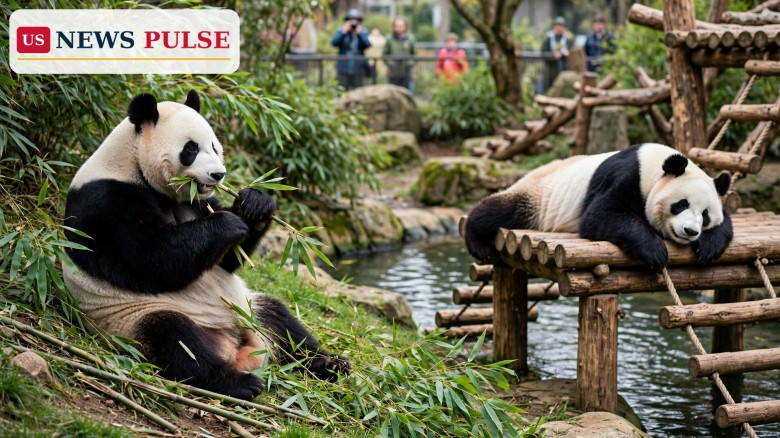
Giant pandas are back in Atlanta. Ping Ping and Fu Shuang, a young pair on loan from China, made their public debut at Zoo Atlanta on Friday, November 6, 2026, chewing bamboo and lounging in their new habitat before delighted crowds — ending a two-year absence.
The debut coincided with the opening of the zoo's newly renovated Arthur M. Blank Panda Grove. Zoo Atlanta has not housed giant pandas since 2024, and the pair — both born in 2020 in Chengdu — are set to remain in Atlanta for the next 10 years.
Key Points
- Giant pandas Ping Ping and Fu Shuang debuted publicly at Zoo Atlanta on Friday, November 6, 2026, after arriving from Chengdu on September 27.
- The pair are on a 10-year loan under a conservation agreement between Zoo Atlanta and the China Wildlife Conservation Association.
- Their debut opened the new Arthur M. Blank Panda Grove, a $6 million renovation funded by a Robert W. Woodruff Foundation grant.
- Zoo Atlanta has not had pandas since 2024, though it hosted pandas from China from 1999 and seven cubs were born there.
- Atlanta is now one of only three US zoos housing giant pandas, and the only one in the Southeast.
What Happened
Ping Ping, a male, and Fu Shuang, a female, arrived from Chengdu on September 27, 2026, aboard a FedEx Boeing 777 dubbed the "Panda Express". After weeks in quarantine, the pair stepped into their new home on Friday as visitors watched them chew bamboo and lounge.
The debut marked the public opening of the Arthur M. Blank Panda Grove, a $6 million renovation featuring expanded indoor spaces, climbing structures, pools and a sculpture, "Reflecting the Wild", by artist David Landis. Zoo staff spent months preparing, assembling a dedicated team of caretakers and securing a stable supply of locally grown bamboo. Both pandas were born in 2020 — Ping Ping on March 17 and Fu Shuang on October 18 — and zoo officials hope the pair will prove to be suitable mates.
Background: Pandas Return to Atlanta After Two Years
Atlanta's relationship with giant pandas stretches back to 1999, when the zoo first hosted pandas on loan from China. Seven cubs were born there, making Zoo Atlanta one of the most successful panda-breeding programmes outside China. All of those animals have since returned to Chengdu, and the zoo has been without pandas since 2024.
The new arrivals continue a tradition that began in 1972, when China gifted a pair of pandas to Washington following President Richard Nixon's historic visit. Since then, pandas have been shipped to zoos around the world as part of Beijing's decades-long "panda diplomacy" programme. The debut came at a sensitive moment: on Friday, top US officials called on China to uphold the trade agreement reached in an October 2025 meeting between President Donald Trump and Chinese President Xi Jinping, an accord that calmed tensions after tariff hikes. Beijing has also shown it will use pandas as leverage: earlier this year, China recalled two of its pandas from Japan following a diplomatic spat.
Meet Ping Ping and Fu Shuang, Zoo Atlanta's New Giant Pandas
Ping Ping and Fu Shuang are both six years old, born at the Chengdu Research Base of Giant Panda Breeding. Their new home gives them room to climb, swim and rest in spaces modelled on the temperate forest habitats where giant pandas live in the wild. Native to the mountain forests of central China, the bears spend most of their waking hours eating bamboo — up to 84 pounds a day, making a reliable local supply essential.
With only an estimated 1,800 giant pandas left in the wild, every animal in a breeding programme matters. Before 2016, pandas were considered endangered; they are now listed as "vulnerable". China has established more than 50 panda reserves, but wild bears still face habitat loss and poaching.
Reactions and Quotes
Zoo Atlanta chief executive Raymond King spoke to onlookers at the debut. "Pandas are animals that have got a unique ability to inspire curiosity, instil passion, evoke joy, and unite people around the globe," King said. "This extraordinary spirit of partnership helps create a future for a species that is truly beloved the world over."
Visitors were just as enthusiastic. "I think they inspire happiness," zoo visitor Rachel Totts told AFP on Friday. "They make people smile. I've never seen someone not say 'Oh, it's so cute!' when they're looking at a panda."
Why It Matters
The return of pandas matters for more than ticket sales. Zoo Atlanta is now one of only three US zoos housing giant pandas, and the only one in the Southeast — making the pair a rare regional attraction and a flagship for the zoo's conservation work.
The 10-year loan also signals that panda diplomacy, despite years of tension between Washington and Beijing, remains alive. Pandas have long been one of the most visible symbols of the relationship between the two countries, and their arrival comes just as the two governments are working to hold together a fragile trade truce. The agreement is designed to support breeding and research, and any cubs born in Atlanta would strengthen a captive population that underpins the survival of a species still listed as vulnerable.
What Happens Next
Ping Ping and Fu Shuang will now settle into a daily routine at the Panda Grove, with keepers monitoring their health, diet and behaviour as they adjust. Visitors can see them during normal zoo hours.
Over the coming months, keepers will watch for signs that the two are compatible as a breeding pair — a process that takes patience, since female giant pandas are fertile for only a few days each year. Any future cub would be a major event for the zoo and for panda conservation in the United States. The loan runs through 2036.
Frequently Asked Questions
Who are Ping Ping and Fu Shuang?
Ping Ping is a male giant panda and Fu Shuang is a female, both born in 2020 at the Chengdu Research Base of Giant Panda Breeding. They arrived at Zoo Atlanta on September 27, 2026, and debuted publicly on November 6, 2026.
How long will the pandas stay at Zoo Atlanta?
The pair are on a 10-year loan under a conservation agreement with the China Wildlife Conservation Association, so they are expected to remain in Atlanta through 2036.
When did Zoo Atlanta last have pandas?
Zoo Atlanta has not had giant pandas since 2024. The zoo first hosted pandas from China in 1999, and seven cubs were born there before all returned to Chengdu.
How many US zoos have giant pandas?
Zoo Atlanta is now one of only three US zoos housing giant pandas, and the only one in the Southeast.
What is the Arthur M. Blank Panda Grove?
It is Zoo Atlanta's newly renovated panda habitat, a $6 million project funded by a Robert W. Woodruff Foundation grant, with expanded indoor spaces, climbing structures, pools and a sculpture by David Landis. It opened on November 6, 2026.
For more entertainment news, see the Kennedy Center Honors 2026 announcement and the Margaret Qualley divorce filing, and read our coverage of Trump's Hollywood tax credit remarks.
© 2026 US News Pulse. All rights reserved.
 Print
 Save