
Russia Names Medinsky and GRU Chief Kostyukov for Abu Dhabi Peace Talks
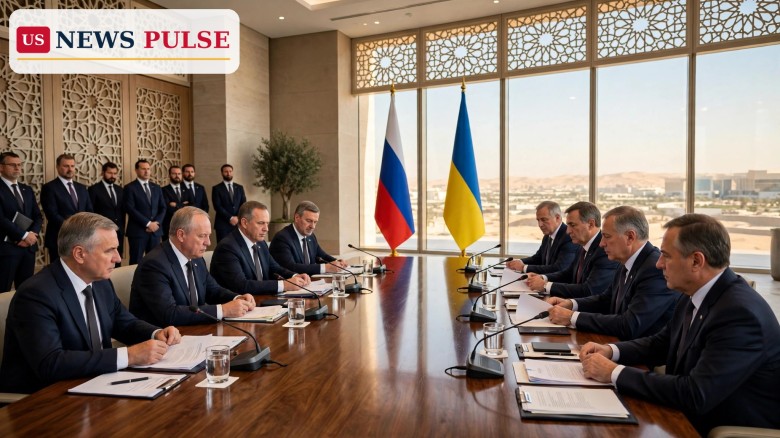
Russia has named the team it will send to next week's trilateral peace talks with the United States and Ukraine in Abu Dhabi, and the list says a great deal about how Moscow is approaching the table. The Russia Abu Dhabi talks delegation will include Kremlin aide Vladimir Medinsky and Igor Kostyukov, chief of Russia's GRU military intelligence agency, Kremlin spokesman Dmitry Peskov told Interfax on Saturday, November 7, 2026. The announcement, three days before the talks open, sets up the first three-way meeting of American, Russian and Ukrainian officials since February, and the first since Trump said on Friday that both sides want to settle the war "for the first time".
Key Points
- Peskov told Interfax Russia's delegation to the Abu Dhabi talks on November 10-11 will include Medinsky, Deputy Foreign Ministers Sergei Ryabkov and Mikhail Galuzin, GRU chief Igor Kostyukov and General Staff officer Yuri Zhigarlovsky.
- The talks are the first trilateral meeting since February, and the first since Trump said both sides want to settle the war.
- Medinsky led Russia's delegations at the Istanbul talks in 2022 and 2025, so his presence signals Moscow sees Abu Dhabi as a continuation.
- Kostyukov's inclusion is the most striking name: the head of Russia's military intelligence service is not a usual figure at a peace table, and his presence puts security questions at the centre.
- The announcement follows a week of fast diplomacy, including the White House meeting hosted by Melania Trump on November 5 and Jared Kushner's Brussels talks on security guarantees.
What Happened
Peskov gave the delegation list to Interfax on Saturday, ending days of speculation about who Moscow would send to the Gulf. Alongside Medinsky, Ryabkov and Galuzin, the delegation will include Kostyukov, who has run the GRU since 2018, and Zhigarlovsky, a senior General Staff officer. Peskov said other senior officials would also travel, without naming them.
Ryabkov is one of Russia's most experienced arms-control negotiators, and Galuzin has handled the Ukraine file for years. Medinsky has been the Kremlin's public face in direct talks with Ukraine. Kostyukov's presence adds a military-intelligence dimension the earlier rounds did not have, underlining that Moscow intends to discuss the war itself, not only its politics. The announcement came as Russian missiles struck Kyiv overnight, injuring two people.
Background and Context
The Abu Dhabi talks on November 10-11 are the next fixed point in a diplomatic push that has accelerated sharply in the past week. On Thursday, November 5, Melania Trump brought Russian and Ukrainian representatives together at the White House, the first time officials from the two warring countries had appeared together there, to review the Oleshky ceasefire she helped broker, which let nearly 800 civilians evacuate. The same day, Trump met Putin envoy Kirill Dmitriev in the Oval Office and predicted a "big, beautiful agreement" on Ukraine.
On Wednesday, November 4, Kushner said in Brussels that Washington was working on a new European security framework built on sovereignty and territorial integrity. Then on Friday, Trump told reporters in Florida that Russia and Ukraine want to settle the war "for the first time". The last trilateral meeting in this format was in February.
The Russia Abu Dhabi Talks Delegation
The composition of the Russian team tells its own story. Medinsky's role points to continuity: he was the man across the table from Ukraine in Istanbul, and his return suggests the Kremlin wants to pick up where those talks left off, including territory, neutrality and security guarantees. Ryabkov and Galuzin bring the Foreign Ministry's weight.
Kostyukov is the name that changes the character of the delegation. The GRU runs the operations that have defined much of the war, from battlefield intelligence to the campaigns in Europe blamed on Moscow. Sending its chief to a peace negotiation is unusual: one reading is that Moscow wants its military reality represented in the room; the other is that the Kremlin wants a man who knows the intelligence picture to judge whether the other side is negotiating in good faith. With Zhigarlovsky reinforcing the military side, the team looks built to negotiate hard, not to sign a pre-cooked deal.
Reactions and Quotes
Trump's own words set the tone. "Russia and Ukraine, for the first time they want to settle," he told reporters on Friday, a claim that would mark a sharp change after years in which each side accused the other of refusing to negotiate in good faith. He added that he expected "a very big settlement" that "could involve all of Europe".
President Volodymyr Zelenskyy's response has been cautious rather than dismissive. He has said Ukraine would back a full ceasefire or a limited truce on energy or maritime targets, but warned a sweeping deal struck over Ukraine's head could divide Europe into spheres of influence, and insisted talks must first end the fighting and lock in security guarantees, rejecting territorial concessions. The Kremlin has not disclosed what positions its delegation will bring to Abu Dhabi.
Why It Matters
If Trump is right that both sides want to settle for the first time, the Abu Dhabi talks would be the most significant opening since the war began. A genuine negotiation could stop the killing and let millions of displaced Ukrainians plan for a future at home.
The list matters because it shows Moscow is taking the meeting seriously enough to send its heaviest hitters, including its military intelligence chief. A team this senior can make real decisions in the room, which is what a breakthrough requires. But a team built around military and security figures is also one built to hold the line on Russia's demands, and Kostyukov's presence suggests the Kremlin will not be rushed into concessions.
What Happens Next
Trump said he would hold more calls on Saturday, with meetings planned for Monday and Tuesday to set the agenda for the trilateral talks in Abu Dhabi on November 10-11. There, the first questions will be the simplest: whether the two sides can agree on a ceasefire, even a limited one, and on security guarantees Ukraine can trust. The answers will show whether the delegation Moscow named is there to make a deal, or to explain why one is not yet possible.
Frequently Asked Questions
Who is in Russia's delegation for the Abu Dhabi talks?
Kremlin aide Vladimir Medinsky, Deputy Foreign Ministers Sergei Ryabkov and Mikhail Galuzin, GRU chief Igor Kostyukov and General Staff officer Yuri Zhigarlovsky, Peskov said.
When are the Abu Dhabi talks?
The United States, Russia and Ukraine meet in Abu Dhabi on November 10-11, with preparatory meetings planned for the Monday and Tuesday before them.
Why does Kostyukov's presence matter?
Kostyukov has run the GRU, Russia's military intelligence service, since 2018. Sending its chief to a peace negotiation is unusual and puts security questions at the centre.
What did Trump say about settling the war?
On Friday, November 6, Trump said Russia and Ukraine want to settle the war "for the first time", predicting "a very big settlement".
Related Coverage
Related: Trump says Russia and Ukraine 'want to settle' for the first time ever, Russian missiles slam Kyiv overnight before Abu Dhabi talks and Trump meets Dmitriev and predicts big, beautiful Ukraine deal.
© 2026 US News Pulse. All rights reserved.
 Print
 Save