
Black Canyon Tragedy: Denver Hiker Found Dead After Drone Search in Colorado
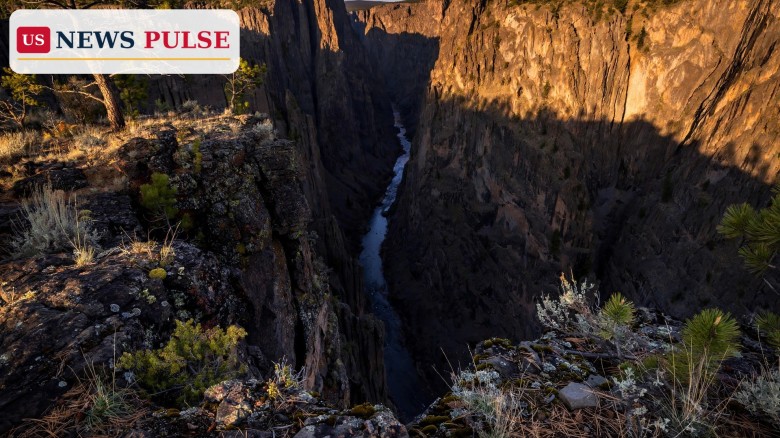
The body of a 57-year-old Denver man has been found on the floor of the Black Canyon of the Gunnison National Park in western Colorado, ending a search that began when deputies found his abandoned vehicle near a South Rim viewpoint. The Montrose County Sheriff's Office said on Wednesday, November 4, that the body of John N. Countryman was recovered from the bottom of one of the steepest gorges in North America, days after a sheriff's office drone team spotted human remains far below the rim.
The Montrose County Coroner's Office confirmed Countryman's identity on Thursday, November 5. The cause and manner of his death remain under investigation.
Key Points
- John N. Countryman, 57, of Denver, was found dead on the floor of the Black Canyon of the Gunnison National Park in western Colorado.
- Deputies were alerted on Tuesday, October 27, at about 5:30 p.m. to an abandoned vehicle near mile marker 10 along the South Rim, close to the Devil's Lookout viewpoint, with personal belongings found nearby.
- A sheriff's office drone team searched the next morning and confirmed human remains on the canyon floor at about 6:30 a.m. on Wednesday, October 28.
- The body was recovered two days later after a technical operation hampered by the park's steep, unmarked inner-canyon terrain.
- The Montrose County Coroner's Office confirmed his identity on Thursday, November 5; the cause and manner of death remain under investigation.
What Happened
The search began on the evening of Tuesday, October 27, when deputies were notified about an abandoned vehicle parked near mile marker 10 along the South Rim road, close to the Devil's Lookout viewpoint. Personal belongings were found near the vehicle, raising concern that its owner might be in trouble somewhere in the park. Deputies searched the area around the viewpoint, where the canyon drops away in near-vertical walls with no marked trail down.
The following morning, a sheriff's office drone team took to the air over the canyon. At about 6:30 a.m. on Wednesday, October 28, the drone confirmed human remains on the canyon floor, far below the rim. The location was so steep and so difficult to reach that recovering the body took two more days. A technical operation brought the remains up from the canyon floor, and the body was recovered on Friday, October 30. On Wednesday, November 4, the sheriff's office announced it was John N. Countryman, 57, of Denver, and the coroner confirmed the identification the next day.
Background: A Remote Stretch of the South Rim
The Black Canyon of the Gunnison National Park protects a 48-mile stretch of the Gunnison River as it cuts through some of the oldest rock in North America. At its deepest point, Warner Point, it plunges 2,722 feet from rim to river, and in places the river is only about 40 feet wide at the bottom while the walls rise more than 1,700 feet above it. The dark walls are made of Precambrian gneiss and schist, rock nearly two billion years old. The South Rim, where Countryman's vehicle was found, is the more visited side of the park, but beyond its overlooks there is no marked route into the inner canyon, and the National Park Service warns that routes there are unmarked, slopes are loose and steep, and a descent that takes an hour can take many hours to climb back out.
The Black Canyon of the Gunnison: A Gorge That Punishes Mistakes
What makes the Black Canyon so dangerous is the combination of its depth, its steepness and its isolation. The walls fall away at angles that leave almost no room for error, and the canyon floor is reachable only by a handful of unmaintained routes that demand scrambling, route-finding and a high level of fitness. A slip near the rim can mean a fall of hundreds of feet, and a deliberate descent can prove far harder to climb back out of. Rescue there is slow and hazardous: helicopters cannot always operate in the narrow gorge, and ground teams must be lowered on ropes or pick their way down the same steep slopes. That is why the recovery took two days even after the drone had pinpointed the remains.
Reactions and Official Statements
The Montrose County Sheriff's Office announced the discovery on Wednesday, November 4, and the coroner's office confirmed the identity the next day. Neither office has released further details about the circumstances of Countryman's death, and officials have said only that the cause and manner of death remain under investigation. The central questions — how Countryman reached the canyon floor and what happened to him there — are still unanswered. No foul play has been suggested, and the sheriff's office has given no timetable for the coroner's findings.
Why It Matters
The death is a stark reminder of the risks that come with America's wildest landscapes. National parks draw millions of visitors every year, but the margin for error in a place like the Black Canyon is vanishingly small. A moment of inattention near an unfenced rim or a wrong turn on an unmarked slope can turn a day's outing into a tragedy, and the terrain that makes the canyon so spectacular is the same terrain that makes rescue so difficult. The case also shows how search and rescue is changing: the drone team found in hours what a ground search might have taken days to achieve, without sending deputies down the same dangerous slopes.
What Happens Next
The Montrose County Coroner's Office will now work to establish the cause and manner of Countryman's death. That process may include an autopsy and toxicology testing, and officials have not said when their findings will be released. The sheriff's office investigation also remains open, and further details may emerge as deputies piece together Countryman's movements in the days before his vehicle was found. For visitors, the park's advice is unchanged: stay behind guardrails, stay on marked trails, and treat the inner canyon with respect. Related coverage: Missing Utah teen Kylie Arellano found safe in Oregon after more than 500 days, Lakewood police shooting kills officer, wounds three near bus stop in Colorado and Colorado Democrats sweep top races as Weiser wins governor and Hickenlooper keeps Senate.
Frequently Asked Questions
Who was the man found in the Black Canyon?
John N. Countryman, 57, of Denver. The Montrose County Coroner confirmed his identity on Thursday, November 5.
When was his body found?
A drone team confirmed remains on the canyon floor at about 6:30 a.m. on Wednesday, October 28; the body was recovered on Friday, October 30.
How was he found?
Deputies were alerted on October 27 to an abandoned vehicle near mile marker 10 on the South Rim, close to Devil's Lookout. A drone search the next morning located the remains on the canyon floor.
What caused his death?
The cause and manner of death remain under investigation by the Montrose County Coroner's Office, and no cause has been announced.
How deep is the Black Canyon?
At its deepest point, Warner Point, the canyon is 2,722 feet deep, with sheer walls dropping as much as 2,000 feet in places.
© 2026 US News Pulse. All rights reserved.
 Print
 Save