
Guterres Calls COP31 Climate Talks a 'Moment of Truth' in Final Plea as UN Chief
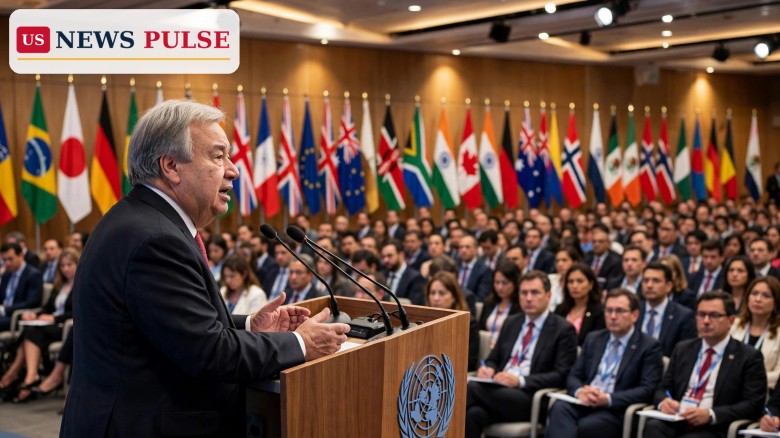
United Nations Secretary-General Antonio Guterres has delivered his bluntest warning yet on the climate crisis, calling the COP31 climate talks opening on Monday in Antalya, Turkey, a "moment of truth" in the fight against global warming. It is his final climate plea as UN chief, and he is not mincing words.
In an exclusive Associated Press interview published on Friday, November 6, 2026, Guterres used the phrase "moment of truth" three times in 20 minutes, urging every country to do more — and to do it now.
Key Points
- Guterres called the COP31 climate talks opening November 9 in Antalya, Turkey, a "moment of truth" in the fight against global warming.
- He said: "We can no longer wait, we can no longer have endless discussions in which everybody tries to push the responsibility to someone else. Everybody must do more, everybody must do more now."
- It is his last climate push as UN chief, with his second and final term expiring at the end of December 2026 and the Security Council still deciding his successor.
- He proposed taxing windfall profits of fossil-fuel companies and directing the money to countries suffering most from climate consequences.
- COP31 runs November 9-20, 2026, at the ANFAS Antalya Expo Center, chaired by Turkey's Environment Minister Murat Kurum, with Australia's Chris Bowen as negotiations chair.
What Happened
Days before the COP31 climate talks open, Guterres sat down with the Associated Press for an exclusive interview that reads as a farewell address on the issue that has defined his decade at the helm of the United Nations. He warned Antalya is where promises must turn into action. His central message was aimed at governments still blaming each other for slow progress: "We can no longer wait, we can no longer have endless discussions in which everybody tries to push the responsibility to someone else. Everybody must do more, everybody must do more now." The interview was published on Friday, November 6, 2026, three days before negotiators gather in Turkey.
Background: A Decade of Warnings, and a Goal Slipping Away
Guterres has used his ten years as Secretary-General to push climate action to the top of the UN agenda, and the interview looked back at the hardest moments of that campaign. He recalled that last year scientists advised him not to claim the 2015 Paris Agreement goal of limiting warming to 1.5 degrees Celsius above pre-industrial levels was still attainable, calling that one of the most difficult days of his life. The 1.5-degree target, agreed by nearly 200 countries in Paris, is the benchmark of the climate fight, and every fraction beyond it means more deadly heat, more destructive storms and more pressure on the most vulnerable countries. Guterres has repeatedly warned the world is running out of time to keep the goal alive, and COP31 is his last major test of whether governments will act.
COP31 Climate Talks: What Is at Stake in Antalya
The COP31 climate talks run from November 9 to 20, 2026, at the ANFAS Antalya Expo Center on Turkey's Mediterranean coast, chaired by Turkey's Environment Minister Murat Kurum, with Australia's Chris Bowen serving as negotiations chair. Delegates from nearly 200 countries will haggle over how fast to cut emissions, how much money richer nations will give poorer ones to adapt, and how to pay for damage already done. Guterres has a concrete proposal on the table: tax the windfall profits of fossil-fuel companies and direct the money to the countries suffering most from climate consequences. The idea, aimed at an industry posting record earnings while temperatures climb, is one of his most direct challenges to fossil-fuel interests as UN chief.
Reactions and Quotes
Guterres closed the interview with a message aimed not at negotiators but at the public, and it was the starkest line of the conversation: "Take it seriously because it is an existential threat. And the first thing we need to fight is for our own lives." The warning carries extra weight because it comes from a man about to leave the job. His second and final term as Secretary-General expires at the end of December 2026, and the Security Council is still deciding who will succeed him. That makes COP31 his last climate summit as UN chief — and his last chance to use the office to press governments into action. His successor will inherit both the negotiations and the consequences if Antalya ends, like some past summits, in compromise and delay.
Why It Matters
COP31 matters because the gap between what governments have promised and what the science demands keeps growing. The Paris goal of holding warming to 1.5 degrees Celsius is the line scientists say separates dangerous warming from far worse, and Guterres's own advisers have told him it may already be slipping out of reach. Every summit that ends without stronger commitments locks in more heat, more floods, more drought and more displacement in the years that follow. Antalya is also a test of whether the COP process still works: after a decade of Guterres's warnings, the talks are where pledges should become plans, and where the countries hit hardest — often those that contributed least — look for help that has been slow to arrive.
What Happens Next
Negotiators arrive in Antalya on Monday, November 9, for twelve days of talks, with ministers joining in the second week for the hardest decisions on money and emissions. Guterres will watch from the sidelines of his final weeks in office, and the test he set is simple: whether countries leave Turkey having done more, and done it now. The fossil-fuel windfall tax idea will be debated, and the finance package for vulnerable nations will be one of the main sticking points. If the summit delivers, it will be a fitting close to Guterres's tenure; if it stalls, his successor takes office in January facing the same warning — and a warmer world.
Frequently Asked Questions
What did Guterres call COP31?
He called it a "moment of truth" in the fight against global warming, using the phrase three times in 20 minutes in an Associated Press interview published November 6, 2026.
When and where is COP31?
COP31 runs November 9-20, 2026, at the ANFAS Antalya Expo Center in Antalya, Turkey, chaired by Turkey's Environment Minister Murat Kurum, with Australia's Chris Bowen as negotiations chair.
Why is this Guterres's final climate plea?
His second and final term as UN Secretary-General expires at the end of December 2026, and the Security Council is still deciding his successor.
What did he propose on fossil fuels?
He proposed taxing windfall profits of fossil-fuel companies and directing the money to countries suffering most from climate consequences.
What is the 1.5-degree goal?
It is the 2015 Paris Agreement target of limiting global warming to 1.5 degrees Celsius above pre-industrial levels. Guterres said scientists advised him last year not to claim it was still attainable.
Related coverage: Lancet Warns Heat Deaths Hit Record 710,000 as Climate Emergency Call Grows Ahead of COP31, COP17 Biodiversity Deal: Nearly 200 Nations Agree to Rescue Nature Goals by 2030, and UN Begins Liquidating Western Sahara Mission After 35 Years as Guterres Warns of Escalation.
© 2026 US News Pulse. All rights reserved.
 Print
 Save