
Iran in Talks With Russia for S-400 Air Defence After Khamenei Letter to Putin
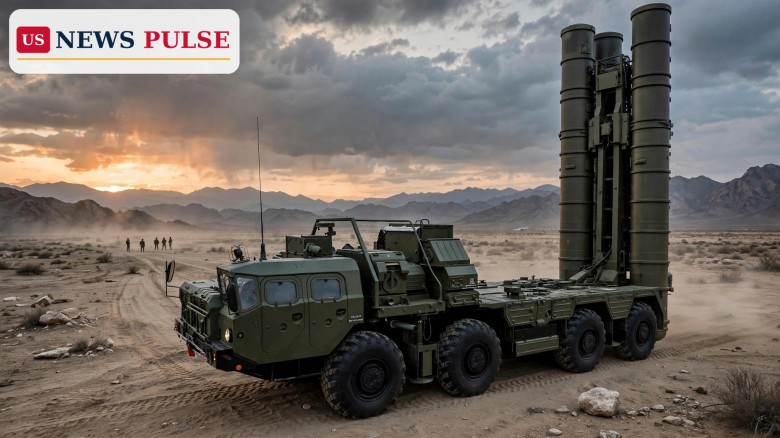
Iran is negotiating with Russia to buy advanced S-400 long-range air defence systems, The Telegraph reported on Friday, November 6, 2026, in a deal that would mark a major upgrade for Tehran's battered air defences — if President Vladimir Putin agrees to supply them. Supreme Leader Mojtaba Khamenei made the S-400 the central demand of a personal letter carried to the Kremlin this week.
Key Points
- The Telegraph reported on November 6, citing a senior Iranian official, that Iran and Russia are negotiating a deal for Moscow to supply S-400 long-range air defence systems.
- Supreme Leader Mojtaba Khamenei sent his security chief, Mohsen Rezaei, to the Kremlin on Thursday, November 5, with a personal letter to President Vladimir Putin whose central demand was the S-400 supply.
- Tehran is "optimistic" Putin will approve, but neither Moscow nor Tehran has confirmed that a deal has been reached.
- The Kremlin confirmed Rezaei delivered a message from Khamenei but did not disclose its contents.
- The report contradicts President Donald Trump's claim that Russia is not helping Iran "at all".
What Happened
According to The Telegraph, the S-400 negotiations are the most sensitive item on a fast-moving agenda between Tehran and Moscow. Khamenei dispatched Rezaei to the Kremlin on Thursday, November 5, carrying a personal letter to Putin. The letter's central demand, the newspaper reported, was for Russia to supply the S-400 — the most advanced long-range air defence weapon in Moscow's arsenal. The Kremlin confirmed that Rezaei had delivered a message from the supreme leader, but gave no details of what the letter said and did not confirm that any arms deal was under discussion. The Telegraph also reported that Russia has agreed to supply 90 launchers for Kh-39 (LMUR) missiles for Mi-28 attack helicopters, and that the talks touched on a new Russia-Iran gas pipeline.
Background and Context
Moscow has discussed selling S-400 systems to Tehran for years but has consistently held back, wary of damaging its relations with Israel and other regional states. That caution has defined Russian policy on Iran's air defences for more than a decade, even as the two countries deepened their military cooperation during the war in Ukraine.
The urgency is new: US and Israeli strikes have badly damaged Iran's air defences in the war now in its ninth month since February 28, 2026, most recently a US strike on Qeshm Island on November 6. Rezaei's trip was itself significant: as US News Pulse reported, he met Putin at the Kremlin on November 5 and set out Tehran's seven conditions for any talks with Washington. The S-400 request now appears to have been the unspoken centrepiece of that visit.
What an Iran S-400 Deal Would Mean for Air Defence
The S-400 Triumf is Russia's most capable long-range air defence system, designed to engage aircraft, cruise missiles and ballistic missiles at ranges of up to 400 kilometres. For Iran, whose air defence network has been degraded by months of strikes, acquiring even a small number of batteries would complicate planning for any future American or Israeli air campaign and give Tehran a credible shield over key sites.
But a deal would not transform Iran's defences overnight. Delivery, crew training and integration into Iran's existing radar and command networks would take months. The political signal may matter as much as the hardware: supplying the S-400 would show Moscow is prepared to arm Tehran with its most sensitive defensive technology despite its ties to Israel.
Reactions and Quotes
The report lands awkwardly for the White House. President Donald Trump has claimed that Russia is not helping Iran "at all" — a statement the reported S-400 negotiations directly contradict. The administration has not commented on The Telegraph report. The Kremlin's response has been careful: it confirmed Rezaei delivered a message from Khamenei, but disclosed nothing about the letter's contents and has not confirmed any discussion of S-400s. That silence leaves open whether Putin has agreed, is still weighing it, or intends to refuse. Israel, which has long lobbied Moscow against selling advanced air defences to Iran, has not commented publicly.
Why It Matters
The S-400 talks cut across the two tracks now shaping the US-Iran war: the military track and the diplomatic one. On the military side, Iran is trying to rebuild defences that American and Israeli strikes have worn down, while Washington weighs whether to resume major strikes. On the diplomatic side, Vice President JD Vance has spent the past fortnight in backchannel talks with Tehran through Qatar and other mediators, and Qatar's prime minister said on Saturday that "significant progress" has been made toward a deal.
An S-400 agreement would strengthen Iran's hand in both arenas: militarily, it would raise the cost of any renewed bombing campaign, and diplomatically, it would show Tehran is not negotiating from weakness. For Washington, it would raise the stakes of the decision Trump has said is coming soon: he warned on November 5 that he may have to "destroy the rest" of Iran if no deal is reached.
What Happens Next
Three things will show whether the S-400 talks are real. First, whether the Kremlin confirms — or denies — that the system was discussed, and what Putin decided. Second, whether any delivery timeline emerges. Third, how Washington responds, including whether the reported negotiations harden the administration's position in the backchannel talks or push it toward a deal before Tehran's defences improve.
For now, the diplomacy continues. Vance has said the United States has made progress in talks with Iran and set no deadline for a deal, But Tehran's message to Moscow is clear: if the talks fail, Iran wants the weapons to fight on. As Iran's chief negotiator warned this week, the ball is in Washington's court — a warning US News Pulse reported on Election Day.
Frequently Asked Questions
What is the S-400 air defence system?
The S-400 Triumf is Russia's most advanced long-range surface-to-air missile system. It can engage aircraft, cruise missiles and ballistic missiles at ranges of up to 400 kilometres, and is operated by Russia, China, India and Turkey.
Has Russia agreed to sell S-400s to Iran?
Not that either side has confirmed. The Telegraph reported on November 6, citing a senior Iranian official, that the two countries are negotiating a deal and that Tehran is optimistic Putin will approve.
Why does Iran need the S-400 now?
US and Israeli strikes during the war that began on February 28, 2026 have badly damaged Iran's air defences, including a US strike on Qeshm Island on November 6. Tehran wants a long-range system to protect key sites.
What else did Rezaei discuss in Moscow?
According to The Telegraph, Russia agreed to supply 90 launchers for Kh-39 (LMUR) missiles for Mi-28 attack helicopters, and the talks touched on a new Russia-Iran gas pipeline.
What does this mean for the US-Iran talks?
An S-400 deal would strengthen Iran's position by raising the cost of renewed US strikes. At the same time, backchannel talks led by Vice President JD Vance continue, with Qatar saying significant progress has been made.
© 2026 US News Pulse. All rights reserved.
 Print
 Save