
Reza Pahlavi Accepts Freedom Prize in Frankfurt as 18,000 Rally for Iran
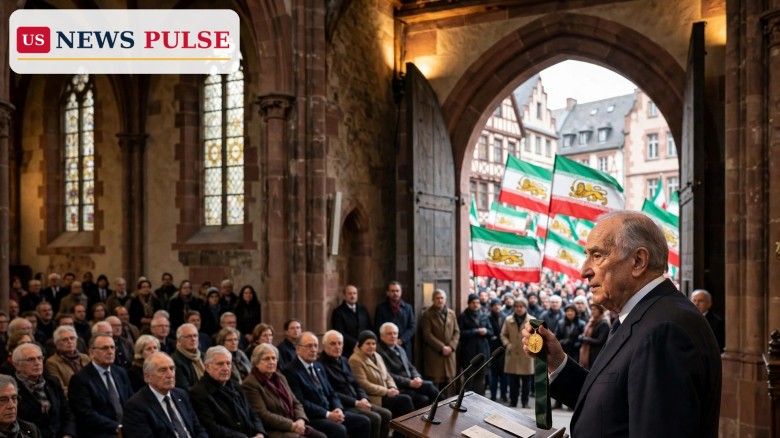
Reza Pahlavi, the exiled son of Iran's last shah, accepted the 2026 Freedom Prize in Frankfurt on Saturday, telling a cheering crowd that he holds the honour only in trust until Iranians can choose their own government — as about 18,000 supporters rallied outside and critics, including some 200 political prisoners inside Iran, denounced the award.
The ceremony at St. Paul's Church, one of Germany's most symbolic democratic landmarks, showcased both the strength and the divisions of the Iranian opposition. Supporters waved the flags of pre-revolutionary Iran, while opponents said honouring the heir of a deposed monarchy betrayed the idea of freedom the prize claims to celebrate.
Key Points
- Reza Pahlavi received the 2026 Freedom Prize of the Friedrich Naumann Foundation at St. Paul's Church in Frankfurt on Saturday, November 7, 2026.
- Police estimated about 18,000 demonstrators greeted him, many waving pre-revolutionary Iranian flags, and a registered march was expected to draw up to 30,000 people.
- Pahlavi said he accepts the prize only as a “trustee” until a democratically elected government is in power in Iran.
- About 200 prisoners held in Iran signed a letter protesting the award, calling him a symbol of a “bygone dictatorship”.
- The ceremony came after anti-government protests in Iran at the end of 2025 were suppressed in a January crackdown that rights groups say killed tens of thousands of people.
What Happened
The Friedrich Naumann Foundation, an organisation close to Germany's liberal Free Democratic Party, presented Pahlavi with its 2026 Freedom Prize in a ceremony for the Iranian people at St. Paul's Church in Frankfurt. The venue, known in German as the Paulskirche, is where Germany's first freely elected parliament met in 1848.
Outside the church, the turnout was striking. Police put the number of demonstrators at about 18,000, many chanting in support of Pahlavi and waving the lion-and-sun flags of pre-revolutionary Iran. Organisers had registered a march expected to draw as many as 30,000 people at related rallies.
Pahlavi, 66, has lived in exile in the United States for decades, but he remains the most recognisable figurehead for Iranians who want the Islamic Republic replaced. Accepting the prize, he framed himself not as a claimant to a throne but as a caretaker, saying he accepts it only as a “trustee” until a democratically elected government is in power in Iran.
Background: The Shah's Son and a Divided Opposition
Pahlavi is the eldest son of Mohammad Reza Pahlavi, the shah overthrown in the Islamic Revolution of 1979. He has spent his adult life in exile, mostly in the United States, campaigning for a secular, democratic Iran. For supporters, he is a unifying figure who can bridge monarchists, liberals and secularists. For critics, he is inseparable from his father's authoritarian rule, whose secret police, the Savak, jailed and tortured dissidents.
That argument has sharpened since the latest wave of unrest. Anti-government protests broke out across Iran at the end of 2025, driven by economic collapse and anger at the clerical regime, and were suppressed in a January crackdown that rights groups say killed tens of thousands. The opposition is now more visible abroad than in years, but also more divided over who should lead it.
Germany, home to a large Iranian diaspora, has become a centre of that debate, so the foundation's decision was always going to be read as a political statement, not just a ceremonial honour.
Reza Pahlavi Freedom Prize: Why the Award Divides Iranians
The dispute is not whether Iran's government should change — almost every opposition faction agrees on that — but what should replace it, and who speaks for the Iranian people in the meantime. Pahlavi's backers argue his profile makes him the opposition's most effective ambassador, and that a prize from a respected German foundation gives the cause legitimacy in European capitals.
His detractors argue the opposite: that honouring the son of a deposed autocrat hands Tehran an easy argument, and sidelines the republican, leftist and ethnic-minority voices in the protest movement. Opposition factions accuse him of not distancing himself clearly enough from his father's rule.
Reactions and Quotes
The sharpest rebuke came from inside Iran itself. About 200 prisoners signed a letter protesting the award, calling Pahlavi a symbol of a “bygone dictatorship”. The letter, reported as the ceremony took place, argued that celebrating the heir of the monarchy insulted the memory of those jailed and killed under both the shah and the Islamic Republic.
Critics outside Iran echoed that view, calling the ceremony illegitimate. Pahlavi's camp pointed to the crowds in Frankfurt as the real verdict: thousands of Iranians, many of them young, who had travelled to cheer a man they see as the face of a free Iran.
Why It Matters
The ceremony matters because it shows how the Iranian opposition is being reshaped in exile while the regime at home fights for survival. Tehran is still at war with the United States, now in its ninth month, even as backchannel talks continue — Vice President JD Vance has spent a fortnight in indirect negotiations with Iran. Read more: Vance letter to Iran: Trump confirms secret peace overture to Tehran hardliner.
A prize in Frankfurt will not change the balance of power in Tehran, but it does change the conversation in Europe. It signals to governments weighing how to deal with Iran that at least one prominent Western institution is prepared to treat Pahlavi as a legitimate representative of the Iranian people.
What Happens Next
No next public appearance by Pahlavi has been announced, and the immediate test will be whether the Frankfurt momentum holds or fades. Watch for a response from Tehran, which has in the past denounced Pahlavi and his supporters as foreign-backed, and for reactions from other opposition groups, some of which may use the prize row to press their own claims to leadership.
Diplomatic efforts around the US-Iran war continue, and the Oleshky ceasefire in Ukraine — brokered with the help of First Lady Melania Trump — shows how quickly one breakthrough can reshape the agenda. Read more: Melania Trump ceasefire brings hope to Oleshky as Ukraine aid mission begins. For now, Frankfurt has given Pahlavi a stage, a prize and a crowd.
Frequently Asked Questions
Who is Reza Pahlavi?
The exiled son of Mohammad Reza Pahlavi, the last shah of Iran, overthrown in the 1979 Islamic Revolution. He lives in the United States and campaigns for a secular, democratic Iran.
What is the Freedom Prize?
An award from the Friedrich Naumann Foundation, an organisation close to Germany's liberal Free Democratic Party. Pahlavi received the 2026 prize at St. Paul's Church in Frankfurt on November 7, 2026.
Why is the award controversial?
Critics, including about 200 political prisoners in Iran, say honouring the son of a deposed autocrat betrays the cause of freedom. Supporters call him a unifying figure for a democratic Iran.
How many people rallied in Frankfurt?
Police estimated about 18,000 demonstrators greeted Pahlavi, many waving pre-revolutionary Iranian flags, and a registered march was expected to draw up to 30,000 people.
What did Pahlavi say about the prize?
He said he accepts the prize only as a “trustee” until a democratically elected government is in power in Iran.
© 2026 US News Pulse. All rights reserved.
 Print
 Save