
Vance Leads Secret Iran Backchannel Talks as Qatar Says a Deal Is Still Possible
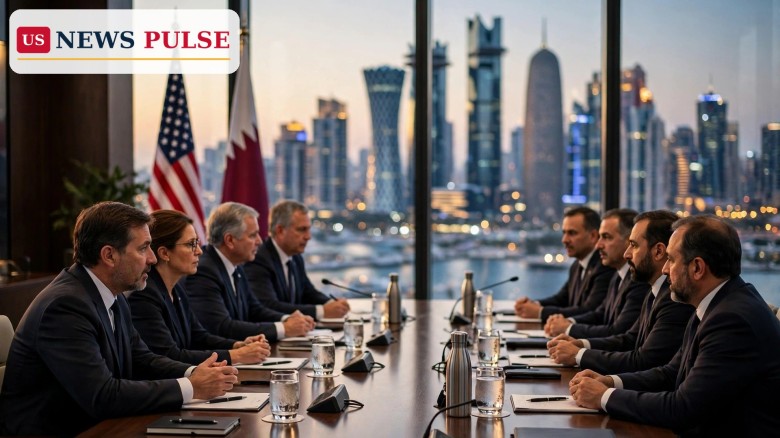
Vice President JD Vance has spent the past two weeks quietly running a secret backchannel with Iran to broker a new ceasefire and revive stalled nuclear talks, Axios reported on Friday, November 7, 2026, as Qatar said on Saturday that mediation continues and has made "significant progress".
Key Points
- Vice President JD Vance has spent the past fortnight directly engaged in indirect negotiations with Iran, Axios reported on Friday, citing two sources.
- Vance has held near-daily discussions with Qatar's Prime Minister Sheikh Mohammed bin Abdulrahman Al-Thani, Pakistan's Army Chief Field Marshal Asim Munir and other mediators.
- Qatar's prime minister said at Oxford University on Saturday that mediation continues, "significant progress" has been made.
- Iran has reportedly passed seven conditions to the United States through intermediaries, and Arab News reported Tehran is willing to discuss nuclear issues previously off the table.
- Two weeks ago, Vance sent a letter to Iran's security chief Mohsen Rezaei proposing a return to direct talks, and a working-level technical meeting between US and Iranian delegates is under discussion.
What Happened
Axios reported that Vance has spent the past fortnight in indirect negotiations with Iran, working to broker a new ceasefire and restart stalled nuclear talks. He has held near-daily discussions with Qatar's prime minister, Pakistan's Army Chief Field Marshal Asim Munir and other regional mediators, according to two sources.
White House envoy Steve Witkoff and presidential adviser Jared Kushner are also engaged, the report said. Trump is letting the diplomacy run while the military stays ready to resume strikes. Two weeks ago, Vance sent a letter to Iran's security chief Mohsen Rezaei proposing a return to direct talks; Rezaei called the changed American tone a good sign but said he had not replied. A working-level technical meeting between US and Iranian delegates is under discussion, although none has yet taken place.
Background: Nine Months of War, Months of Dead Ends
The US-Iran war began on February 28, 2026, and is now in its ninth month. Earlier diplomacy produced only pauses: a June ceasefire collapsed, and the naval blockade imposed in April was briefly lifted, then reimposed in July. On Friday, November 6, American forces carried out fresh limited strikes on an Iranian air-defence system on Qeshm Island, a reminder that the military track has not paused while diplomats talk.
On Monday, November 2, Vance said Washington had made "progress" with Iran and that he and Trump "both feel pretty good about the prospects for potentially coming to a negotiated settlement", adding that the United States had set "no strict deadline".
Vance Iran Backchannel Talks: What We Know So Far
The backchannel's shape is now clearer. Vance is the central American figure, working through Qatar and Pakistan rather than a direct line to Tehran. The talks aim at a new ceasefire and a revival of nuclear negotiations stalled since the war began. The top American priority, Vance has said, is a firm and verifiable commitment that Iran will not rebuild its nuclear programme.
Tehran's position is also coming into focus. Arab News reported the two sides are "edging toward a potential breakthrough", with Iran willing to discuss nuclear issues previously off the table. Iran has reportedly passed seven conditions to the United States through intermediaries, including easing sanctions, lifting the naval blockade and releasing frozen assets. At Oxford University on Saturday, Qatar's prime minister said mediation continues, "significant progress" has been made and "we cannot wait to reach a perfect agreement; we hope to reach a good agreement". The day before, Qatar denied online claims that he had said the talks had failed, calling them false and a deliberate distortion.
Reactions and Quotes
The Qatari prime minister's Oxford remarks set the tone for the weekend. "We cannot wait to reach a perfect agreement; we hope to reach a good agreement," he said, signalling that the mediators are pushing for a workable deal rather than holding out for a comprehensive settlement.
Vance has been measured in public. On November 2, he said the United States had made "progress" in talks with Iran and that Washington retains both military and non-military options. Trump said the same day that a deal was "coming together very nicely". From Tehran, the signals have been mixed: Rezaei called the changed American tone a good sign but said he had not replied, while Supreme Leader Mojtaba Khamenei warned that any US or Israeli threat would face a response without geographic limits.
Why It Matters
A deal would end a war that has reshaped the region and roiled global markets. The fighting has repeatedly sent oil prices surging, and the naval blockade has prevented Iran from exporting more than $25 billion in crude oil in recent months, according to US Central Command. A ceasefire would ease pressure on energy markets and shipping through the Strait of Hormuz.
The stakes are also political. The midterms showed voters punishing the party in power for a war many Americans never expected to last nine months. A settlement would let Trump claim he ended a war his critics said he started, while a collapse would leave him facing a Democratic Congress that has vowed investigations and can constrain further military action. The war has already spilled into Saudi Arabia and Yemen.
What Happens Next
The immediate question is whether the working-level technical meeting under discussion actually takes place in the coming days. It would move the diplomacy from messages passed through mediators to direct negotiation between specialists, the clearest sign yet that both sides are serious. Watch for Tehran's next signals on its seven conditions, and for Washington's response. The military track will not pause: the United States keeps both military and non-military options open, and Iran's decision to lift its missile-range limit shows Tehran is preparing for the possibility that diplomacy fails.
Frequently Asked Questions
What is the Vance Iran backchannel?
A secret track in which Vice President JD Vance has spent the past two weeks negotiating indirectly with Iran through mediators, mainly Qatar's prime minister and Pakistan's army chief, to broker a ceasefire and revive nuclear talks.
Who is mediating between the US and Iran?
Qatar is the central mediator, with Prime Minister Sheikh Mohammed bin Abdulrahman Al-Thani holding near-daily talks with Vance. Pakistan's Army Chief Field Marshal Asim Munir and other mediators are involved.
Has Iran set conditions for a deal?
Iran has reportedly passed seven conditions to the United States through intermediaries, including easing sanctions, lifting the naval blockade and releasing frozen assets before fully reopening the Strait of Hormuz.
Is there a deadline for the talks?
No. Vance said on November 2 that the United States has set "no strict deadline" for Iran, and that Washington retains both military and non-military options if the talks fail.
How long has the US-Iran war lasted?
The war began on February 28, 2026, and is now in its ninth month, with American strikes, an Iranian missile campaign, a naval blockade and repeated mediation by Qatar.
Related coverage: Vance says US-Iran talks are making progress; Iran sends US a nuclear proposal via Qatar; Trump speaks to Qatar Emir Tamim.
© 2026 US News Pulse. All rights reserved.
 Print
 Save