
Japan Earthquake: Magnitude 5.7 Quake Strikes Central Japan, Injuring at Least 20 in Aichi
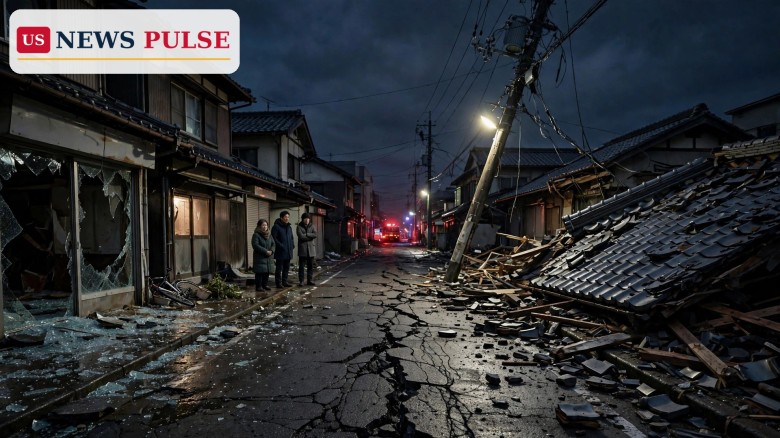
A Japan earthquake of magnitude 5.7 struck central Japan in the early hours of Sunday, injuring at least 20 people in Aichi Prefecture and delivering the strongest shaking the prefecture has felt in almost 30 years. The tremor hit at 1:04 a.m. local time, rattling homes, shattering shop windows — but it caused no tsunami threat and, so far, no deaths.
The Japan Meteorological Agency said the quake was centred in western Shizuoka Prefecture, at a depth of about 41 kilometres, and registered upper 5 on Japan's seven-point seismic intensity scale in Chita City, Aichi Prefecture — the first shaking of that strength observed in Aichi since March 1997.
Key Points
- A magnitude 5.7 earthquake struck western Shizuoka Prefecture in central Japan at 1:04 a.m. JST on Sunday, November 8, 2026, at a depth of about 41 kilometres.
- It registered upper 5 on Japan's seismic intensity scale in Chita City, Aichi Prefecture — the first jolt of that strength in Aichi since March 1997 — and lower 5 in parts of Aichi, Shizuoka, Gifu and Nagano.
- At least 20 people were injured in Aichi, with local media reporting as many as 22, no deaths have been reported.
- The Japan Meteorological Agency said there was no tsunami threat, but warned of aftershocks of around upper 5 intensity over the next week and a higher risk of landslides.
- The tremor occurred in the projected epicentre area of the feared Nankai Trough megaquake, but officials said it is believed to be a different, smaller event.
What Happened
The earthquake struck shortly after 1 a.m. on Sunday, when most people in central Japan were asleep. In Chita City, south of Nagoya, the shaking reached upper 5 on the Japan Meteorological Agency's intensity scale Lower 5 shaking was recorded across a wide area of Aichi, Shizuoka, Gifu and Nagano prefectures.
The tremor was felt far beyond the epicentre. Strong shaking was reported in Hamamatsu, and the quake was felt in Kyoto, Nara and Yamanashi Prefecture, home to Mount Fuji. In Aichi, local media reported shattered store windows and residents rushing out of buildings.
In Tokoname City, a woman in her 50s was taken to hospital with a fractured ankle, and in Toyota City a man in his 40s and a woman in her 80s were taken to hospital with head injuries after falling; both were conscious. In Higashiura Town, water supplies were cut off in parts of the town and officials received reports of water gushing from manholes. The government set up an emergency liaison office.
Background: Japan's Earthquake Country
Japan is one of the most earthquake-prone countries on Earth, sitting at the junction of four tectonic plates on the Pacific Ring of Fire. It records more than 1,500 tremors strong enough to be felt each year,
Central Japan is closely watched because it lies near the Nankai Trough, a deep ocean trench off the Pacific coast, where scientists have warned for decades that a megaquake is a matter of when, not if. Sunday's quake came just two days after a separate magnitude 6.1 earthquake struck off Japan's Kanto coast on Friday evening, rattling Tokyo but causing no damage or injuries.
Japan Earthquake: Aichi's Strongest Shaking Since 1997
For Aichi Prefecture, the headline figure is the shaking itself. Upper 5 intensity had not been recorded anywhere in the prefecture since March 1997 — nearly three decades ago — which is why the Meteorological Agency's announcement drew immediate national attention.
Chita City, where the strongest shaking was measured, sits on a peninsula jutting into Ise Bay, south of Nagoya. The prefecture is home to major manufacturing and to more than 7.5 million people.
So far the damage reported has been limited: broken windows, fallen objects, a handful of water-supply problems and injuries from falls. That fits a magnitude 5.7 quake at a depth of more than 40 kilometres — strong enough to frighten and injure, but deep enough that widespread structural damage was unlikely.
Reactions and Official Response
At the Meteorological Agency's emergency news conference, official Ebita Ayataka urged residents in areas hit by strong tremors to "pay close attention to future seismic activity and rain conditions, as there is a growing risk of falling rocks and landslides." He added that people should be on the alert for quakes with an intensity of around upper 5 during the next week or so.
Ebita said that while the tremor occurred in the projected epicentre area of the anticipated Nankai Trough megaquake, it is believed to be different from that much larger earthquake. The government moved quickly to set up an emergency liaison office There was no tsunami threat, the agency confirmed, and no tsunami warning or advisory was issued.
Why It Matters
A magnitude 5.7 earthquake in a densely populated part of central Japan matters for three reasons. First, the human cost: at least 20 people were hurt, some needing hospital treatment. Second, the location: Aichi is an industrial heartland, and even a moderate quake there prompts checks on factories, rail lines and ports. Third, the context: the Nankai Trough link means every strong quake here is watched for what it might signal.
The timing also matters. Coming two days after the magnitude 6.1 quake off the Kanto coast, Sunday's tremor is the second reminder this week of the ground beneath Japan's feet. Neither quake caused major damage,
What Happens Next
The Meteorological Agency has warned that aftershocks with an intensity of around upper 5 could strike over the next week, and that rain in the coming days could raise the risk of landslides on slopes loosened by the quake. Residents have been urged to stay alert, avoid steep slopes and damaged buildings, and follow official updates.
Local authorities will continue damage surveys, including checks on water supplies after the reported outages in Higashiura Town. Seismologists will study the quake's data closely; for now, the official assessment is that this was a separate, moderate event, not the start of something larger.
Frequently Asked Questions
How strong was the earthquake in Japan on November 8, 2026?
The Japan Meteorological Agency measured the quake at magnitude 5.7, with its epicentre in western Shizuoka Prefecture at a depth of about 41 kilometres. The US Geological Survey put the magnitude at 5.5. It struck at 1:04 a.m. local time on Sunday, November 8, 2026.
Where was the shaking strongest?
The strongest shaking, upper 5 on Japan's seven-point intensity scale, was recorded in Chita City, Aichi Prefecture — the first time that level had been observed in Aichi since March 1997.
How many people were injured?
At least 20 people were injured in Aichi Prefecture, with some media putting the figure at 22. No deaths have been reported.
Was there a tsunami warning?
No. The Japan Meteorological Agency said there was no tsunami threat, and no tsunami warning or advisory was issued.
Is this earthquake connected to the Nankai Trough megaquake?
Officials said the quake occurred in the projected epicentre area of the feared Nankai Trough megaquake but is believed to be a different, smaller event.
Related coverage: Japan Earthquake: Magnitude 6.1 Quake Strikes Off Tokyo Coast, No Tsunami Warning and Japan Unveils Emergency Cybersecurity Package After Wave of Data Breaches.
© 2026 US News Pulse. All rights reserved.
 Print
 Save