
Israel Strikes Beirut, Killing Top Hezbollah Commander in First Attack Since Ceasefire
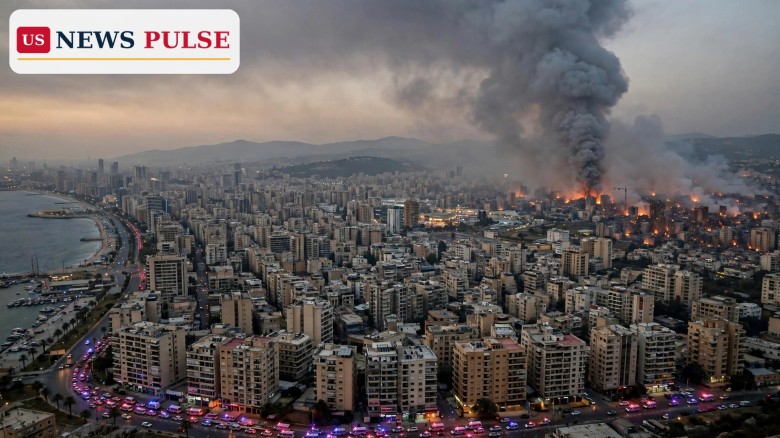
Israel carried out a major airstrike on Beirut's southern suburbs on Wednesday night, November 4, 2026, killing a senior Hezbollah commander in the first Israeli strike on the Lebanese capital since a United States-brokered ceasefire took effect in April.
The Israeli military confirmed on Thursday, November 5, that Ahmed Ghaleb Balout, chief of operations for Hezbollah's elite Radwan Force, was killed in a precision strike on Dahiyeh, the southern suburbs that serve as the group's stronghold. Two more Hezbollah commanders were killed in separate strikes the same day.
Key Points
- Israel struck Beirut's southern suburbs on Wednesday night, November 4, 2026, the first strike on the capital since the ceasefire took effect on April 17, 2026.
- The Israeli military confirmed that Ahmed Ghaleb Balout, the Radwan Force's chief of operations, was killed in the precision strike on Dahiyeh.
- Two more Hezbollah commanders died the same day: Muhammad Ali Bazi, intelligence chief of the Nasr division, and Hussein Hassan Romani, head of aerial defence operations.
- The strikes followed Hezbollah attacks that wounded seven Israeli soldiers, one seriously, with explosive drones and rockets in southern Lebanon.
- Israel warned 12 villages to evacuate before a broad wave of strikes across the south; a strike in Zellaya hit the town mayor's home, killing four and wounding five, Lebanon's Health Ministry said.
What Happened
The airstrike hit Dahiyeh late on Wednesday night, sending a column of smoke over the southern suburbs. It was the first time Israeli jets had struck Beirut itself since the ceasefire began.
On Thursday, the Israel Defense Forces confirmed the strike had killed Balout, a senior commander who had planned attacks on Israeli troops, advanced Hezbollah's "Conquer the Galilee" plan for northern Israel, and directed dozens of attacks in southern Lebanon.
Two more commanders were killed in separate strikes the same day: Muhammad Ali Bazi, intelligence chief of the Nasr regional division, and Hussein Hassan Romani, head of aerial defence operations. Three senior commanders lost in one day is one of the heaviest blows to Hezbollah's command since the ceasefire took hold.
The strikes were not limited to the capital. Israel issued evacuation warnings for 12 villages before the wider wave across southern Lebanon. In Zellaya, a strike hit the mayor's home, killing four and wounding five, Lebanon's Health Ministry said.
Israel Strikes Beirut: The Night the Ceasefire Broke
What makes Wednesday night different is the target. The ceasefire agreed in April had, until now, kept the Lebanese capital out of the fighting. By hitting Dahiyeh, Israel signalled it is willing to take the war back to Hezbollah's heartland when it believes the group has crossed a line.
Prime Minister Benjamin Netanyahu and Defense Minister Israel Katz issued a joint statement after the strike. "No terrorist has immunity. Israel's long arm will reach every enemy and murderer. We promised to bring security to the residents of the north," they said.
The military said the strikes answered Hezbollah attacks that wounded seven Israeli soldiers, one seriously, earlier on Wednesday, and that it has killed more than 1,900 Hezbollah operatives since the fighting began.
Background and Context
The ceasefire that Wednesday night's strike has shaken was brokered by the United States and announced by President Donald Trump on April 16, 2026. It took effect the following day, April 17, ending months of open fighting and raising hopes that the border between Israel and Lebanon could finally quieten.
For more than six months, that hope largely held: Beirut had not been struck since the deal took effect. The Radwan Force, Hezbollah's elite commando unit, remained a central concern for Israel because of its cross-border attack planning and its "Conquer the Galilee" plan.
The wider region remains on edge amid the United States' nine-month war with Iran, including the US operation that disabled the cargo ship M/V Huda in the Gulf of Oman and Iran's execution of three men accused of aiding Israel and the United States.
Reactions and Quotes
Israel's leadership was swift and uncompromising. Netanyahu and Katz framed it as a promise kept to northern Israel's residents, who have lived under the threat of Hezbollah attack for years. "No terrorist has immunity. Israel's long arm will reach every enemy and murderer. We promised to bring security to the residents of the north," the two leaders said.
The military confirmed Balout's death on Thursday, saying he had directed dozens of attacks in southern Lebanon, and confirmed the deaths of Bazi and Romani. Lebanon's Health Ministry reported four killed and five wounded in Zellaya; no fuller casualty figures had been released.
Why It Matters
Wednesday night's strike matters because it breaks the one boundary the April ceasefire had held: the Lebanese capital itself. For more than six months, Beirut had been spared. A strike on Dahiyeh changes the calculation for everyone, from the Lebanese government to the United States, which brokered the truce.
It also matters because of who was killed. Balout was the operations chief of Hezbollah's most feared unit, and his death, with the Nasr division's intelligence chief and the aerial defence chief, strips Hezbollah of senior commanders in one day. That invites retaliation, in a region already strained by war and by the crisis in Gaza, where the first winter storm has flooded 70,000 tents of displaced Palestinians.
What Happens Next
The immediate question is whether Hezbollah responds. The group has not yet been reported to have answered the killing of three commanders, but its past practice suggests a response is likely, by rocket fire, drone attacks, or a strike on Israeli forces. Any response would test whether Israel treats it as a further breach justifying more strikes on Beirut.
The second question is diplomatic. The ceasefire was an American-brokered deal, and Washington will now face pressure to shore it up before the cycle of attack and response destroys it altogether. Neither side has declared the truce dead, but Wednesday night showed how thin it has become.
Frequently Asked Questions
Who was Ahmed Ghaleb Balout?
Balout was the chief of operations for Hezbollah's elite Radwan Force. Israel said he planned attacks on Israeli troops, advanced the "Conquer the Galilee" invasion plan for northern Israel, and directed dozens of attacks in southern Lebanon. He was killed in Wednesday night's strike on Beirut's southern suburbs.
Why did Israel strike Beirut now?
Israel said the strikes answered Hezbollah attacks that wounded seven Israeli soldiers, one seriously, on Wednesday. It was the first strike on the capital since the ceasefire took effect in April 2026.
What is the Radwan Force?
The Radwan Force is Hezbollah's elite commando unit, behind the "Conquer the Galilee" plan to seize territory in northern Israel. Israel regards it as the sharpest threat to its northern communities.
What happened in Zellaya?
A strike in Zellaya hit the home of the town's mayor, killing four people and wounding five, according to Lebanon's Health Ministry. Israel had warned 12 villages to evacuate before the strikes.
Is the April ceasefire over?
Neither side has declared the ceasefire dead, but this is the most serious breach since the deal took effect on April 17, 2026. Whether it survives will depend on Hezbollah's response and on US-led diplomatic efforts to pull both sides back.
© 2026 US News Pulse. All rights reserved.
 Print
 Save