
US Homelessness Falls to 698,425 in Largest Drop in Over a Decade, HUD Says
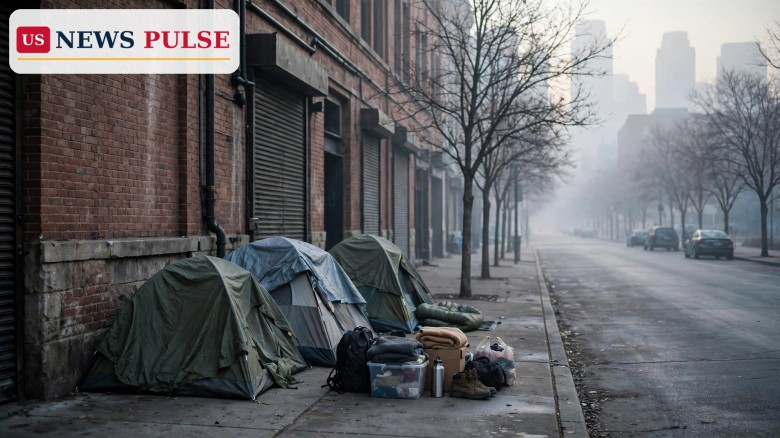
Homelessness in the United States fell to 698,425 people on a single night in January 2026, the Department of Housing and Urban Development announced on Friday, a drop of 6.3 percent that the department called the largest decrease in homelessness on record. Roughly 49,000 fewer people were counted than a year earlier, the second consecutive annual decline after the record high of January 2024. The figures come from the annual Point-in-Time count.
Key Points
- HUD said on Friday, November 6, 2026, that the 2026 count found 698,425 people homeless on a single night in January, down 6.3 percent — about 49,000 fewer than a year before.
- HUD called it the largest decrease in homelessness on record; NPR called it the largest drop in more than a decade.
- It is the second straight annual fall, after the January 2025 count of 745,652, down about 3.3 percent from the record 771,480 in January 2024.
- HUD Secretary Scott Turner credited President Donald Trump's border crackdown, the encampment crackdown after the Supreme Court's 2024 ruling letting cities ban public camping, and the shift from "Housing First" to "Treatment First" under the July 2025 executive order.
- An independent analysis for the National Alliance to End Homelessness found a similar fall but credited funded housing programmes and softening rental markets instead.
What Happened
The Department of Housing and Urban Development released the headline results of its 2026 Point-in-Time count on Friday, November 6, 2026. The count, carried out by local communities on a single night in January, found 698,425 people homeless across the United States — 6.3 percent fewer than the 745,652 counted in January 2025.
HUD presented the result as a historic turn. The department called it the largest decrease in homelessness on record, while NPR described it as the largest drop in more than a decade. The decline follows the January 2025 count, itself down about 3.3 percent from the record 771,480 people counted in January 2024 — the highest figure since HUD standardised its counting methodology in 2007. The detailed report has not yet been published.
Background: From Record High to Two Years of Decline
The January 2024 count of 771,480 was the highest since HUD standardised its methodology in 2007. The pandemic years pushed the numbers up sharply as rents climbed, evictions resumed and shelter systems strained.
The January 2025 count brought the first fall, down about 3.3 percent to 745,652, and January 2026 has now extended it to 6.3 percent, the steepest annual percentage drop in the modern counting era. Even so, nearly 700,000 people were homeless on a single January night, still well above pre-pandemic levels. The count is a snapshot, not a census of everyone who experiences homelessness over a year, and unsheltered homelessness is widely accepted to be undercounted. But the method has been consistent since 2007.
US Homelessness Falls — But Nearly 700,000 People Remain Without Homes
The headline is good news; the context is harder. Almost 700,000 people still had nowhere to live on the night of the count, and the improvement was not shared everywhere. Los Angeles County, home to one of the largest homeless populations in the country, bucked the trend: its estimated homeless population rose 1.2 percent in 2026 to 73,040 people, while the city of Los Angeles itself was up 3.4 percent to 45,194.
That split matters: the national figure averages very different local stories. Until the detailed report appears, it is impossible to say which cities drove the decline and which were left behind. The human cost is also uneven: people without homes face far greater risks from extreme weather, and heat deaths in Phoenix surged past the 2025 total this year, with unhoused people far more likely to die of heat, while homelessness in that county has risen about 30 percent since 2020.
Reactions
HUD Secretary Scott Turner credited the Trump administration's policies for the decline. He pointed to the president's border crackdown and the removal of what he called "criminal illegals" from the streets, to the encampment crackdown that followed the Supreme Court's 2024 ruling allowing cities to ban public camping, and to the shift from "Housing First" to "Treatment First" under the president's July 2025 executive order. The order made treatment for addiction and mental illness a condition of help, rather than providing housing first.
Advocates read the same numbers very differently. An independent analysis of the same count, commissioned by the National Alliance to End Homelessness, found a similar decline but credited funded housing programmes and softening rental markets instead. The disagreement is a fight over what the federal government should do next. Other governments are spending heavily on the same problem — Canada's new budget sets aside billions for homelessness — while a shooting at a homeless encampment in Chicago last month showed how quickly the politics of encampments can turn violent.
Why It Matters
The count is the number the federal government uses to judge its homelessness policy and decide where money goes. A 6.3 percent fall, the largest on record, will be used by the administration as proof that its approach works — and by its critics as proof that housing funding works. Both sides will now fight over the same figure.
It matters, too, because of what it does not show. Nearly 700,000 people were homeless on one January night, well above pre-pandemic levels, and the count misses many people who are homeless over the course of a year. Los Angeles, the city most associated with the crisis, went in the opposite direction. Above all, the count sets the terms of the next policy argument: the shift from "Housing First" to "Treatment First" is one of the biggest changes in American homelessness policy in decades, and this is the first count under it.
What Happens Next
HUD is expected to publish the detailed report, including state-by-state and demographic breakdowns, showing whether the fall was driven by fewer people in shelters, fewer people sleeping outside, or both. Advocates and researchers will publish their own analyses of the same data. Los Angeles and other cities where homelessness rose will face their own questions: a national fall does not relieve local pressure.
Frequently Asked Questions
How many people are homeless in the United States?
698,425 people, per HUD's 2026 count — down 6.3 percent, about 49,000 fewer, from 745,652 in January 2025.
Is this the largest drop in homelessness ever recorded?
Yes — the largest decrease on record, per HUD, and the largest drop in more than a decade, per NPR. It follows a 3.3 percent fall in January 2025, after the record 771,480 in January 2024.
What does HUD say caused the decline?
Secretary Scott Turner credited President Trump's border crackdown, the encampment crackdown after the Supreme Court's 2024 ruling, and the shift from "Housing First" to "Treatment First" under the July 2025 executive order.
Do homelessness advocates agree with that explanation?
No. An independent analysis commissioned by the National Alliance to End Homelessness found a similar decline but credited funded housing programmes and softening rental markets instead.
Did homelessness fall everywhere?
No. Los Angeles County was up 1.2 percent to 73,040, and the city up 3.4 percent to 45,194.
© 2026 US News Pulse. All rights reserved.
 Print
 Save