
Houthi Missiles Intercepted Over Riyadh as Debris Damages Aramco Tower
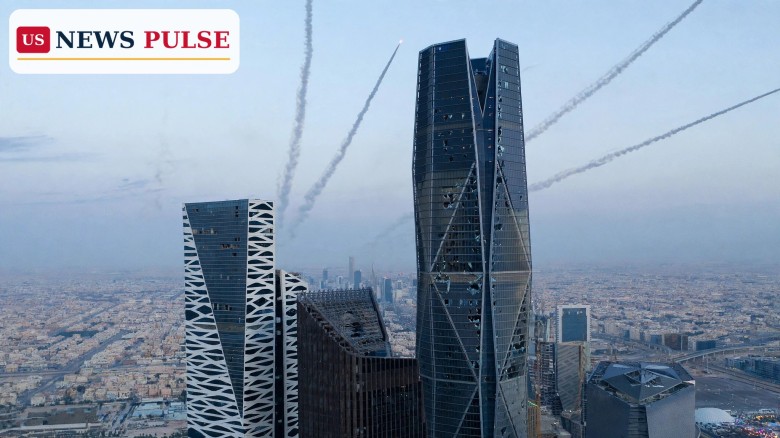
Saudi air defences intercepted four Houthi missiles over Riyadh early on Sunday, November 8, 2026, but falling debris damaged an Aramco administrative building in the capital's King Abdullah Financial District, Saudi authorities said. The Saudi Energy Ministry said the damage was limited and there were no injuries or fatalities, even as a Reuters witness reported blown-out windows across several floors of the Aramco Tower. The attack was the latest in a sharp escalation of Houthi strikes on Saudi Arabia unfolding alongside the ninth month of the United States war with Iran.
Key Points
- Coalition air defences intercepted two Houthi ballistic missiles aimed at Riyadh early on Sunday, November 8, 2026, and later destroyed two cruise missiles over Riyadh and the south.
- Falling debris damaged an Aramco administrative building in the King Abdullah Financial District; a Reuters witness saw blown-out windows across several floors of the Aramco Tower.
- The Saudi Energy Ministry said the damage was limited, with no injuries or fatalities.
- Loud booms were heard across the capital after a civil defence alert; authorities later said the danger had passed.
- The Houthis issued no immediate statement, and Aramco was not immediately available for comment.
What Happened
The attack began in the early hours of Sunday, November 8, 2026, when Saudi Civil Defense issued a Riyadh alert and residents reported hearing loud booms. The Saudi-led coalition said its air defences had intercepted and destroyed two ballistic missiles fired by Yemen's Iran-aligned Houthis towards Riyadh. Later in the morning, the coalition said it had also destroyed two cruise missiles over Riyadh and the kingdom's southern region.
Even with every missile intercepted, the attack left its mark on the skyline. Falling debris struck an administrative building belonging to Saudi Aramco in the King Abdullah Financial District, the kingdom's financial heart. A Reuters witness saw blown-out windows across several floors of the Aramco Tower. The Saudi Energy Ministry said the damage was limited, with no injuries or fatalities. Coalition spokesman Major General Turki al-Maliki confirmed the intercepts, and authorities later said the danger had passed.
Background and Context
The early Sunday attack came one day after the Houthis claimed their most ambitious strikes on Saudi Arabia yet. Houthi military spokesman Yahya Saree said the group had carried out six missile and drone operations against Saudi Arabia on Saturday, November 7, targeting King Khalid International Airport in Riyadh, Aramco oil sites, and Saudi military positions. Those claims have not been independently verified, and Saudi Arabia did not immediately confirm any damage from that wave. The coalition said on Saturday that it had intercepted a Houthi cruise missile heading for the Riyadh region, an attack covered in our earlier report on Saturday's interception.
The Houthis said the operations were retaliation for Saudi strikes on civilians in Taiz and Bani Hushaysh, where they say 33 people were killed and 39 injured. Saudi-led airstrikes near the Yemeni capital Sanaa killed at least 25 people earlier in the week, most of them women and children. Fighting between the Houthis and the Saudi-led coalition resumed in earnest in July 2026, breaking down a truce that had largely held since a United Nations-brokered ceasefire in 2022.
Houthi Missiles Over Riyadh and the Aramco Tower Damage
The damage to the Aramco Tower matters because it shows that even a fully intercepted attack can wound a symbol of Saudi economic power. The district is home to the headquarters of the kingdom's biggest banks, the stock exchange and the Public Investment Fund. Blown-out windows across several floors turned an abstract air-defence success into a concrete image of vulnerability.
Aramco's administrative building is not an oil facility, and the Energy Ministry was quick to stress that the damage was limited and that nobody was hurt. But the choice of target, or at least the path of the debris, carries a message the Houthis have delivered before: the kingdom's most valuable assets, in its most heavily defended city, are within reach. Even a successful interception can shatter windows in a dense district of glass towers.
Reactions and Quotes
Coalition spokesman Major General Turki al-Maliki confirmed that Saudi air defences had intercepted and destroyed the two ballistic missiles fired towards Riyadh, in a statement. The Saudi Energy Ministry said the attempted attack caused limited damage from falling debris and shrapnel and that there were no injuries or fatalities.
Saudi Civil Defense issued an alert in the Riyadh region as the attack unfolded and later said the danger had passed. A Reuters witness who saw the Aramco Tower after the attack described blown-out windows across several floors. Neither Aramco nor the Houthis issued an immediate statement. Aramco was not immediately available for comment, and the Houthis said nothing about the early Sunday launches.
Why It Matters
The attack matters for three reasons. First, it brings the war to the doorstep of Saudi Arabia's financial centre. The King Abdullah Financial District is the showcase of the kingdom's economic ambitions, and damage to an Aramco building there is a visible blow to the sense of security in the capital.
Second, it shows the Houthis can sustain a tempo of attacks on Riyadh day after day. Saturday's claimed six operations and Sunday's four intercepted missiles add up to a campaign, not a one-off.
Third, the attack complicates the diplomacy around the United States war with Iran, now in its ninth month, ahead of talks due in Abu Dhabi on November 10 and 11.
What Happens Next
Saudi authorities are expected to assess the damage to the Aramco Tower and clear the debris from the financial district. The Houthis may claim the attack in the coming hours, as they did after Saturday's operations, and any claim will be weighed against the coalition's account of four interceptions and limited debris damage. The Houthis have launched strikes on most days since the fighting intensified, and there is no sign yet that either side is ready to de-escalate.
Frequently Asked Questions
What happened in Riyadh on Sunday, November 8, 2026?
Saudi air defences intercepted two Houthi ballistic missiles aimed at Riyadh and later destroyed two cruise missiles over Riyadh and the south. Falling debris damaged an Aramco administrative building in the King Abdullah Financial District, with no injuries or fatalities.
Was anyone hurt in the attack?
No. The Saudi Energy Ministry said the damage was limited and there were no injuries or fatalities.
What is the Aramco Tower?
It is an administrative building belonging to Saudi Aramco, the state oil giant, in the King Abdullah Financial District in Riyadh, where a Reuters witness reported blown-out windows across several floors.
Did the Houthis claim the attack?
Not immediately, although they had claimed six missile and drone operations against Saudi Arabia the previous day, as covered in our report on the Houthis' claim of six strikes.
How does this fit into the wider conflict?
The fighting resumed in July 2026 after the breakdown of a truce that had largely held since 2022, and the attacks have escalated alongside the United States war with Iran, now in its ninth month. An earlier Houthi claim on the kingdom's main airport is covered in our report on the November 4 airport claim.
© 2026 US News Pulse. All rights reserved.
 Print
 Save