
Philadelphia Kristallnacht Boycott Fails as Crowds Rally for Jewish Restaurants
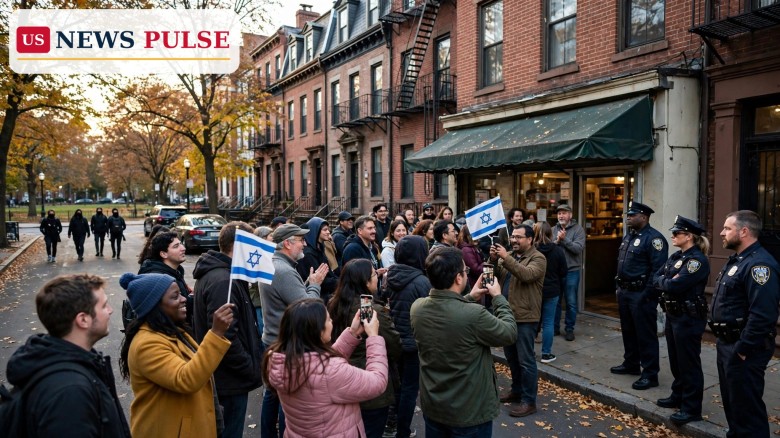
A planned boycott of Jewish-owned restaurants in Philadelphia collapsed within hours on Sunday, November 8, 2026, as a far larger crowd of supporters turned out and the small group of masked demonstrators gave up and went home. The Philadelphia Kristallnacht boycott, staged in Rittenhouse Square on the eve of the Kristallnacht anniversary, was meant to intimidate Jewish business owners. Instead, it ended with lines of customers stretching out of the restaurants.
The protest, organised by Philly Bike On Your Left, drew only about 75 people, a supporter told the New York Post. The masked bikers gathered outside restaurants including Dizengoff and Goldie and demanded that the businesses leave the city, but a massive crowd heckled them, waved Israeli flags and shouted them down until the organisers gave up early, citing safety concerns.
Key Points
- Dozens of masked bikers staged a boycott of Jewish-owned restaurants in Rittenhouse Square on Sunday, November 8, 2026, on the eve of Kristallnacht.
- Only about 75 boycotters turned out, while a much larger crowd of supporters waved Israeli flags and shouted them down.
- The boycott ended early, citing safety concerns, and lines at the targeted businesses stretched out the door.
- Police arrested at least one masked boycotter, and the Attorney General's Office and Mayor Cherelle Parker condemned the action as antisemitic.
- The Anti-Defamation League called the boycott antisemitic, plain and simple, and an attempt to intimidate a Jewish community that has faced generations of violence.
What Happened
The boycott began on Sunday afternoon in Rittenhouse Square, where Dizengoff, Goldie and other Jewish-owned restaurants sit beside cafes and boutiques. The demonstrators arrived on bicycles and positioned themselves outside the restaurants. Social media posts promoting the action had demanded that the businesses leave the city, with one post saying, "Show these zio business owners that we see them for the disgusting humans they are."
But the plan unravelled almost at once. Supporters, alerted in advance by the Anti-Defamation League, were already there in force. They formed lines outside the targeted businesses, cheered the owners and staff, and turned on the protesters. "This is America, not Nazi, Germany, coward," supporters shouted. Outnumbered and drowned out, the boycotters left early. Police arrested at least one masked boycotter, and no injuries were reported.
Background: What Kristallnacht Was
The timing was no accident. November 9 marks the anniversary of Kristallnacht, the "Night of Broken Glass," the night of November 9-10, 1938, when Nazi mobs across Germany and Austria attacked Jewish homes, businesses and synagogues. Jewish-owned shops were smashed and looted, more than a thousand synagogues were burned, and at least 91 Jews were murdered.
Kristallnacht is widely remembered as a turning point in the persecution of Jews under the Nazis, when state violence moved from discrimination and boycotts into open terror. The 1930s boycott of Jewish businesses was one of the first steps in that campaign, and its deliberate echo on the eve of the anniversary was what made Sunday's protest so chilling to many who saw it. That history also explains the response: Jewish organisations urged Philadelphians to show up and spend money at the targeted restaurants, and neighbours of all backgrounds answered.
Philadelphia Kristallnacht Boycott: How the Day Unfolded
The boycott's social media posts had singled out the restaurants by name and accused their owners of supporting Israel, framing the action as a protest against the war in Gaza. But the targets were small local restaurants with no role in foreign policy. Mac Mart co-owner Marti Lieberman told reporters that her mac and cheese shop had nothing to do with Israel and that she believed she was targeted because she wears a Star of David.
That detail has become central to the criticism. The businesses were not chains or political organisations but neighbourhood restaurants, and the common thread was that their owners are Jewish. Critics say that is what separates a political protest from an act of antisemitism: the targets were chosen for the identity of the owners, not for anything the businesses had done. As the afternoon wore on, the numbers told the story: about 75 boycotters faced a crowd many times larger, which did not seek a physical confrontation. Supporters shouted, sang, waved flags and, most effectively of all, queued up to eat, and the restaurants did brisk business all afternoon while the demonstrators drifted away.
Reactions and Quotes
Philadelphia Mayor Cherelle Parker condemned the boycott, and the Pennsylvania Attorney General's Office also denounced it as an antisemitic act. The condemnations were swift, reflecting how seriously officials treated the protest.
The Anti-Defamation League, which had urged people to patronise the restaurants, called the boycott "an attempt to intimidate a Jewish community that has faced generations of violence, exclusion and antisemitism" and "antisemitic, plain and simple." "This is America, not Nazi, Germany, coward," supporters shouted as the protesters left. For the owners, the most meaningful reaction may have been the queues: new customers turned up to show support, and regulars came back to make sure the businesses knew they were wanted.
Why It Matters
Sunday's events matter beyond a single afternoon in Philadelphia. The boycott was staged on the eve of the Kristallnacht anniversary, a date with deep meaning for Jewish communities worldwide. Choosing that date, and Jewish-owned businesses as targets, was a message in itself, and the city's response was a message in return.
The episode also comes amid heightened concern about antisemitism in the United States. Jewish groups have reported a sharp rise in antisemitic incidents since the war in Gaza began, including attacks on synagogues, vandalism of Jewish businesses and harassment of Jewish students on campuses. A boycott aimed at Jewish-owned restaurants fits a pattern Jewish organisations say they are seeing more often. But the outcome in Philadelphia offers a different lesson: the boycott failed because its target community was not alone.
What Happens Next
Police have not said whether further charges will follow the arrest at the scene; any decision will rest with prosecutors. The organisers have not announced any further action, and it is not clear whether they plan to return to Rittenhouse Square. The Attorney General's Office and the Mayor's Office are expected to keep monitoring the situation, and the Anti-Defamation League will track any further attempts to target Jewish-owned businesses. For now, Philadelphia's answer is on the record: the boycott was drowned out and sent home early.
Frequently Asked Questions
What happened in Philadelphia on Sunday, November 8, 2026?
Dozens of masked bikers staged a boycott of Jewish-owned restaurants in Rittenhouse Square, on the eve of the Kristallnacht anniversary. A much larger crowd shouted them down and queued to eat. The boycott ended early.
Which restaurants were targeted?
Jewish-owned restaurants in Rittenhouse Square, including Dizengoff and Goldie, and Mac Mart, whose co-owner said she was targeted because she wears a Star of David.
Was anyone arrested?
Police arrested at least one masked boycotter. Officers have not yet said what charges, if any, will follow.
How did officials respond?
Mayor Cherelle Parker and the Attorney General's Office condemned the boycott as an antisemitic act. The Anti-Defamation League called it antisemitic, plain and simple.
Read more: Liz Benichou shoved at University of Michigan free-speech event and US homelessness falls to 698,425.
© 2026 US News Pulse. All rights reserved.
 Print
 Save