
Trump Held Off Weekend Strike on Iran, Giving Vance Days to Reach a Deal
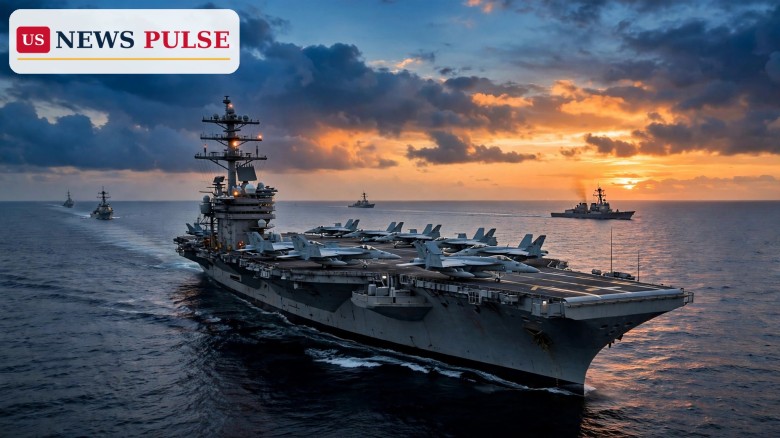
President Donald Trump held off a possible strike on Iran over the weekend, even as American and Israeli forces prepared for a renewed military operation, according to a report published on Sunday night. The decision bought diplomats a short window — described by sources as "a few days" — to reach an agreement that could keep the United States out of a new round of fighting in a war now in its ninth month.
Key Points
- President Donald Trump held off a possible strike on Iran over the weekend, and no strike order was issued, the Jerusalem Post reported on Sunday, citing two sources.
- Prime Minister Benjamin Netanyahu met Israel's top security officials on Friday afternoon, while the US military also prepared for a possible renewed operation.
- Two diplomatic sources told the Post that Mr Trump gave Vice President JD Vance and senior officials "a few days" to reach an agreement with Tehran.
- The aircraft carrier USS Theodore Roosevelt left Singapore for the US Central Command area, while the amphibious assault ship USS Makin Island left Japan, also bound for the Middle East.
- Mr Trump said on Sunday evening that the "Iron Gate" task force is at full capacity and that, with the naval blockade, almost nothing is entering or leaving Iran.
What Happened
According to the Jerusalem Post, Israel and the United States spent the weekend preparing for a possible strike on Iran, but Mr Trump held off as mediators kept working on a deal. Mr Netanyahu gathered Israel's top security officials on Friday afternoon, and the American military made its own preparations. In the end, no order came. The same day, Mr Trump told CNN there was a "very low probability" he would order the United States back to war if talks progress, if Tehran signs "a very strong agreement".
Meanwhile, the US military is reinforcing its presence in the Middle East. The Roosevelt strike group is expected in the Central Command area within several days, and the Makin Island is en route from Japan.
Background and Context
The United States and Iran have been at war since February 28, 2026, now in its ninth month. The fighting has included American strikes on Iranian targets, Iranian retaliation, and a US naval blockade that Central Command says has prevented more than $25 billion in Iranian oil exports. The new Iron Gate task force, announced on Saturday, November 7, extends that pressure to Iran's land borders and the Caspian Sea.
US forces carried out defensive strikes on Iran's Qeshm Island in recent days, and Mr Trump has repeatedly said he wants a deal while keeping military pressure on Tehran. Mediation has continued throughout, with Qatar as a central intermediary, and the Jerusalem Post said mediators were still working over the weekend — the work that persuaded Mr Trump to hold off.
Why Trump Held Off the Iran Strike
The decision to hold off appears to have been a deliberate pause, not a change of course. Mr Trump gave his negotiators days, not weeks, and the military preparations continued in parallel. A strike ordered on Friday or Saturday would have landed before the diplomatic track had run its course, and the sources who spoke to the Jerusalem Post described mediators as still working.
Holding off cost Mr Trump nothing in military terms: the Roosevelt strike group is still steaming toward the region, the Makin Island is on its way, and the blockade is tightening. There is also a political backdrop: the November 3 midterms reshaped Washington, and Mr Trump has faced questions about the war's cost at home, including higher fuel prices.
Reactions and Quotes
Mr Trump set out his own position in the CNN interview. He said there was a "very low probability" he would order the United States back to war with Iran if talks progress, and that it depends on Tehran signing "a very strong agreement". He also said the United States could destroy 38 Iranian bridges in one hour, but that he would prefer not to strike infrastructure because rebuilding could take up to 10 years.
On Sunday evening, Mr Trump said the "Iron Gate" task force is operating at full capacity and that, with the naval blockade he called "the largest in history", almost nothing is entering or leaving Iran. No public statement from Mr Vance or Mr Netanyahu about the weekend preparations was in the Jerusalem Post report.
Why It Matters
A strike that does not happen is still news when the forces were ready and the order was a live possibility. The weekend showed how close the United States and Israel came to a new round of fighting — and how narrow the path to a deal has become. Mr Vance now has days, not weeks, and the Roosevelt strike group's arrival will add firepower just as that window closes.
The stakes reach beyond Iran. The naval blockade is already reshaping oil flows, the war has driven fuel prices higher in the United States, and Gulf allies have warned about the risk of a wider regional conflict. A deal would ease all three pressures at once; a failed deadline would leave Mr Trump with the choice he deferred this weekend.
What Happens Next
Mr Vance and senior officials have "a few days" to reach an agreement, according to the two diplomatic sources. No firm date was given, but the window looks set to close well before the end of the week. Mediators are expected to keep working, and any sign of progress — or its absence — is likely to become public quickly.
The military clock is also running. The Roosevelt strike group is expected in the Central Command area within several days, and the Makin Island is en route from Japan. If talks fail, the president will face the same decision he deferred on Sunday: whether to order the renewed operation the military has prepared, or to keep relying on the blockade and the Iron Gate task force.
Frequently Asked Questions
Did Trump order a strike on Iran this weekend?
No. Israel and the United States prepared for a possible strike, but President Donald Trump held off and no strike order was issued.
How long does JD Vance have to reach a deal?
Two diplomatic sources said Mr Trump gave Vice President JD Vance and other senior officials "a few days" to reach an agreement. No exact date was given.
Which US ships are heading to the Middle East?
The aircraft carrier USS Theodore Roosevelt left Singapore for the US Central Command area, and the amphibious assault ship USS Makin Island left Japan, also heading to the Middle East.
What is Task Force Iron Gate?
It is a US Central Command task force, announced on Saturday, November 7, 2026, to stop Iran moving advanced weapons, dual-use technologies, sanctioned materials and illegal revenue across its land borders and the Caspian Sea. Mr Trump said it is operating at full capacity.
Read more: Trump: new Iran attack highly unlikely if talks progress; CENTCOM launches Task Force Iron Gate.
© 2026 US News Pulse. All rights reserved.
 Print
 Save