
Trump Presses Netanyahu to Advance Gaza Peace Plan After Israel Election
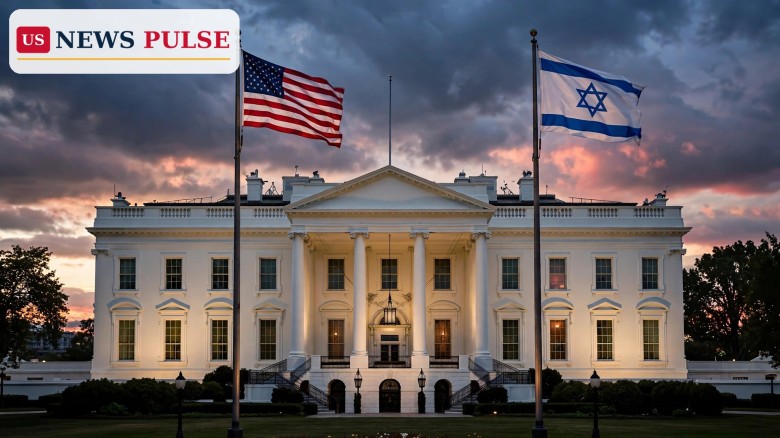
President Donald Trump has pressed Israeli Prime Minister Benjamin Netanyahu to move quickly on his Gaza peace plan now that Israel's election campaign is over, urging concrete steps in a phone call last week, according to reports published on Sunday. The call, held on Thursday, November 5, brought together Secretary of State Marco Rubio and Trump's senior envoys Jared Kushner and Steve Witkoff. It marked Washington's clearest push yet to restart a plan frozen for months: the campaign is over, and the work on Gaza must now begin.
Key Points
- Trump urged Netanyahu in a November 5 call to take concrete steps on the Gaza peace plan, Axios reported on November 8, citing two sources.
- Rubio, Kushner and Witkoff joined the call, which Netanyahu initiated and sources called constructive and positive.
- The 20-point plan calls for Hamas to disarm, Gaza to be demilitarised, and a technocratic Palestinian government to take over, with an international force and phased Israeli withdrawal.
- A senior US official said Gaza's reconstruction will not begin without progress on disarming Hamas, gradual and subject to verification.
- Former British prime minister Tony Blair visited Israel on November 7 to press Netanyahu and opposition leader Gadi Eisenkot to back the plan.
What Happened
Trump's call came on Thursday, November 5, nine days after Israelis voted on October 27. Axios reported it on Sunday, November 8, citing two sources familiar with the discussion, and Israel's Channel 12 reported the same development the same day, citing two American sources. Both accounts agree on the message: with the campaign behind him, Netanyahu should now move the Gaza plan forward.
The call was initiated by Netanyahu, and it was not a one-to-one conversation: Rubio joined, along with Kushner and Witkoff. Sources described it as constructive and positive. The war with Iran was also discussed. The timing matters: Israel's president tapped opposition leader Gadi Eisenkot on November 7 to try to form a government, and Trump wants progress regardless of who ends up in charge.
Background: A Plan Frozen by an Election
Trump's 20-point plan was meant to set out Gaza's endgame: an end to Hamas rule, a new administration, and a long rebuilding effort. But implementation was effectively frozen for months while Israel fought an election campaign, with no government in a position to take the decisions the plan requires. That pause has now collided with conditions on the ground: the first winter storm flooded at least 70,000 tents sheltering displaced Palestinians, leaving more than a million people facing a harsh winter with far too little shelter.
The Board of Peace, the body Trump created to oversee the plan, presented a six-month Gaza recovery programme worth $2.45 billion at the United Nations General Assembly in September. But a recovery programme is only a document until the political groundwork is laid — above all, agreement on who disarms whom and who governs Gaza next — and that groundwork has not moved since the campaign began.
The Gaza Peace Plan: Disarmament Before Reconstruction
At the heart of the plan is a sequence Washington insists cannot be reversed. First, Hamas must disarm and Gaza must be demilitarised, with weapons under international supervision. Administration would pass to a Palestinian technocratic committee, a government of experts rather than a political faction. An International Stabilization Force would deploy to keep order, Israeli forces would withdraw in phases, and only then would large-scale reconstruction begin.
That sequencing is where the argument sits. A senior US official told Channel 12 that reconstruction will not begin without progress toward disarming Hamas, proceeding gradually and subject to verification. Netanyahu remains sceptical Hamas will ever demilitarise, saying the group is reconstituting and rearming in Gaza. If Hamas will not disarm, the technocratic government has nothing to govern and the withdrawal has no trigger — and Trump's call was an attempt to break that circle from the Israeli side.
Reactions and Quotes
Neither the White House nor Netanyahu's office has set out its own version of the conversation; the accounts rest on the sources cited by Axios and Channel 12. What the reporting does establish is the tone: sources described the call as constructive and positive, a notably warm description for a conversation in which one leader was pressing the other to move faster.
The clearest public signal came from the senior US official who told Channel 12 that reconstruction will not begin without progress on disarming Hamas — a deliberately conditional promise. Blair's visit added a second channel of pressure: as a senior member of the Board of Peace, he met both Netanyahu and Eisenkot in Israel on November 7 to encourage support for the plan.
Why It Matters
The call matters because it sets a clock running. For months the Gaza plan has existed mostly on paper while Israeli politics took priority; Trump's intervention says that excuse has now expired. Whether Netanyahu stays or Eisenkot forms a government, Washington expects the plan to move, and to move with concrete steps rather than more statements of intent.
It matters too because winter is arriving in Gaza, where the flooding of 70,000 tents showed how quickly conditions worsen for more than a million displaced people. And the disarmament question has no easy answer: Netanyahu's doubt that Hamas will give up its weapons is widely shared in Israel's security establishment, and the group has given no public sign of accepting the plan's terms.
What Happens Next
The immediate question is who forms Israel's next government. Eisenkot, tapped on November 7, must try to assemble a coalition while Netanyahu fights to stay. The Gaza plan will be part of those calculations, since any government must answer Washington's demand for progress.
Blair and the Board of Peace are expected to stay engaged, with Kushner and Witkoff remaining the administration's point men. The reports set out no public timetable for the first steps. For now the call has done what Trump intended: it has put the Gaza plan back at the top of the agenda and made clear Washington will not accept another long pause.
Frequently Asked Questions
What did Trump ask Netanyahu to do?
Concrete steps to advance his Gaza peace plan now that Israel's October 27 elections are over, Axios and Channel 12 reported.
What is in the plan?
Twenty points: Hamas disarmament, demilitarisation under international supervision, a Palestinian technocratic government, an International Stabilization Force, phased Israeli withdrawal, and reconstruction.
Why was it frozen?
It stalled for months during Israel's election campaign, when no government could take the decisions it requires.
Will reconstruction start soon?
Not immediately. A senior US official said it will not begin without progress toward disarming Hamas, gradual and subject to verification.
Who else is pushing it?
Rubio, Kushner and Witkoff joined the call, and Tony Blair of the Board of Peace visited Israel on November 7 to press for support.
Related coverage: Gaza Flooding: First Winter Storm Floods 70,000 Tents of Displaced Palestinians | Qatar Bridge Deal: 48-Hour Plan Trades Blockade Relief for Hormuz Reopening | Trump Held Off Weekend Strike on Iran, Giving Vance Days to Reach a Deal
© 2026 US News Pulse. All rights reserved.
 Print
 Save